[Skip to main content](https://www.nike.com#skip-to-content)
- [](https://www.nike.com/jp/en/jordan)
- [Find a Store](https://www.nike.com/jp/en/retail)
- [Help](https://www.nike.com/jp/en/help)
[Help](https://www.nike.com/jp/en/help)
- [Order Status](https://www.nike.com/jp/en/orders/details)
- [Shipping & Delivery](https://www.nike.com/jp/en/help/a/shipping-delivery-jp)
- [Returns](https://www.nike.com/jp/en/help/a/returns-policy-jp)
- [Contact Us](https://www.nike.com/jp/en/help/#contact)
- [Privacy Policy](https://agreementservice.svs.nike.com/jp/ja_jp/rest/agreement?agreementType=privacyPolicy&uxId=com.nike.unite&country=JP&language=en&requestType=redirect)
- [Terms of Sale](https://agreementservice.svs.nike.com/rest/agreement?agreementType=termsOfSale&uxId=default&requestType=redirect)
- [Terms of Use](https://agreementservice.svs.nike.com/jp/ja_jp/rest/agreement?agreementType=termsOfUse&uxId=com.nike&country=JP&language=en&requestType=redirect)
- [Send Us Feedback](https://www.nike.com#site-feedback)
- [Join Us](https://www.nike.com/jp/en/membership)
- [Sign In](https://www.nike.com/jp/en/register)
[](https://www.nike.com/jp/en/)
- [Fall Sale](https://www.nike.com/jp/en/w/seasonal-sale-lt4x)
- [Featured](https://www.nike.com/jp/en/w/seasonal-sale-lt4x)
- [Shop All](https://www.nike.com/jp/en/w/seasonal-sale-lt4x)
- [New to Sale](https://www.nike.com/jp/en/w/new-to-sale-9x8hr)
- [Nike Air Max](https://www.nike.com/jp/en/w/seasonal-sale-air-max-shoes-a6d8hzlt4xzy7ok)
- [Nike Air Jordan 1](https://www.nike.com/jp/en/w/seasonal-sale-jordan-1-shoes-4fokyzlt4xzy7ok)
- [Nike Air Force 1](https://www.nike.com/jp/en/w/seasonal-sale-air-force-1-shoes-5sj3yzlt4xzy7ok)
- [Sandal](https://www.nike.com/jp/en/w/seasonal-sale-sandals-slides-fl76zlt4x)
- [Added to Sale](https://www.nike.com/jp/en/w/additional-styles-4y7d7)
- [Last Chance](https://www.nike.com/jp/en/w/seasonal-sale-low-inventory-52uxvzlt4x)
- Discount Rate
- [Discount Rate Up](https://www.nike.com/jp/en/w/deeper-discount-39mb8)
- [40% Off](https://www.nike.com/jp/en/w/40-off-3s9u5)
- [30% Off](https://www.nike.com/jp/en/w/30-off-6ei6f)
- [20% Off](https://www.nike.com/jp/en/w/20-off-8s4p6)
- [10% Off](https://www.nike.com/jp/en/w/japan-10-discount-8k8hc)
- [Shop by Sport](https://www.nike.com/jp/en/w/seasonal-sale-performance-3k7dgzlt4x)
- [Running](https://www.nike.com/jp/en/w/seasonal-sale-running-37v7jzlt4x)
- [Basketball](https://www.nike.com/jp/en/w/seasonal-sale-basketball-3glsmzlt4x)
- [Training & Gym](https://www.nike.com/jp/en/w/seasonal-sale-training-gym-58jtozlt4x)
- [Soccer](https://www.nike.com/jp/en/w/seasonal-sale-soccer-1gdj0zlt4x)
- [Golf](https://www.nike.com/jp/en/w/seasonal-sale-golf-23q9wzlt4x)
- [Men](https://www.nike.com/jp/en/w/mens-seasonal-sale-lt4xznik1)
- [Shop All](https://www.nike.com/jp/en/w/mens-seasonal-sale-lt4xznik1)
- [Shoes](https://www.nike.com/jp/en/w/mens-seasonal-sale-shoes-lt4xznik1zy7ok)
- [Clothing](https://www.nike.com/jp/en/w/mens-seasonal-sale-clothing-6ymx6zlt4xznik1)
- [Accessories](https://www.nike.com/jp/en/w/mens-seasonal-sale-accessories-equipment-awwpwzlt4xznik1)
- [Jordan](https://www.nike.com/jp/en/w/mens-seasonal-sale-jordan-37eefzlt4xznik1)
- [Women](https://www.nike.com/jp/en/w/womens-seasonal-sale-5e1x6zlt4x)
- [Shop All](https://www.nike.com/jp/en/w/womens-seasonal-sale-5e1x6zlt4x)
- [Shoes](https://www.nike.com/jp/en/w/womens-seasonal-sale-shoes-5e1x6zlt4xzy7ok)
- [Clothing](https://www.nike.com/jp/en/w/womens-seasonal-sale-clothing-5e1x6z6ymx6zlt4x)
- [Accessories](https://www.nike.com/jp/en/w/womens-seasonal-sale-accessories-equipment-5e1x6zawwpwzlt4x)
- [Jordan](https://www.nike.com/jp/en/w/womens-seasonal-sale-jordan-37eefz5e1x6zlt4x)
- [Kids](https://www.nike.com/jp/en/w/kids-seasonal-sale-lt4xzv4dh)
- [Shop All](https://www.nike.com/jp/en/w/kids-seasonal-sale-lt4xzv4dh)
- [Shoes](https://www.nike.com/jp/en/w/kids-seasonal-sale-shoes-lt4xzv4dhzy7ok)
- [Clothing](https://www.nike.com/jp/en/w/kids-seasonal-sale-clothing-6ymx6zlt4xzv4dh)
- [Accessories](https://www.nike.com/jp/en/w/kids-seasonal-sale-accessories-equipment-awwpwzlt4xzv4dh)
- [Jordan](https://www.nike.com/jp/en/w/kids-seasonal-sale-jordan-37eefzlt4xzv4dh)
- [Men](https://www.nike.com/jp/en/men)
- [New Releases](https://www.nike.com/jp/en/w/new-mens-3n82yznik1)
- [Shop All](https://www.nike.com/jp/en/w/new-mens-3n82yznik1)
- [Shoes](https://www.nike.com/jp/en/w/new-mens-shoes-3n82yznik1zy7ok)
- [Clothing](https://www.nike.com/jp/en/w/new-mens-clothing-3n82yz6ymx6znik1)
- [Accessories & Equipment](https://www.nike.com/jp/en/w/new-mens-accessories-equipment-3n82yzawwpwznik1)
- Featured
- [Coming Soon](https://www.nike.com/jp/en/w/coming-soon-5uoo6)
- [Nike Direct Exclusives](https://www.nike.com/jp/en/w/mens-nike-direct-exclusives-6gbknznik1)
- [Best Sellers](https://www.nike.com/jp/en/w/mens-best-76m50znik1)
- [ACG](https://www.nike.com/jp/en/w/mens-acg-93bsdznik1)
- [For Rainy Weather](https://www.nike.com/jp/en/w/wet-weather-conditions-jp1r)
- [SNKRS](https://www.nike.com/jp/launch)
- [Fall Sale](https://www.nike.com/jp/en/w/mens-seasonal-sale-lt4xznik1)
- Icons
- [Nike Air Force 1](https://www.nike.com/jp/en/w/mens-air-force-1-shoes-5sj3yznik1zy7ok)
- [Nike Air Max](https://www.nike.com/jp/en/w/mens-air-max-shoes-a6d8hznik1zy7ok)
- [Nike Dunk](https://www.nike.com/jp/en/w/mens-dunk-shoes-90aohznik1zy7ok)
- [Air Jordan 1](https://www.nike.com/jp/en/w/mens-jordan-1-shoes-4fokyznik1zy7ok)
- [Cortez](https://www.nike.com/jp/en/w/mens-cortez-shoes-byfxznik1zy7ok)
- [Shox](https://www.nike.com/jp/en/w/mens-shox-shoes-7e8jqznik1zy7ok)
- [Pegasus](https://www.nike.com/jp/en/w/mens-pegasus-running-shoes-37v7jz8nexhznik1zy7ok)
- [Vomero](https://www.nike.com/jp/en/w/mens-zoom-vomero-running-shoes-37v7jz7gee1znik1zy7ok)
- [Structure](https://www.nike.com/jp/en/w/mens-zoom-structure-shoes-1sytgznik1zy7ok)
- [Autumn Essentials](https://www.nike.com/jp/en/w/mens-autumn-essentials-3cj6vznik1)
- [Shoes](https://www.nike.com/jp/en/w/mens-autumn-essentials-shoes-3cj6vznik1zy7ok)
- [Clothing](https://www.nike.com/jp/en/w/mens-autumn-essentials-clothing-3cj6vz6ymx6znik1)
- [Matching Sets](https://www.nike.com/jp/en/w/mens-matching-sets-2lukpznik1)
- [Shoes](https://www.nike.com/jp/en/w/mens-shoes-nik1zy7ok)
- [Shop All](https://www.nike.com/jp/en/w/mens-shoes-nik1zy7ok)
- [Lifestyle](https://www.nike.com/jp/en/w/mens-lifestyle-shoes-13jrmznik1zy7ok)
- [Sandals](https://www.nike.com/jp/en/w/mens-sandals-slides-fl76znik1)
- [Jordan](https://www.nike.com/jp/en/w/mens-jordan-shoes-37eefznik1zy7ok)
- [Running](https://www.nike.com/jp/en/w/mens-running-shoes-37v7jznik1zy7ok)
- [Basketball](https://www.nike.com/jp/en/w/mens-basketball-shoes-3glsmznik1zy7ok)
- [Soccer](https://www.nike.com/jp/en/w/mens-soccer-shoes-1gdj0znik1zy7ok)
- [Skateboarding](https://www.nike.com/jp/en/w/mens-skateboarding-shoes-8mfrfznik1zy7ok)
- [Training & Gym](https://www.nike.com/jp/en/w/mens-training-gym-shoes-58jtoznik1zy7ok)
- [Nike By You (Customize)](https://www.nike.com/jp/en/w/mens-nike-by-you-shoes-6ealhznik1zy7ok)
- [Clothing](https://www.nike.com/jp/en/w/mens-clothing-6ymx6znik1)
- [Shop All](https://www.nike.com/jp/en/w/mens-clothing-6ymx6znik1)
- [Tops & T-shirts](https://www.nike.com/jp/en/w/mens-tops-t-shirts-9om13znik1)
- [Sweatshirts & Fleece](https://www.nike.com/jp/en/w/mens-fleece-clothing-4xh6qz6ymx6znik1)
- [Hoodies & Pullovers](https://www.nike.com/jp/en/w/mens-hoodies-and-pullovers-6riveznik1)
- [Jackets & Vests](https://www.nike.com/jp/en/w/mens-jackets-vests-50r7yznik1)
- [Tech Fleece](https://www.nike.com/jp/en/w/mens-nike-tech-7lrxuznik1)
- [Pants & Tights](https://www.nike.com/jp/en/w/mens-pants-and-tights-2kq19znik1)
- [Shorts](https://www.nike.com/jp/en/w/mens-shorts-38fphznik1)
- [Baselayer & Underwear](https://www.nike.com/jp/en/w/mens-underwear-9plciznik1)
- [Accessories & Equipment](https://www.nike.com/jp/en/w/mens-accessories-equipment-awwpwznik1)
- [Shop All](https://www.nike.com/jp/en/w/mens-accessories-equipment-awwpwznik1)
- [Bags & Backpacks](https://www.nike.com/jp/en/w/mens-bags-and-backpacks-9xy71znik1)
- [Hats & Headwear](https://www.nike.com/jp/en/w/mens-hats-visors-and-headbands-52r49znik1)
- [Socks](https://www.nike.com/jp/en/w/mens-socks-7ny3qznik1)
- [Clearance Sale](https://www.nike.com/jp/en/w/mens-sale-3yaepznik1)
- [Shop All](https://www.nike.com/jp/en/w/mens-sale-3yaepznik1)
- [Shoes](https://www.nike.com/jp/en/w/mens-sale-shoes-3yaepznik1zy7ok)
- [Clothing](https://www.nike.com/jp/en/w/mens-sale-clothing-3yaepz6ymx6znik1)
- [Accessories & Equipment](https://www.nike.com/jp/en/w/mens-sale-accessories-equipment-3yaepzawwpwznik1)
- [Women](https://www.nike.com/jp/en/women)
- [New Releases](https://www.nike.com/jp/en/w/new-womens-3n82yz5e1x6)
- [Shop All](https://www.nike.com/jp/en/w/new-womens-3n82yz5e1x6)
- [Shoes](https://www.nike.com/jp/en/w/new-womens-shoes-3n82yz5e1x6zy7ok)
- [Clothing](https://www.nike.com/jp/en/w/new-womens-clothing-3n82yz5e1x6z6ymx6)
- [Accessories & Equipment](https://www.nike.com/jp/en/w/new-womens-accessories-equipment-3n82yz5e1x6zawwpw)
- Featured
- [Nike Direct Exclusives](https://www.nike.com/jp/en/w/womens-nike-direct-exclusives-5e1x6z6gbkn)
- [Best Sellers](https://www.nike.com/jp/en/w/womens-best-5e1x6z76m50)
- [NikeSKIMS](https://www.nike.com/jp/en/w/nikeskims-b2asd)
- [ACG](https://www.nike.com/jp/en/w/womens-acg-5e1x6z93bsd)
- [SNKRS](https://www.nike.com/jp/launch)
- [Fall Sale](https://www.nike.com/jp/en/w/womens-seasonal-sale-5e1x6zlt4x)
- Icons
- [Nike Air Force 1](https://www.nike.com/jp/en/w/womens-air-force-1-shoes-5e1x6z5sj3yzy7ok)
- [Nike Air Max](https://www.nike.com/jp/en/w/womens-air-max-shoes-5e1x6za6d8hzy7ok)
- [Nike Dunk](https://www.nike.com/jp/en/w/womens-dunk-shoes-5e1x6z90aohzy7ok)
- [Air Jordan 1](https://www.nike.com/jp/en/w/womens-jordan-1-shoes-4fokyz5e1x6zy7ok)
- [Cortez](https://www.nike.com/jp/en/w/womens-cortez-shoes-5e1x6zbyfxzy7ok)
- [Shox](https://www.nike.com/jp/en/w/womens-shox-shoes-5e1x6z7e8jqzy7ok)
- [Pegasus](https://www.nike.com/jp/en/w/womens-pegasus-running-shoes-37v7jz5e1x6z8nexhzy7ok)
- [Vomero](https://www.nike.com/jp/en/w/womens-zoom-vomero-running-shoes-37v7jz5e1x6z7gee1zy7ok)
- [Structure](https://www.nike.com/jp/en/w/womens-zoom-structure-shoes-1sytgz5e1x6zy7ok)
- [Autumn Essentials](https://www.nike.com/jp/en/w/womens-autumn-essentials-3cj6vz5e1x6)
- [Shoes](https://www.nike.com/jp/en/w/womens-autumn-essentials-shoes-3cj6vz5e1x6zy7ok)
- [Clothing](https://www.nike.com/jp/en/w/womens-autumn-essentials-clothing-3cj6vz5e1x6z6ymx6)
- [Matching Sets](https://www.nike.com/jp/en/w/womens-matching-sets-2lukpz5e1x6)
- [Shoes](https://www.nike.com/jp/en/w/womens-shoes-5e1x6zy7ok)
- [Shop All](https://www.nike.com/jp/en/w/womens-shoes-5e1x6zy7ok)
- [Lifestyle](https://www.nike.com/jp/en/w/womens-lifestyle-shoes-13jrmz5e1x6zy7ok)
- [Sandals](https://www.nike.com/jp/en/w/womens-sandals-slides-5e1x6zfl76)
- [Platform Shoes](https://www.nike.com/jp/en/w/womens-platform-shoes-5e1x6z7uq76)
- [Boots](https://www.nike.com/jp/en/w/boots-9uqux)
- [Jordan](https://www.nike.com/jp/en/w/womens-jordan-shoes-37eefz5e1x6zy7ok)
- [Running](https://www.nike.com/jp/en/w/womens-running-shoes-37v7jz5e1x6zy7ok)
- [Basketball](https://www.nike.com/jp/en/w/womens-basketball-shoes-3glsmz5e1x6zy7ok)
- [Training & Gym](https://www.nike.com/jp/en/w/womens-training-gym-shoes-58jtoz5e1x6zy7ok)
- [Under ¥10,000](https://www.nike.com/jp/en/w/womens-under-10000-shoes-1spp7z5e1x6zy7ok)
- [Nike By You (Customize)](https://www.nike.com/jp/en/w/womens-nike-by-you-shoes-5e1x6z6ealhzy7ok)
- [Clothing](https://www.nike.com/jp/en/w/womens-clothing-5e1x6z6ymx6)
- [Shop All](https://www.nike.com/jp/en/w/womens-clothing-5e1x6z6ymx6)
- [Tops & T-shirts](https://www.nike.com/jp/en/w/womens-tops-t-shirts-5e1x6z9om13)
- [Sweatshirts & Fleece](https://www.nike.com/jp/en/w/womens-fleece-clothing-4xh6qz5e1x6z6ymx6)
- [Hoodies & Pullovers](https://www.nike.com/jp/en/w/womens-hoodies-and-pullovers-5e1x6z6rive)
- [Jackets & Vests](https://www.nike.com/jp/en/w/womens-jackets-vests-50r7yz5e1x6)
- [Tech Fleece](https://www.nike.com/jp/en/w/womens-nike-tech-5e1x6z7lrxu)
- [Pants & Tights & Leggings](https://www.nike.com/jp/en/w/womens-pants-and-tights-2kq19z5e1x6)
- [Shorts](https://www.nike.com/jp/en/w/womens-shorts-38fphz5e1x6)
- [Sports Bras](https://www.nike.com/jp/en/w/womens-sports-bras-40qgmz5e1x6)
- [Skirts & Dresses](https://www.nike.com/jp/en/w/womens-skirts-and-dresses-5e1x6z8y3qp)
- [Accessories & Equipment](https://www.nike.com/jp/en/w/womens-accessories-equipment-5e1x6zawwpw)
- [Shop All](https://www.nike.com/jp/en/w/womens-accessories-equipment-5e1x6zawwpw)
- [Bags & Backpacks](https://www.nike.com/jp/en/w/womens-bags-and-backpacks-5e1x6z9xy71)
- [Hats & Headwear](https://www.nike.com/jp/en/w/womens-hats-visors-and-headbands-52r49z5e1x6)
- [Socks](https://www.nike.com/jp/en/w/womens-socks-5e1x6z7ny3q)
- [Clearance Sale](https://www.nike.com/jp/en/w/womens-sale-3yaepz5e1x6)
- [Shop All](https://www.nike.com/jp/en/w/womens-sale-3yaepz5e1x6)
- [Shoes](https://www.nike.com/jp/en/w/womens-sale-shoes-3yaepz5e1x6zy7ok)
- [Clothing](https://www.nike.com/jp/en/w/womens-sale-clothing-3yaepz5e1x6z6ymx6)
- [Accessories & Equipment](https://www.nike.com/jp/en/w/womens-sale-accessories-equipment-3yaepz5e1x6zawwpw)
- [Kids](https://www.nike.com/jp/en/kids)
- [New Releases](https://www.nike.com/jp/en/w/new-kids-3n82yzv4dh)
- [Shop All](https://www.nike.com/jp/en/w/new-kids-3n82yzv4dh)
- [Shoes](https://www.nike.com/jp/en/w/new-kids-shoes-3n82yzv4dhzy7ok)
- [Clothing](https://www.nike.com/jp/en/w/new-kids-clothing-3n82yz6ymx6zv4dh)
- [Accessories & Equipment](https://www.nike.com/jp/en/w/new-kids-accessories-equipment-3n82yzawwpwzv4dh)
- Featured
- [Nike Direct Exclusives](https://www.nike.com/jp/en/w/kids-nike-direct-exclusives-6gbknzv4dh)
- [Best Sellers](https://www.nike.com/jp/en/w/kids-best-76m50zv4dh)
- [Teens](https://www.nike.com/jp/en/teens)
- [Nike x LEGO® Collection](https://www.nike.com/jp/en/w/nike-lego-collection-58jr)
- [Fall Sale](https://www.nike.com/jp/en/w/kids-seasonal-sale-lt4xzv4dh)
- Icons
- [Kids Air Force 1](https://www.nike.com/jp/en/w/kids-air-force-1-shoes-5sj3yzv4dhzy7ok)
- [Kids Air Max](https://www.nike.com/jp/en/w/kids-air-max-shoes-a6d8hzv4dhzy7ok)
- [Kids Dunk](https://www.nike.com/jp/en/w/kids-dunk-shoes-90aohzv4dhzy7ok)
- [Kids Air Jordan 1](https://www.nike.com/jp/en/w/kids-jordan-1-shoes-4fokyzv4dhzy7ok)
- [Cortez](https://www.nike.com/jp/en/w/kids-cortez-shoes-byfxzv4dhzy7ok)
- [Court Borough](https://www.nike.com/jp/en/w/kids-nike-court-borough-shoes-1g2nazv4dhzy7ok)
- [Flex Runner](https://www.nike.com/jp/en/w/kids-nike-flex-runner-shoes-2f4v2zv4dhzy7ok)
- [Autumn Essentials](https://www.nike.com/jp/en/w/kids-autumn-essentials-3cj6vzv4dh)
- [Shoes](https://www.nike.com/jp/en/w/kids-autumn-essentials-shoes-3cj6vzv4dhzy7ok)
- [Clothing](https://www.nike.com/jp/en/w/kids-autumn-essentials-clothing-3cj6vz6ymx6zv4dh)
- [Shoes by Size](https://www.nike.com/jp/en/w/kids-shoes-v4dhzy7ok)
- [Baby & Toddler (7–16cm)](https://www.nike.com/jp/en/w/baby-toddler-shoes-2j488zy7ok)
- [Little Kids (14–22cm)](https://www.nike.com/jp/en/w/little-shoes-6dacezy7ok)
- [Big Kids (20–25cm)](https://www.nike.com/jp/en/w/big-shoes-agibjzy7ok)
- [Shoes](https://www.nike.com/jp/en/w/kids-shoes-v4dhzy7ok)
- [Shop All](https://www.nike.com/jp/en/w/kids-shoes-v4dhzy7ok)
- [Lifestyle](https://www.nike.com/jp/en/w/kids-lifestyle-shoes-13jrmzv4dhzy7ok)
- [Sandals](https://www.nike.com/jp/en/w/kids-sandals-slides-fl76zv4dh)
- [White Sneakers](https://www.nike.com/jp/en/w/kids-triple-white-shoes-2kfmuzv4dhzy7ok)
- [Basketball](https://www.nike.com/jp/en/w/kids-basketball-shoes-3glsmzv4dhzy7ok)
- [Soccer](https://www.nike.com/jp/en/w/kids-soccer-shoes-1gdj0zv4dhzy7ok)
- [Running](https://www.nike.com/jp/en/w/kids-running-shoes-37v7jzv4dhzy7ok)
- [Jordan](https://www.nike.com/jp/en/w/kids-jordan-shoes-37eefzv4dhzy7ok)
- [Easy On & Off](https://www.nike.com/jp/en/w/kids-easy-on-off-shoes-qh2hzv4dhzy7ok)
- [Mini Me](https://www.nike.com/jp/en/w/mini-me-shoes-1qcqhzy7ok)
- [Clothing by Size](https://www.nike.com/jp/en/w/kids-clothing-6ymx6zv4dh)
- [Baby & Toddler (50–104cm)](https://www.nike.com/jp/en/w/baby-toddler-kids-clothing-2j488z6ymx6zv4dh)
- [Little Kids (98–122cm)](https://www.nike.com/jp/en/w/little-kids-clothing-6dacez6ymx6zv4dh)
- [Big Kids (130–170cm)](https://www.nike.com/jp/en/w/big-kids-clothing-6ymx6zagibjzv4dh)
- [Clothing](https://www.nike.com/jp/en/w/kids-clothing-6ymx6zv4dh)
- [Shop All](https://www.nike.com/jp/en/w/kids-clothing-6ymx6zv4dh)
- [Tops & T-shirts](https://www.nike.com/jp/en/w/kids-tops-t-shirts-9om13zv4dh)
- [Shorts](https://www.nike.com/jp/en/w/kids-shorts-38fphzv4dh)
- [Pants & Tights & Leggings](https://www.nike.com/jp/en/w/kids-pants-and-tights-2kq19zv4dh)
- [Hoodies & Pullovers](https://www.nike.com/jp/en/w/kids-hoodies-and-pullovers-6rivezv4dh)
- [Jackets & Vests](https://www.nike.com/jp/en/w/kids-jackets-vests-50r7yzv4dh)
- [Tech Fleece](https://www.nike.com/jp/en/w/kids-nike-tech-7lrxuzv4dh)
- [Sports Bras](https://www.nike.com/jp/en/w/kids-sports-bras-40qgmzv4dh)
- [Matching Sets](https://www.nike.com/jp/en/w/kids-sets-adhmezv4dh)
- [Accessories & Equipment](https://www.nike.com/jp/en/w/kids-accessories-equipment-awwpwzv4dh)
- [Shop All](https://www.nike.com/jp/en/w/kids-accessories-equipment-awwpwzv4dh)
- [Bags & Backpacks](https://www.nike.com/jp/en/w/kids-bags-and-backpacks-9xy71zv4dh)
- [Hats & Headwear](https://www.nike.com/jp/en/w/kids-hats-visors-and-headbands-52r49zv4dh)
- [Socks](https://www.nike.com/jp/en/w/kids-socks-7ny3qzv4dh)
- [Clearance Sale](https://www.nike.com/jp/en/w/kids-sale-3yaepzv4dh)
- [Shop All](https://www.nike.com/jp/en/w/kids-sale-3yaepzv4dh)
- [Shoes](https://www.nike.com/jp/en/w/kids-sale-shoes-3yaepzv4dhzy7ok)
- [Clothing](https://www.nike.com/jp/en/w/kids-sale-clothing-3yaepz6ymx6zv4dh)
- [Accessories & Equipment](https://www.nike.com/jp/en/w/kids-sale-accessories-equipment-3yaepzawwpwzv4dh)
- [NikeSKIMS](https://www.nike.com/jp/en/nikeskims)
- [NikeSKIMS](https://www.nike.com/jp/en/nikeskims)
- [Nike SKIMS](https://www.nike.com/jp/en/w/nikeskims-b2asd)
- [NikeSKIMS Shoes](https://www.nike.com/jp/en/w/nikeskims-shoes-b2asdzy7ok)
- [All Clothing](https://www.nike.com/jp/en/w/nikeskims-clothing-6ymx6zb2asd)
- [Bras](https://www.nike.com/jp/en/w/nikeskims-sports-bras-40qgmzb2asd)
- [Jacekts](https://www.nike.com/jp/en/w/nikeskims-jackets-5sac5zb2asd)
- [Leggings](https://www.nike.com/jp/en/w/nikeskims-tights-leggings-29sh2zb2asd)
- [Shorts](https://www.nike.com/jp/en/w/nikeskims-shorts-38fphzb2asd)
- [Tops and Tanks](https://www.nike.com/jp/en/w/nikeskims-tops-t-shirts-9om13zb2asd)
- [Accessories](https://www.nike.com/jp/en/w/nikeskims-accessories-equipment-awwpwzb2asd)
- [Shop by Materials](https://www.nike.com/jp/en/w/nikeskims-b2asd)
- [Satin Shine](https://www.nike.com/jp/en/w/nikeskims-satin-shine-97fc5)
- [Stretch Knit 2.0](https://www.nike.com/jp/en/w/nikeskims-stretch-knit-21jwl)
- [Ribbed Seamless](https://www.nike.com/jp/en/w/nikeskims-seamless-6lh4s)
- [Stretch Nylon](https://www.nike.com/jp/en/w/nikeskims-stretch-nylon-7sut9)
- [Matte](https://www.nike.com/jp/en/w/nikeskims-matte-5s3en)
- [Studio Stretch](https://www.nike.com/jp/en/w/nikeskims-studio-stretch-admbq)
- [Performance Cotton Blend](https://www.nike.com/jp/en/w/nikeskims-performance-cotton-blend-93ehs)
- [Weightless Layers](https://www.nike.com/jp/en/w/nikeskims-weightless-4csx8)
- [Shop by Color](https://www.nike.com/jp/en/w/nikeskims-b2asd)
- [Yellow](https://www.nike.com/jp/en/w/nikeskims-yellow-ayp69zb2asd)
- [Grey](https://www.nike.com/jp/en/w/nikeskims-grey-6s5r5zb2asd)
- [Blue](https://www.nike.com/jp/en/w/nikeskims-blue-8hfx3zb2asd)
- [Brown](https://www.nike.com/jp/en/w/nikeskims-brown-557pqzb2asd)
- [Black](https://www.nike.com/jp/en/w/nikeskims-black-90poyzb2asd)
- [White](https://www.nike.com/jp/en/w/nikeskims-white-4g797zb2asd)
- [NikeSKIMS Guides](https://www.nike.com/jp/en/nikeskims)
- [NikeSKIMS Collection Guide](https://www.nike.com/jp/en/nikeskims-collection-guide)
- [NikeSKIMS Bra Guide](https://www.nike.com/jp/en/nikeskims-bra-guide)
- [NikeSKIMS Lookbook](https://www.nike.com/jp/en/nikeskims-lookbook)
- [Sport](https://www.nike.com/jp/en/w/performance-3k7dg)
- [Running](https://www.nike.com/jp/en/running)
- [Shop All](https://www.nike.com/jp/en/w/running-37v7j)
- [Shoes](https://www.nike.com/jp/en/w/running-shoes-37v7jzy7ok)
- [Road Running Shoes](https://www.nike.com/jp/en/w/road-running-shoes-3qxw3zy7ok)
- [Road Racing Shoes](https://www.nike.com/jp/en/w/road-racing-shoes-9gdhkzy7ok)
- [Trail Running](https://www.nike.com/jp/en/w/trail-running-75jcn)
- [Track & Field Shoes](https://www.nike.com/jp/en/w/track-field-shoes-7nem3zy7ok)
- [Clothing](https://www.nike.com/jp/en/w/running-clothing-37v7jz6ymx6)
- [Accessories & Equipment](https://www.nike.com/jp/en/w/running-accessories-equipment-37v7jzawwpw)
- [Nike By You (Customize)](https://www.nike.com/jp/en/w/nike-by-you-running-shoes-37v7jz6ealhzy7ok)
- [Running Shoe Finder](https://www.nike.com/jp/en/running-shoe-finder)
- [Clearance Sale](https://www.nike.com/jp/en/w/sale-running-37v7jz3yaep)
- [Basketball](https://www.nike.com/jp/en/basketball)
- [Shop All](https://www.nike.com/jp/en/w/basketball-3glsm)
- [Shoes](https://www.nike.com/jp/en/w/basketball-shoes-3glsmzy7ok)
- [Clothing](https://www.nike.com/jp/en/w/basketball-clothing-3glsmz6ymx6)
- [Accessories & Equipment](https://www.nike.com/jp/en/w/basketball-accessories-equipment-3glsmzawwpw)
- [Kobe Bryant](https://www.nike.com/jp/en/w/kobe-basketball-3glsmzpgd6)
- [Sabrina Ionescu](https://www.nike.com/jp/en/w/sabrina-ionescu-basketball-2h3kpz3glsm)
- [Ja Morant](https://www.nike.com/jp/en/w/ja-morant-basketball-3glsmz4m5h1)
- [LeBron James](https://www.nike.com/jp/en/w/lebron-basketball-3glsmz7y57x)
- [Caitlin Clark](https://www.nike.com/jp/en/w/caitlin-clark-basketball-3glsmzb0s81)
- [Nike By You (Customize)](https://www.nike.com/jp/en/w/nike-by-you-basketball-3glsmz6ealh)
- [Clearance Sale](https://www.nike.com/jp/en/w/sale-basketball-3glsmz3yaep)
- [Soccer](https://www.nike.com/jp/en/soccer)
- [Shop All](https://www.nike.com/jp/en/w/soccer-1gdj0)
- [Spikes & Shoes](https://www.nike.com/jp/en/w/soccer-shoes-1gdj0zy7ok)
- [Clothing](https://www.nike.com/jp/en/w/soccer-clothing-1gdj0z6ymx6)
- [Accessories & Equipment](https://www.nike.com/jp/en/w/soccer-accessories-equipment-1gdj0zawwpw)
- [Club Teams](https://www.nike.com/jp/en/w/soccer-clubs-6fu9q)
- [National Teams](https://www.nike.com/jp/en/w/national-team-soccer-1gdj0zav9de)
- [Clearance Sale](https://www.nike.com/jp/en/w/sale-soccer-1gdj0z3yaep)
- [Tennis](https://www.nike.com/jp/en/w/tennis-ed1q)
- [Shop All](https://www.nike.com/jp/en/w/tennis-ed1q)
- [Shoes](https://www.nike.com/jp/en/w/tennis-shoes-ed1qzy7ok)
- [Clothing](https://www.nike.com/jp/en/w/tennis-clothing-6ymx6zed1q)
- [Accessories & Equipment](https://www.nike.com/jp/en/w/tennis-accessories-equipment-awwpwzed1q)
- [Training & Gym](https://www.nike.com/jp/en/w/training-gym-58jto)
- [Shop All](https://www.nike.com/jp/en/w/training-gym-58jto)
- [Shoes](https://www.nike.com/jp/en/w/training-gym-shoes-58jtozy7ok)
- [Clothing](https://www.nike.com/jp/en/w/training-gym-clothing-58jtoz6ymx6)
- [Socks](https://www.nike.com/jp/en/w/training-gym-socks-58jtoz7ny3q)
- [Accessories & Equipment](https://www.nike.com/jp/en/w/training-gym-accessories-equipment-58jtozawwpw)
- [Clearance Sale](https://www.nike.com/jp/en/w/sale-training-gym-3yaepz58jto)
- [Golf](https://www.nike.com/jp/en/w/golf-23q9w)
- [Shop All](https://www.nike.com/jp/en/w/golf-23q9w)
- [Shoes](https://www.nike.com/jp/en/w/golf-shoes-23q9wzy7ok)
- [Clothing](https://www.nike.com/jp/en/w/golf-clothing-23q9wz6ymx6)
- [Accessories & Equipment](https://www.nike.com/jp/en/w/golf-accessories-equipment-23q9wzawwpw)
- [Jordan](https://www.nike.com/jp/en/w/jordan-golf-23q9wz37eef)
- [More Sports](https://www.nike.com/jp/en/w/performance-3k7dg)
- [Jerseys](https://www.nike.com/jp/en/w/jerseys-3a41e)
- [Yoga](https://www.nike.com/jp/en/w/yoga-anrlj)
- [ACG](https://www.nike.com/jp/en/acg)
- [Outdoor](https://www.nike.com/jp/en/w/outdoor-xw4h)
- [Trekking & Hiking](https://www.nike.com/jp/en/w/hiking-90dwj)
- [Baseball](https://www.nike.com/jp/en/w/baseball-99fch)
- [Skateboarding](https://www.nike.com/jp/en/skateboarding)
- [Breaking & Dance](https://www.nike.com/jp/en/w/dance-3cii8)
- [Bukatsu (Student Club Activities)](https://www.nike.com/jp/en/w/bukatsu-collection-9h07w)
Cancel
Cancel
Popular Search Terms
[autumn essentials](https://www.nike.com/jp/en/w?q=autumn%20essentials&vst=autumn%20essentials)[pegasus plus 2](https://www.nike.com/jp/en/w?q=pegasus%20plus%202&vst=pegasus%20plus%202)[jordan](https://www.nike.com/jp/en/w?q=jordan&vst=jordan)[air force 1](https://www.nike.com/jp/en/w?q=air%20force%201&vst=air%20force%201)[air rift](https://www.nike.com/jp/en/w?q=air%20rift&vst=air%20rift)[acg](https://www.nike.com/jp/en/w?q=acg&vst=acg)[nike mind](https://www.nike.com/jp/en/w?q=nike%20mind&vst=nike%20mind)[nike x one piece](https://www.nike.com/jp/en/w?q=nike%20x%20one%20piece&vst=nike%20x%20one%20piece)
[](https://www.nike.com/jp/en/favorites "Favorites")[](https://www.nike.com/jp/en/cart "Bag Items: 0")
# What To Wear to the Gym: A Complete Guide to the Perfect Gym Outfit
##### Styling Tips
Not sure what to wear to the gym? Learn how to build the perfect gym outfit out of comfortable workout clothes — sweat-wicking tops, supportive sports bras and breathable bottoms — with the right training shoes.
Last updated: March 30, 2026
10 min read
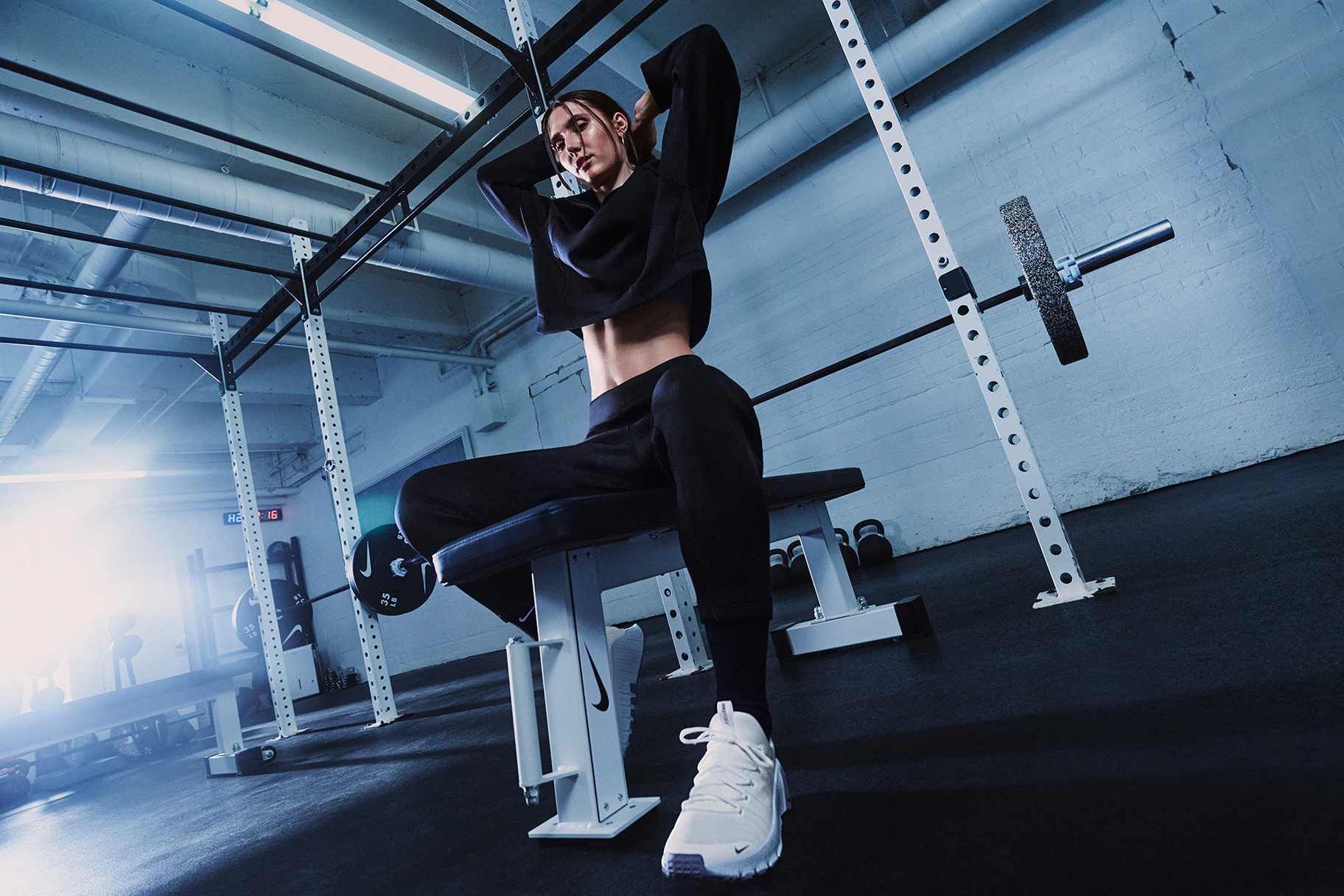
If your gym outfit is whatever clean top and bottoms you grab first, you could be missing out on some real performance perks. Putting more thought into what to wear to the gym not only makes your training session more enjoyable, but it also helps you move better, stay comfortable, and get more out of every workout.
The first step to picking your gym outfit is identifying the type of workout you’re planning to do. This will help you decide what shoes will best support your performance, whether you need a high-impact sports bra, and if you’re better off wearing loose-fitting workout pants or compressive leggings.
Here are [gym-outfit essentials](https://www.nike.com/jp/en/a/what-to-bring-to-the-gym) to help get you started, plus styling tips to pull the whole look together.
## Quick Take
- Choose shoes based on your workout (running, lifting, HIIT).
- Look for sweat-wicking fabrics and technology like Nike Dri-FIT and Nike Stealth Evaporation.
- Match sports bra support level to workout intensity.
- Build your outfit around styles that suit your needs for stability and support.
- Keep in mind that comfort plus performance equals confidence.
## What To Wear to the Gym — Your Guide To Creating High-Performance Workout Outfits
## 1. Pick Out Appropriate Shoes
[](https://www.nike.com/jp/en/w/metcon-training-gym-shoes-3yxqsz58jtozy7ok)
It’s easy to grab the same pair of shoes every time you head to the gym. However, having the right pair for your planned activity can optimize your workout.
If you’re focused solely on running, Nike Pegasus[](https://www.nike.com) running shoes may be your new go-to choice. Why? The supportive shoe is equipped with cushioning to help soften the impact as your feet strike the ground.
For strength or [HIIT workouts](https://www.nike.com/jp/en/a/what-is-hiit-workout), you want a stable shoe that boosts your power by maximizing balance and [supports your form](https://pubmed.ncbi.nlm.nih.gov/27096286/). You also want light cushioning, as too much bounce can create instability and limit your progress. Finally, look for a shoe that offers flexibility to respond to the demands of a dynamic HIIT class.
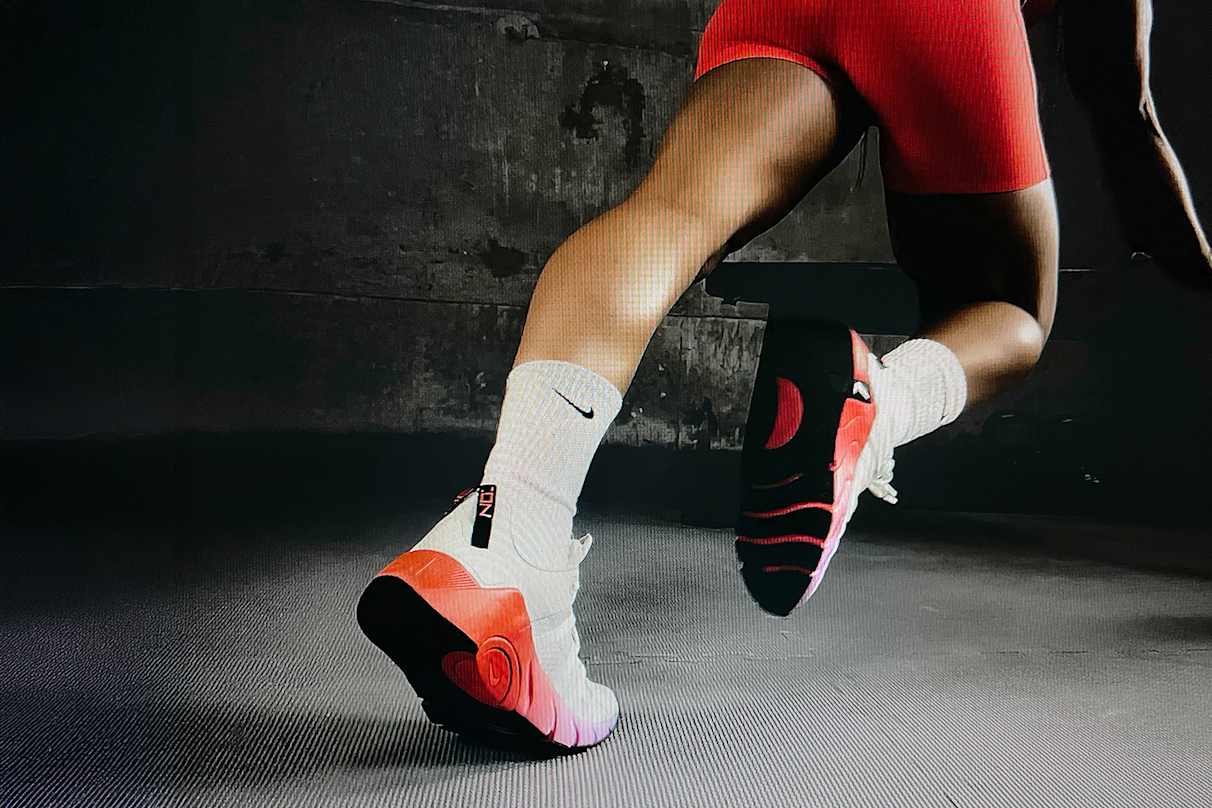
One shoe that offers the right mix of stability, light cushioning, and flexibility is the Nike Free Metcon 7. It strikes a good balance, improving on previous models with a two-part midsole that provides more durability and flexibility as you power through your sets. Other key updates include a webbing lace structure that keeps the midfoot locked in, along with greater flexibility in the forefoot, offering a stable yet flexible base for quick movements like [burpees](https://www.nike.com/jp/en/a/what-is-a-burpee-exercise) and skater jumps. From a styling perspective, the Free Metcon 7 is available in a mix of materials and colors so that you can incorporate your personal style into your gym outfit.
__Styling Tip:__ If you’re looking for maximum outfit versatility, go with the all-white option. Alternatively, opt for a colorful hue if wearing neutral-toned clothing.
## 2. Select Breathable Tops and Bottoms
[](https://www.nike.com/jp/en/w/metcon-training-gym-shoes-3yxqsz58jtozy7ok)
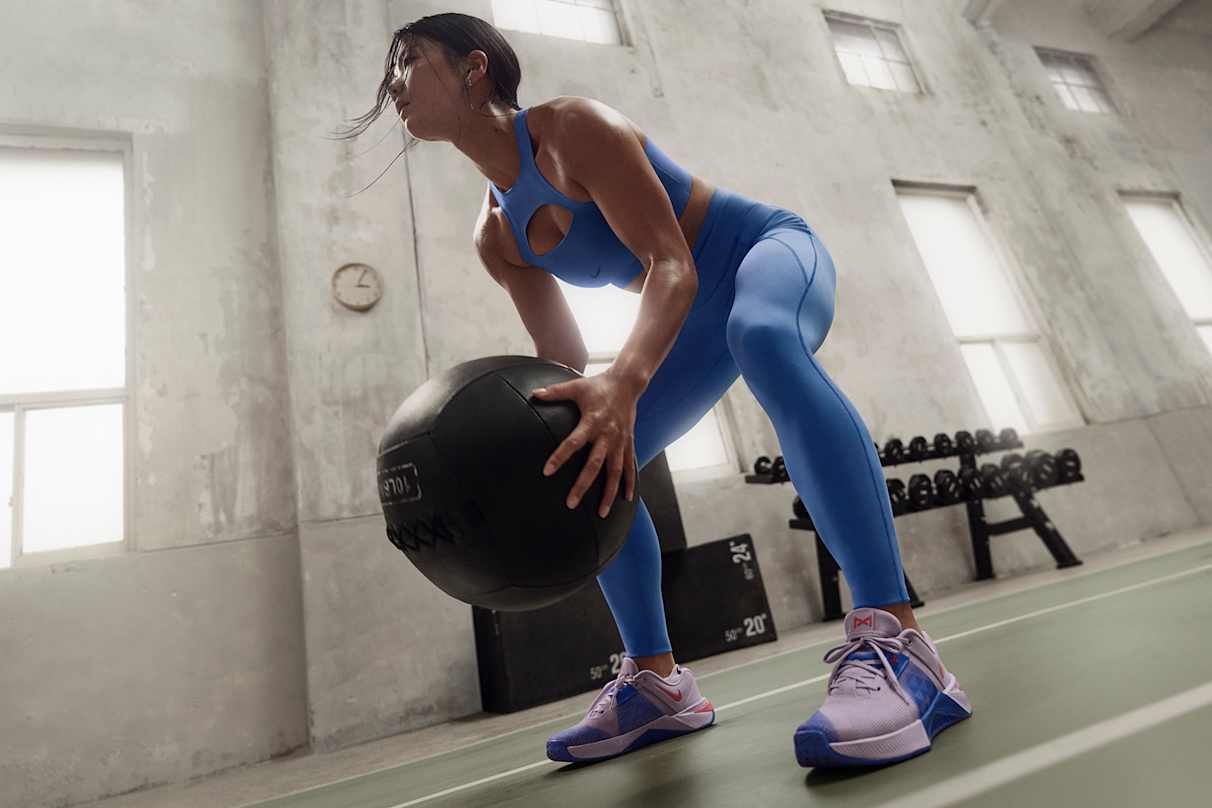
Fit and style preferences heavily influence what you choose to wear on the top and bottom half of your gym outfit. However, selecting apparel designed with [moisture-wicking technology](https://www.nike.com/jp/en/a/what-is-moisture-wicking) is an absolute must. Options made with [Nike Dri-FIT](https://www.nike.com/jp/en/w/dri-fit-32dxr) technology, for example, can help to keep you comfortable and dry — no matter the workout.
If you feel most comfortable working out in [gym shorts](https://www.nike.com/jp/en/w/training-gym-shorts-38fphz58jto) that offer a snug fit around the hips and thighs, try the classic [Nike Pro training shorts](https://www.nike.com/jp/en/w/nike-pro-training-gym-shorts-38fphz3cqxfz58jto). For a loose-fitting option, go for Nike Tempo or Nike One brief-lined shorts — the latter has an extra-high waistband, which pairs seamlessly with a strappy sports bra.
__Styling Tip:__ Choose matching colors for a [monochromatic](https://www.nike.com/jp/en/a/monochrome-outfits) or tonal look.
If you’re more of a full-coverage gym-goer, check out [Nike Universa leggings](https://www.nike.com/jp/en/w/womens-universa-tights-leggings-29sh2z5e1x6z9sh3f), available in both full-length and 7/8-length models. Made with both Nike Stealth Evaporation and Nike Dri-FIT technologies, these leggings are not only ideal for a high-impact sweat sesh, but they also make a statement in the weight room.
__Styling Tip:__ Pair with a cropped, moisture-wicking top to accentuate your silhouette.
Once you’ve found your ideal workout bottom, choose a sweat-wicking top with Nike Dri-FIT fabric to complement it. If your bottoms are high-waisted, try a coordinating [cropped top](https://www.nike.com/jp/en/w/womens-cropped-tops-t-shirts-5e1x6z928edz9om13) for a cinched look. For more coverage, Nike Dri-FIT T-shirts are not only comfortable, but they’re also easy to mix and match with a variety of different bottoms — from [biker shorts](https://www.nike.com/jp/en/a/biker-shorts-outfit-ideas) to joggers.
__Styling Tip:__ Finish off the look with a lightweight [full-zip hoodie](https://www.nike.com/jp/en/w/full-zip-hoodies-and-pullovers-54twwz6rive) on top, or even an [oversized pullover hoodie](https://www.nike.com/jp/en/w/hoodies-45iar) for a bit more impact.
## 3. Find Supportive Sports Bras
[](https://www.nike.com/jp/en/w/metcon-training-gym-shoes-3yxqsz58jtozy7ok)
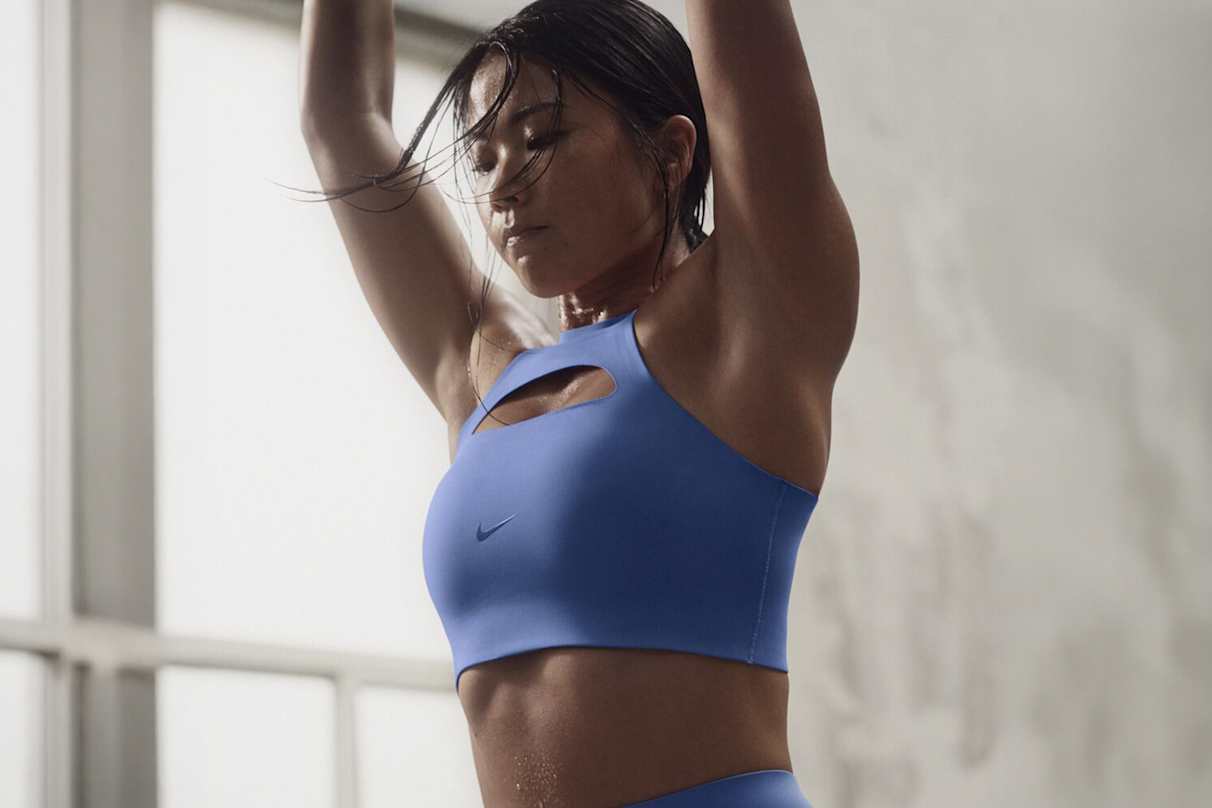
When it comes to choosing a comfortable and [supportive sports bra](https://www.nike.com/jp/en/a/how-to-choose-sports-bra) for the gym, there’s a lot to consider — primarily, how high-impact your workout will be that day.
Nike sports bras come in a wide range of sizes, all of which fall into one of the following support levels: low, medium, and hig. [Light-support sports bras](https://www.nike.com/jp/en/w/womens-dri-fit-light-support-sports-bras-2tijaz32dxrz40qgmz5e1x6) like the [Nike Indy](https://www.nike.com/jp/en/t/indy-womens-light-support-padded-v-neck-sports-bra-jF7h8c/CZ4456-100) are ideal for low-impact exercises like Pilates, yoga, or lifting. If you have a medium-impact workout like cycling or rowing planned, look for a [medium-support](https://www.nike.com/jp/en/w/womens-dri-fit-medium-support-sports-bras-2e3q2z32dxrz40qgmz5e1x6) sports bra like the [Nike Swoosh](https://www.nike.com/jp/en/w/womens-swoosh-sports-bras-40qgmz4c8vhz5e1x6). For high-impact exercises such as running or jumping — or, if you have larger breasts — a [high-support](https://www.nike.com/jp/en/w/womens-dri-fit-high-support-sports-bras-32dxrz40qgmz4wlitz5e1x6) option like [Nike Rival](https://www.nike.com) is your best bet.
These [sports bras](https://www.nike.com/jp/en/a/how-to-choose-sports-bra) are made from lightweight fabric that elicits a “second skin” feel. In part, this makes the bra easy to get on and, perhaps even most important, off — even when you’re super sweaty. Nike Dri-FIT technology and mesh lining will also help evaporate sweat, so you stay dry and cool.
__Styling Tip:__ Have fun with color blocking. Wear a solid (and bold-toned) strappy sports bra with a different — but equally bold — colored tank top to create a peekaboo effect.
## 4. Finish Off the Look With Accessories
A gym outfit isn’t complete without a pair of comfy, cushioned socks. Not only are Nike crew socks breathable, but they’re also designed to help wick sweat away from the feet. They also come in a wide range of colors.
To complete your gym outfit, choose functional [accessories](https://www.nike.com/jp/en/w/training-gym-accessories-equipment-58jtozawwpw) that also add a bit of style. For example, consider carrying a sleek [duffel bag](https://www.nike.com/jp/en/w/training-gym-duffels-3eyowz58jto) to hold your change of clothes and post-workout essentials, such as snacks and water.
__Styling Tip:__ Make a pair of [black leggings](https://www.nike.com/jp/en/a/best-black-leggings) pop with tie-dye socks and a coordinating top. Alternatively, elevate a black-and-white look with a pair of white socks that feature the classic black swoosh icon.
## How To Choose the Right Gym Outfit for Your Workout
[](https://www.nike.com/jp/en/w/metcon-training-gym-shoes-3yxqsz58jtozy7ok)
## Strength Training
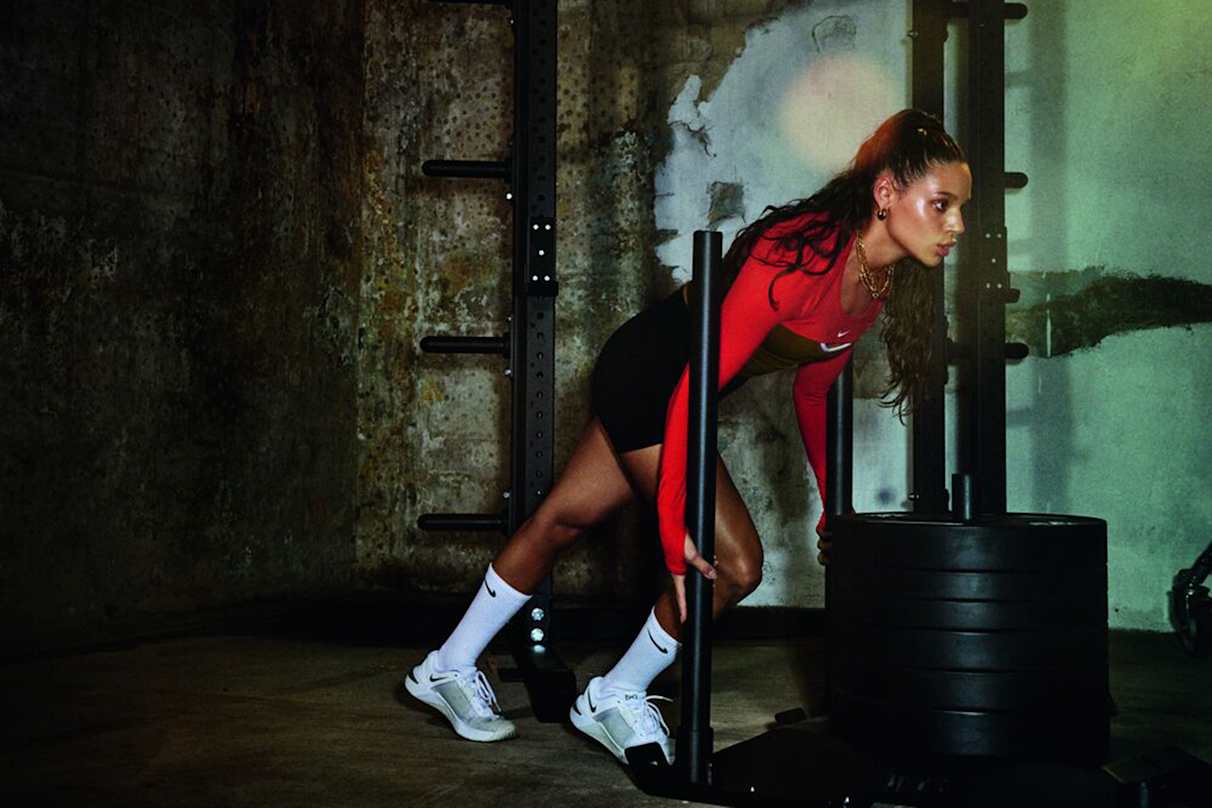
If you have a strength workout planned, opt for a sweat-wicking top and a pair of stretchy, stay-dry leggings like the [Nike Pro](https://www.nike.com/jp/en/w/nike-pro-tights-leggings-29sh2z3cqxf). Top it off with a pair of [gym](https://www.nike.com/jp/en/a/best-gym-training-shoes)[](https://www.nike.com/a/best-gym-training-shoes) [training shoes](https://www.nike.com/jp/en/a/best-gym-training-shoes) like the [Nike Metcon](https://www.nike.com/jp/en/w/metcon-shoes-3yxqszy7ok), which provide stability and grip for heavy strength sessions.
## HIIT / Bootcamp
Quick-moving, high-intensity workouts like HIIT and fitness bootcamp demand breathable clothes that move with you. This way, you can focus on squeezing in more burpees — not adjusting your shorts. Opt for a [slim-fitting tank top](https://adminops-ext.prod.commerce.nikecloud.com/iris/editor/source/d70b7d25-9d7b-4530-bae6-f74777cb3e73/layout/e6caab8d-f4a3-4f17-92c7-4369396da3d9/general) or short-sleeve shirt and shorts or leggings like the Nike Universa, made of sweat-wicking, ultrasmooth fabric that offers squat-proof stretch and moisture-concealing technology that hides sweat. Finish off your gym outfit with moisture-wicking socks, a [high-support sports bra](https://adminops-ext.prod.commerce.nikecloud.com/iris/editor/source/d70b7d25-9d7b-4530-bae6-f74777cb3e73/layout/e6caab8d-f4a3-4f17-92c7-4369396da3d9/general), and cross-training shoes like the [Nike Free Metcon](https://adminops-ext.prod.commerce.nikecloud.com/iris/editor/source/d70b7d25-9d7b-4530-bae6-f74777cb3e73/layout/e6caab8d-f4a3-4f17-92c7-4369396da3d9/general).
## Cardio / Running
For outdoor cardio workouts, dress as if it’s 10 to 20 degrees warmer than the actual [temperature](https://www.nike.com/jp/en/a/what-to-wear-by-temperature). Warmer weather calls for lightweight, UV-protective fabrics that promote airflow, while colder weather favors insulating layers and accessories that hold in body heat.
For indoor cardio workouts, choose sweat-wicking clothing that’s neither too tight nor too loose, and be sure to wear shoes designed for your activity of choice — whether running, cycling or rowing.
## Walking / Recovery
Gentler workouts like walking and other recovery day activities are ideal for looser-fitting clothes that don’t restrict your movement. Sweat-wicking fabrics are always helpful for keeping you dry, but they’re not necessarily required for recovery workouts. Shoes, on the other hand, are required (unless you’re doing yoga or other mat-based activities). Running shoes should be sufficient, but consider investing in a pair of [walking shoes](https://www.nike.com/jp/en/a/difference-between-running-walking-shoes), such as the Nike Motiva, to spare your running shoes the added mileage.
## What Makes Good Gym Workout Clothes?
- Sweat-wicking fabric
- Breathability
- Stretch and mobility
- Secure fit
- Minimal chafing seams
## Build Your Gym Outfit in 60 Seconds
- __Lifting Day:__ Stable training shoes + compressive bottoms
- __HIIT:__ Flexible trainers + medium/high support bra
- __Treadmill Day:__ Cushioned running shoes + sweat-wicking top
- __Recovery Day:__ Walking shoes + lightweight layers
## Training Shoes vs Running Shoes for the Gym
If you run and strength-train, you may be tempted to use the same shoes for both workouts. However, it’s often essential to have a dedicated pair for each, as the workouts have different demands that call for [different shoes](https://www.nike.com/jp/en/a/difference-between-training-running-shoes).
[Training shoes](https://www.nike.com/jp/en/a/best-gym-training-shoes) like the Nike Metcon 10 fuse stability, grip, durability and lockdown into one package — key for crushing heavy strength exercises. These shoes also offer areas of flexibility to help you toe off properly for explosive movements.
Running shoes like the Nike Pegasus, on the other hand, are built for forward movement and offer responsive cushioning that maximizes energy return while absorbing the impact from each footstrike.
If you’re bouncing between cardio and strength exercises — like in a bootcamp or HIIT class — you need versatile cross-training shoes like the Nike Free Metcon 7. With more cushioning than the Metcon, the Free Metcon 7 is ideal for workouts that involve more jumping and less weightlifting. It offers greater forefoot flexibility for cardio bursts, along with a stable base for moderate weightlifting movements.
## Best Shoes for HIIT and Functional Training
If HIIT or functional training is on the schedule, be sure your training shoes can handle the various demands of a versatile workout. They should have a bit of cushioning to absorb impact from plyometrics, along with stability to keep your feet locked in during squats and deadlifts. The Nike Free Metcon 7 is a great choice, as it features a two-part midsole that offers both durability and flexibility, along with an updated webbing lace structure that keeps the midfoot secure.
## Frequently Asked Questions
What should a workout outfit include?
It’s essential to choose apparel that suits your workout. Don’t forget to pack a couple of layers (the Nike 24.7 line offers great pieces) in your duffel bag or backpack to change into after your workout.
What is the best gym outfit for beginners?
The best gym outfit is one that makes you feel comfortable and confident, so wear whatever matches your preferences and style. As a beginner, you can’t go wrong with a short-sleeve top and a pair of gym shorts or leggings made of moisture-wicking fabric. Be sure to match your shoes to your training regimen.
Can you wear running shoes to the gym?
Training shoes are best for strength, HIIT and functional training because they provide stability, grip and shock absorption. Consider running shoes if you're planning to only run on the treadmill.
How do you choose the right sports bra for your workout?
For low-intensity workouts, a [light support sports bra](https://www.nike.com/jp/en/w/swoosh-training-gym-light-support-sports-bras-2tijaz40qgmz4c8vhz58jto) may be sufficient. However, for workouts like running or HIIT, a [medium](https://www.nike.com/jp/en/w/swoosh-training-gym-medium-support-sports-bras-2e3q2z40qgmz4c8vhz58jto)- or [high-support](https://www.nike.com/jp/en/w/training-gym-high-support-sports-bras-40qgmz4wlitz58jto) sports bra may feel more secure. Nike Dri-FIT technology and a mesh lining will also help evaporate sweat and keep you dry and cool.
What are the best Nike workout clothes?
Nike offers many apparel options to suit a variety of workouts. Nike Dri-FIT technology can be found in tops, bottoms, socks and sports bras. For bottoms, browse loose-fitting Nike Tempo or Nike One shorts. Pair your choice with a [cropped top](https://www.nike.com/jp/en/w/cropped-tops-t-shirts-928edz9om13) or Nike Dri-FIT T-shirt, along with a Nike Swoosh sports bra. Top everything with a lightweight [full-zip hoodie](https://www.nike.com/jp/en/w/full-zip-hoodies-and-pullovers-54twwz6rive) or [oversized pullover hoodie.](https://www.nike.com/jp/en/w/oversized-caps-hoodies-323e0z3nghfz6w88m)
How tight should gym clothes be?
The fit of your gym clothes is a matter of personal preference. However, it’s generally best to choose clothes that are form-fitting but not restrictive — especially if your workout involves machines or other modalities that make looser clothing risky. Excess fabric can get in the way, ride up, or shift around during moments when you're trying to stay focused.
## Words by Lauren Bedosky
Originally published: April 2, 2026
## Related Stories
- 
[](https://www.nike.com/jp/en/a/what-to-wear-to-gym)
# Styling Tips
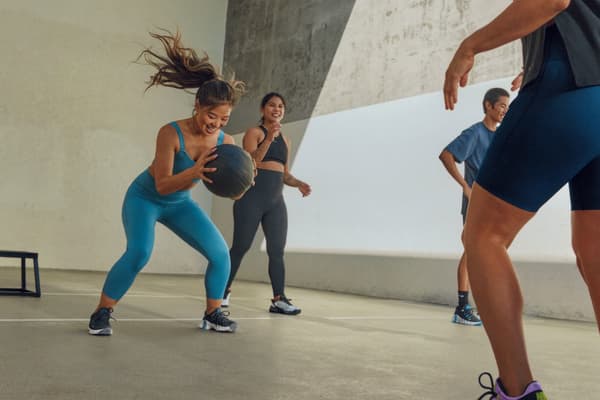
# What To Wear to the Gym: 5 Outfit Essentials
- 
[](https://www.nike.com/jp/en/a/monochrome-outfits)
# Styling Tips
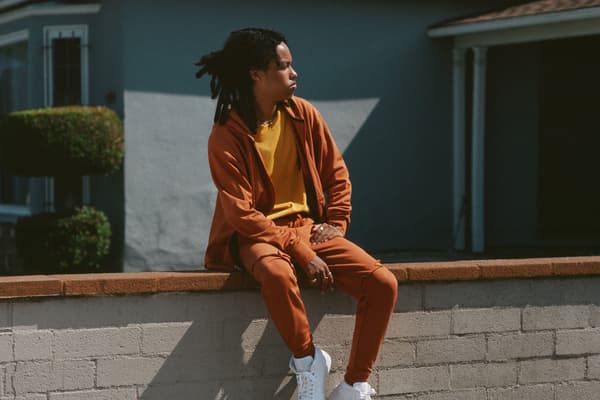
# Shop These Nike Monochrome Outfit Ideas
- 
[](https://www.nike.com/jp/en/a/what-to-wear-in-50-degree-weather)
# Styling Tips
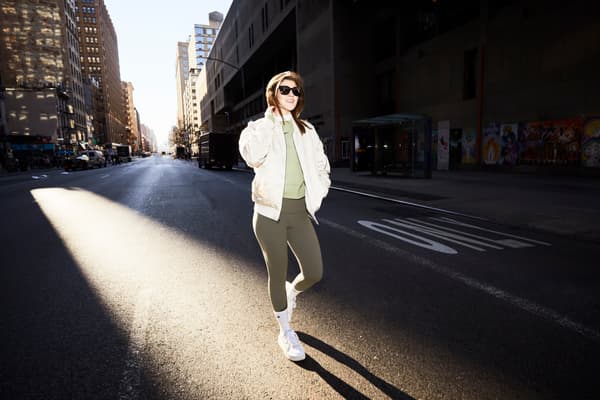
# What to Wear in 50-Degree Weather: 7 Nike Outfit Essentials
- 
[](https://www.nike.com/jp/en/a/gifts-ideas-for-dancers)
# Buying Guide
# The Top 9 Nike Gift Ideas for Dancers
- 
[](https://www.nike.com/jp/en/a/volleyball-outfits)
# Styling Tips
# Spike and Set in Style With These Volleyball Outfits From Nike
Resources
[Membership](https://www.nike.com/jp/en/membership)
[Store Locator](https://www.nike.com/jp/en/retail)
[Order Status](https://www.nike.com/jp/en/orders/details)
[Shoe Finder](https://www.nike.com/jp/en/running/shoe-finder)
[Product Advice](https://www.nike.com/jp/en/product-advice)
Discounts
[Birthday Discount](https://www.nike.com/jp/en/help/a/birthday-promo-terms-jp)
[Student/Teacher Discount](https://www.nike.com/jp/student-discount)
[Disability Discount](https://www.nike.com/jp/help/a/disability-discount)
Help
[Help](https://www.nike.com/jp/en/help)
[Shipping](https://www.nike.com/jp/en/help/a/shipping-delivery-jp)
[Returns](https://www.nike.com/jp/en/help/a/returns-policy-jp)
[Payment Options](https://www.nike.com/jp/en/help/a/payment-options-jp)
[Convenience Store Pickup](https://www.nike.com/jp/en/help/a/convenience-store-pickup)
[Contact](https://www.nike.com/jp/en/help#contact)
Company
[Nike](http://nike.jp/nikebiz/about)
[News (Japanese)](https://nike.jp/nikebiz/)
[Careers](https://careers.nike.com)
[Investors](http://investors.nike.com/)
[Sustainability](https://www.nike.com/jp/en/sustainability)
[Feedback](https://secure.ethicspoint.com/domain/media/ja/gui/56821/index.html)
[Report a Concern](https://secure.ethicspoint.com/domain/media/en/gui/56821/index.html)
## Resources
[Membership](https://www.nike.com/jp/en/membership)
[Store Locator](https://www.nike.com/jp/en/retail)
[Order Status](https://www.nike.com/jp/en/orders/details)
[Shoe Finder](https://www.nike.com/jp/en/running/shoe-finder)
[Product Advice](https://www.nike.com/jp/en/product-advice)
## Discounts
[Birthday Discount](https://www.nike.com/jp/en/help/a/birthday-promo-terms-jp)
[Student/Teacher Discount](https://www.nike.com/jp/student-discount)
[Disability Discount](https://www.nike.com/jp/help/a/disability-discount)
## Help
[Help](https://www.nike.com/jp/en/help)
[Shipping](https://www.nike.com/jp/en/help/a/shipping-delivery-jp)
[Returns](https://www.nike.com/jp/en/help/a/returns-policy-jp)
[Payment Options](https://www.nike.com/jp/en/help/a/payment-options-jp)
[Convenience Store Pickup](https://www.nike.com/jp/en/help/a/convenience-store-pickup)
[Contact](https://www.nike.com/jp/en/help#contact)
## Company
[Nike](http://nike.jp/nikebiz/about)
[News (Japanese)](https://nike.jp/nikebiz/)
[Careers](https://careers.nike.com)
[Investors](http://investors.nike.com/)
[Sustainability](https://www.nike.com/jp/en/sustainability)
[Feedback](https://secure.ethicspoint.com/domain/media/ja/gui/56821/index.html)
[Report a Concern](https://secure.ethicspoint.com/domain/media/en/gui/56821/index.html)
Japan
- © 2026 Nike, Inc. All Rights Reserved.
- Guides
- [Kids](https://www.nike.com/jp/en/kids)
- [Nike Air Max](https://www.nike.com/jp/en/air-max)
- [Nike Air Force 1](https://www.nike.com/jp/en/air-force-1)
- [Nike React](https://www.nike.com/jp/en/react)
- [Nike ZoomX](https://www.nike.com/jp/en/zoomx)
- [Nike FlyEase](https://www.nike.com/jp/en/flyease)
- [NBA Shop](https://www.nike.com/jp/en/nba)
- [Notation Based on the Act on Specified Commercial Transactions / Terms of Sale](https://agreementservice.svs.nike.com/rest/agreement?agreementType=termsOfSale&uxId=default&requestType=redirect)
- [Terms of Use](https://agreementservice.svs.nike.com/jp/ja_jp/rest/agreement?agreementType=termsOfUse&uxId=com.nike&country=JP&language=en&requestType=redirect)
- [Nike Privacy Policy](https://agreementservice.svs.nike.com/jp/ja_jp/rest/agreement?agreementType=privacyPolicy&uxId=com.nike.unite&country=JP&language=en&requestType=redirect)
- [Privacy Settings](https://www.nike.com/jp/en/guest/settings/privacy)
- [Customer Harassment Policy](https://agreementservice.svs.nike.com/rest/agreement?uxId=default&agreementType=customerHarassmentPolicy&requestType=redirect)
## Africa
- [__Egypt__
\
English](https://www.nike.com/eg/)
- [__Morocco__
\
English](https://www.nike.com/ma/en/)
- [__Maroc__
\
Français](https://www.nike.com/ma/)
- [__South Africa__
\
English](https://www.nike.com/za/)
## Americas
- [__Argentina__
\
Español](https://www.nike.com.ar)
- [__Brasil__
\
Português](https://www.nike.com.br)
- [__Canada__
\
English](https://www.nike.com/ca/)
- [__Canada__
\
Français](https://www.nike.com/ca/fr/)
- [__Chile__
\
Español](https://www.nike.cl)
- [__Colombia__
\
Español](https://www.nike.com.co)
- [__México__
\
Español](https://www.nike.com/mx/)
- [__Peru__
\
Español](https://www.nike.com.pe)
- [__Puerto Rico__
\
Español](https://www.nike.com/pr/)
- [__United States__
\
English](https://www.nike.com)
- [__Estados Unidos__
\
Español](https://www.nike.com/us/es/)
- [__Uruguay__
\
Español](https://www.nike.com.uy)
- [__Latin America__
\
Español](https://www.nike.com/xl/)
## Asia Pacific
- [__Australia__
\
English](https://www.nike.com/au/)
- [__中国大陆__
\
简体中文](https://www.nike.com.cn/)
- [__Hong Kong__
\
English](https://www.nike.com.hk/)
- [__香港__
\
繁體中文](https://www.nike.com.hk/)
- [__India__
\
English](https://www.nike.in/)
- [__Indonesia__
\
English](https://www.nike.com/id/)
- [__Japan__
\
English](https://www.nike.com/jp/en/)
- [__日本__
\
日本語](https://www.nike.com/jp/)
- [__대한민국__
\
한국어](https://www.nike.com/kr/)
- [__Malaysia__
\
English](https://www.nike.com/my/)
- [__New Zealand__
\
English](https://www.nike.com/nz/)
- [__Philippines__
\
English](https://www.nike.com/ph/)
- [__Singapore__
\
English](https://www.nike.com/sg/)
- [__台灣__
\
繁體中文](https://www.nike.com/tw/)
- [__ไทย__
\
ภาษาไทย](https://www.nike.com/th/)
- [__Vietnam__
\
English](https://www.nike.com/vn/)
## Europe
- [__Österreich__
\
Deutsch](https://www.nike.com/at/)
- [__Austria__
\
English](https://www.nike.com/at/en/)
- [__Belgien__
\
Deutsch](https://www.nike.com/be/de/)
- [__Belgium__
\
English](https://www.nike.com/be/en/)
- [__Belgique__
\
Français](https://www.nike.com/be/fr/)
- [__België__
\
Nederlands](https://www.nike.com/be/)
- [__Bulgaria__
\
English](https://www.nike.com/bg/)
- [__Croatia__
\
English](https://www.nike.com/hr/)
- [__Česká republika__
\
Čeština](https://www.nike.com/cz/)
- [__Czech Republic__
\
English](https://www.nike.com/cz/en/)
- [__Danmark__
\
Dansk](https://www.nike.com/dk/)
- [__Denmark__
\
English](https://www.nike.com/dk/en/)
- [__Finland__
\
English](https://www.nike.com/fi/)
- [__France__
\
Français](https://www.nike.com/fr/)
- [__Deutschland__
\
Deutsch](https://www.nike.com/de/)
- [__Ελλάδα__
\
ελληνικά](https://www.nike.com/gr/)
- [__Hungary__
\
English](https://www.nike.com/hu/en/)
- [__Magyarország__
\
Magyar](https://www.nike.com/hu/)
- [__Ireland__
\
English](https://www.nike.com/ie/)
- [__Israel__
\
English](https://www.nike.com/il/)
- [__Italia__
\
Italiano](https://www.nike.com/it/)
- [__Luxemburg__
\
Deutsch](https://www.nike.com/lu/de/)
- [__Luxembourg__
\
English](https://www.nike.com/lu/en/)
- [__Luxembourg__
\
Français](https://www.nike.com/lu/)
- [__Netherlands__
\
English](https://www.nike.com/nl/en/)
- [__Nederland__
\
Nederlands](https://www.nike.com/nl/)
- [__Norway__
\
English](https://www.nike.com/no/en/)
- [__Norge__
\
Norsk](https://www.nike.com/no/)
- [__Polska__
\
Polski](https://www.nike.com/pl/)
- [__Portugal__
\
English](https://www.nike.com/pt/en/)
- [__Portugal__
\
Português](https://www.nike.com/pt/)
- [__Romania__
\
English](https://www.nike.com/ro/)
- [__Россия__
\
Русский](https://www.nike.com/ru/)
- [__Slovakia__
\
English](https://www.nike.com/sk/)
- [__Slovenia__
\
English](https://www.nike.com/si/)
- [__Espanya__
\
Català](https://www.nike.com/es/ca/)
- [__España__
\
Español](https://www.nike.com/es/)
- [__Sweden__
\
English](https://www.nike.com/se/en/)
- [__Sverige__
\
Svenska](https://www.nike.com/se/)
- [__Schweiz__
\
Deutsch](https://www.nike.com/ch/)
- [__Switzerland__
\
English](https://www.nike.com/ch/en/)
- [__Suisse__
\
Français](https://www.nike.com/ch/fr/)
- [__Svizzera__
\
Italiano](https://www.nike.com/ch/it/)
- [__Türkiye__
\
Türkçe](https://www.nike.com/tr/)
- [__United Kingdom__
\
English](https://www.nike.com/gb/)
## Middle East
- [__Saudi Arabia__
\
English](https://www.nike.sa/en/home)
- [__المملكة العربية السعودية__
\
العربية](https://www.nike.sa/ar/home)
- [__United Arab Emirates__
\
English](https://www.nike.ae/en/home)
- [__الإمارات العربية المتحدة__
\
العربية](https://www.nike.ae/ar/home)
- [__Qatar__
\
English](https://www.nike.qa/en/home)
- [__دولة قطر__
\
العربية](https://www.nike.qa/ar/home)
- [__Kuwait__
\
English](https://www.nike.com.kw/en/home)
- [__الكويت__
\
العربية](https://www.nike.com.kw/ar/home)