[Skip to main content](https://www.nike.com#skip-to-content)[Accessibility at Nike](https://www.nike.com/accessibility#introduction)
- [](https://www.nike.com/jordan)
- [](https://www.nike.com/w/converse-akmjx)
- [Find a Store](https://www.nike.com/retail)
- [Help](https://www.nike.com/help)
[Help](https://www.nike.com/help)
- [Order Status](https://www.nike.com/orders/details/)
- [Shipping & Delivery](https://www.nike.com/help/a/shipping-delivery)
- [Returns](https://www.nike.com/help/a/returns-policy)
- [Order Cancellation](https://www.nike.com/help/a/change-cancel-order)
- [Size Charts](https://www.nike.com/help/a/size-charts)
- [Contact Us](https://www.nike.com/help/#contact)
- [Membership](https://www.nike.com/membership)
- [Promotions & Discounts](https://www.nike.com/promo-code)
- [Product Advice](https://www.nike.com/product-advice)
- [Send Us Feedback](https://www.nike.com#site-feedback)
- [Join Us](https://www.nike.com/membership)
- [Sign In](https://www.nike.com/register)
[](https://www.nike.com)
- [Men](https://www.nike.com/men)
- [New & Featured](https://www.nike.com/w/new-mens-3n82yznik1)
- [New Arrivals](https://www.nike.com/w/new-mens-3n82yznik1)
- [Best Sellers](https://www.nike.com/w/mens-best-76m50znik1)
- [Latest Drops](https://www.nike.com/w/new-upcoming-drops-k0gk)
- [Nike Sportswear](https://www.nike.com/w/mens-lifestyle-13jrmznik1)
- [SNKRS Launch Calendar](https://www.nike.com/launch)
- [Shop All Sale](https://www.nike.com/w/mens-sale-3yaepznik1)
- [Shoes](https://www.nike.com/w/mens-shoes-nik1zy7ok)
- [All Shoes](https://www.nike.com/w/mens-shoes-nik1zy7ok)
- [Basketball](https://www.nike.com/w/mens-basketball-shoes-3glsmznik1zy7ok)
- [Jordan](https://www.nike.com/w/mens-jordan-shoes-37eefznik1zy7ok)
- [Running](https://www.nike.com/w/mens-running-shoes-37v7jznik1zy7ok)
- [Sandals & Slides](https://www.nike.com/w/mens-sandals-slides-fl76znik1)
- [Sportswear](https://www.nike.com/w/mens-lifestyle-shoes-13jrmznik1zy7ok)
- [Training & Gym](https://www.nike.com/w/mens-training-gym-shoes-58jtoznik1zy7ok)
- [Custom Shoes](https://www.nike.com/w/mens-nike-by-you-shoes-6ealhznik1zy7ok)
- [Clothing](https://www.nike.com/w/mens-clothing-6ymx6znik1)
- [All Clothing](https://www.nike.com/w/mens-clothing-6ymx6znik1)
- [Fleece](https://www.nike.com/w/mens-fleece-4xh6qznik1)
- [Hoodies & Sweatshirts](https://www.nike.com/w/mens-hoodies-and-pullovers-6riveznik1)
- [Jackets & Vests](https://www.nike.com/w/mens-jackets-vests-50r7yznik1)
- [Pants](https://www.nike.com/w/mens-pants-and-tights-2kq19znik1)
- [Shorts](https://www.nike.com/w/mens-shorts-38fphznik1)
- [Swim](https://www.nike.com/w/mens-surf-swimming-3c2djznik1)
- [Tops & Graphic Tees](https://www.nike.com/w/mens-tops-t-shirts-9om13znik1)
- [Accessories](https://www.nike.com/w/mens-accessories-equipment-awwpwznik1)
- [All Accessories](https://www.nike.com/w/mens-accessories-equipment-awwpwznik1)
- [Bags & Backpacks](https://www.nike.com/w/mens-bags-and-backpacks-9xy71znik1)
- [Hats & Headwear](https://www.nike.com/w/mens-hats-visors-and-headbands-52r49znik1)
- [Socks](https://www.nike.com/w/mens-socks-7ny3qznik1)
- [Sunglasses](https://www.nike.com/w/sunglasses-arlyp)
- [Women](https://www.nike.com/women)
- [New & Featured](https://www.nike.com/w/new-womens-3n82yz5e1x6)
- [New Arrivals](https://www.nike.com/w/new-womens-3n82yz5e1x6)
- [Best Sellers](https://www.nike.com/w/womens-best-5e1x6z76m50)
- [Nike Sportswear](https://www.nike.com/w/womens-lifestyle-13jrmz5e1x6)
- [NikeSKIMS](https://www.nike.com/w/nikeskims-b2asd)
- [SNKRS Launch Calendar](https://www.nike.com/launch)
- [Shop All Sale](https://www.nike.com/w/womens-sale-3yaepz5e1x6)
- [Shop by Color](https://www.nike.com/w/womens-matching-sets-clothing-2lukpz5e1x6z6ymx6)
- [Dark Neutrals](https://www.nike.com/w/womens-color-shop-brown-4elb3z5e1x6)
- [Illusion Green](https://www.nike.com/w/womens-color-shop-green-5e1x6z9cm3q)
- [Midnight Blue](https://www.nike.com/w/womens-color-shop-blues-5e1x6z7wk8r)
- [Pink Rise](https://www.nike.com/w/womens-color-shop-fierce-pinks-4x3uaz5e1x6)
- [Warm Neutrals](https://www.nike.com/w/womens-color-shop-new-neutrals-5e1x6z98ed2)
- [Shoes](https://www.nike.com/w/womens-shoes-5e1x6zy7ok)
- [All Shoes](https://www.nike.com/w/womens-shoes-5e1x6zy7ok)
- [Basketball](https://www.nike.com/w/womens-basketball-shoes-3glsmz5e1x6zy7ok)
- [Jordan](https://www.nike.com/w/womens-jordan-shoes-37eefz5e1x6zy7ok)
- [Running](https://www.nike.com/w/womens-running-shoes-37v7jz5e1x6zy7ok)
- [Sandals & Slides](https://www.nike.com/w/womens-sandals-slides-5e1x6zfl76)
- [Sportswear](https://www.nike.com/w/womens-lifestyle-shoes-13jrmz5e1x6zy7ok)
- [Training & Gym](https://www.nike.com/w/womens-training-gym-shoes-58jtoz5e1x6zy7ok)
- [Custom Shoes](https://www.nike.com/w/womens-nike-by-you-shoes-5e1x6z6ealhzy7ok)
- [Clothing](https://www.nike.com/w/womens-clothing-5e1x6z6ymx6)
- [All Clothing](https://www.nike.com/w/womens-clothing-5e1x6z6ymx6)
- [Bras](https://www.nike.com/w/womens-sports-bras-40qgmz5e1x6)
- [Fleece](https://www.nike.com/w/womens-fleece-4xh6qz5e1x6)
- [Hoodies & Sweatshirts](https://www.nike.com/w/womens-hoodies-and-pullovers-5e1x6z6rive)
- [Jackets & Vests](https://www.nike.com/w/womens-jackets-vests-50r7yz5e1x6)
- [Leggings](https://www.nike.com/w/womens-tights-leggings-29sh2z5e1x6)
- [Matching Sets](https://www.nike.com/w/womens-matching-sets-clothing-2lukpz5e1x6z6ymx6)
- [Pants](https://www.nike.com/w/womens-pants-and-tights-2kq19z5e1x6)
- [Shorts](https://www.nike.com/w/womens-shorts-38fphz5e1x6)
- [Skirts & Dresses](https://www.nike.com/w/womens-skirts-and-dresses-5e1x6z8y3qp)
- [Swim](https://www.nike.com/w/womens-surf-swimming-3c2djz5e1x6)
- [Tops & Graphics Tees](https://www.nike.com/w/womens-tops-t-shirts-5e1x6z9om13)
- [Accessories](https://www.nike.com/w/womens-accessories-equipment-5e1x6zawwpw)
- [All Accessories](https://www.nike.com/w/womens-accessories-equipment-5e1x6zawwpw)
- [Bags & Backpacks](https://www.nike.com/w/womens-bags-and-backpacks-5e1x6z9xy71)
- [Hats & Headwear](https://www.nike.com/w/womens-hats-visors-and-headbands-52r49z5e1x6)
- [Socks](https://www.nike.com/w/womens-socks-5e1x6z7ny3q)
- [Sunglasses](https://www.nike.com/w/sunglasses-arlyp)
- [Kids](https://www.nike.com/kids)
- [New & Featured](https://www.nike.com/w/new-kids-3n82yzv4dh)
- [New Arrivals](https://www.nike.com/w/new-kids-3n82yzv4dh)
- [Best Sellers](https://www.nike.com/w/kids-best-76m50zv4dh)
- [Nike Sportswear](https://www.nike.com/w/kids-lifestyle-13jrmzv4dh)
- [Nike x LEGO®](https://www.nike.com/w/nike-lego-collection-58jr)
- [Teens Collection](https://www.nike.com/teens)
- [Shop All Sale](https://www.nike.com/w/kids-sale-3yaepzv4dh)
- [Shoes](https://www.nike.com/w/kids-shoes-v4dhzy7ok)
- [All Shoes](https://www.nike.com/w/kids-shoes-v4dhzy7ok)
- [Teens (13-15 yrs)](https://www.nike.com/w/teen-collection-shoes-6hguezy7ok)
- [Big Kids (7-12 yrs)](https://www.nike.com/w/big-kids-shoes-agibjzv4dhzy7ok)
- [Little Kids (3-7 yrs)](https://www.nike.com/w/little-kids-shoes-6dacezv4dhzy7ok)
- [Baby & Toddler (0-3 yrs)](https://www.nike.com/w/baby-toddler-kids-shoes-2j488zv4dhzy7ok)
- [Clothing](https://www.nike.com/w/kids-clothing-6ymx6zv4dh)
- [All Clothing](https://www.nike.com/w/kids-clothing-6ymx6zv4dh)
- [Teens (13-15 yrs)](https://www.nike.com/w/teen-collection-clothing-6hguez6ymx6)
- [Big Kids (7-12 yrs)](https://www.nike.com/w/big-kids-clothing-6ymx6zagibjzv4dh)
- [Little Kids (3-7 yrs)](https://www.nike.com/w/little-kids-clothing-6dacez6ymx6zv4dh)
- [Baby & Toddler (0-3 yrs)](https://www.nike.com/w/baby-toddler-kids-clothing-2j488z6ymx6zv4dh)
- [Accessories](https://www.nike.com/w/kids-accessories-equipment-awwpwzv4dh)
- [All Accessories](https://www.nike.com/w/kids-accessories-equipment-awwpwzv4dh)
- [Bags & Backpacks](https://www.nike.com/w/kids-bags-and-backpacks-9xy71zv4dh)
- [Hats & Headwear](https://www.nike.com/w/kids-hats-visors-and-headbands-52r49zv4dh)
- [Socks](https://www.nike.com/w/kids-socks-7ny3qzv4dh)
- Shop By Sport
- [Basketball](https://www.nike.com/w/kids-basketball-3glsmzv4dh)
- [Gymnastics](https://www.nike.com/w/gymnastics-dance-inspired-2obuy)
- [Fan Gear](https://www.nike.com/w/kids-fan-gear-b170ozv4dh)
- [Football](https://www.nike.com/w/kids-football-3hj8mzv4dh)
- [Running](https://www.nike.com/w/kids-running-37v7jzv4dh)
- [Soccer](https://www.nike.com/w/kids-soccer-1gdj0zv4dh)
- [Jordan](https://www.nike.com/jordan)
- [New & Featured](https://www.nike.com/w/new-jordan-37eefz3n82y)
- [New Arrivals](https://www.nike.com/w/new-jordan-37eefz3n82y)
- [Best Sellers](https://www.nike.com/w/best-jordan-37eefz76m50)
- [Heat Check](https://www.nike.com/w/jordan-heat-check-1n7xt)
- [Shop All Sale](https://www.nike.com/w/sale-jordan-37eefz3yaep)
- [Men](https://www.nike.com/w/mens-jordan-37eefznik1)
- [Shop All](https://www.nike.com/w/mens-jordan-37eefznik1)
- [Shoes](https://www.nike.com/w/mens-jordan-shoes-37eefznik1zy7ok)
- [AJ1](https://www.nike.com/w/mens-jordan-1-shoes-4fokyznik1zy7ok)
- [Clothing](https://www.nike.com/w/mens-jordan-clothing-37eefz6ymx6znik1)
- [Accessories](https://www.nike.com/w/jordan-accessories-equipment-37eefzawwpw)
- [Women](https://www.nike.com/w/womens-jordan-37eefz5e1x6)
- [Shop All](https://www.nike.com/w/womens-jordan-37eefz5e1x6)
- [Shoes](https://www.nike.com/w/womens-jordan-shoes-37eefz5e1x6zy7ok)
- [AJ1](https://www.nike.com/w/womens-jordan-1-shoes-4fokyz5e1x6zy7ok)
- [Clothing](https://www.nike.com/w/womens-jordan-clothing-37eefz5e1x6z6ymx6)
- [Accessories](https://www.nike.com/w/jordan-accessories-equipment-37eefzawwpw)
- [Kids](https://www.nike.com/w/kids-jordan-37eefzv4dh)
- [Shop All](https://www.nike.com/w/kids-jordan-37eefzv4dh)
- [Shoes](https://www.nike.com/w/kids-jordan-shoes-37eefzv4dhzy7ok)
- [AJ1](https://www.nike.com/w/jordan-1-shoes-1onraz3aqegz4fokyzy7ok)
- [Clothing](https://www.nike.com/w/kids-jordan-clothing-37eefz6ymx6zv4dh)
- [Accessories](https://www.nike.com/w/kids-jordan-accessories-equipment-37eefzawwpwzv4dh)
- Sport
- [Basketball](https://www.nike.com/w/jordan-basketball-37eefz3glsm)
- [Golf](https://www.nike.com/w/jordan-golf-23q9wz37eef)
- [Cleats](https://www.nike.com/w/jordan-cleats-spikes-37eefz5ufbh)
- [NikeSKIMS](https://www.nike.com/nikeskims)
- [All Shoes](https://www.nike.com/w/nikeskims-shoes-b2asdzy7ok)
- [NikeSKIMS Rift](https://www.nike.com/w/nikeskims-shoes-b2asdzy7ok)
- [All Clothing](https://www.nike.com/w/nikeskims-b2asd)
- [Bras](https://www.nike.com/w/nikeskims-sports-bras-40qgmzb2asd)
- [Jackets](https://www.nike.com/w/nikeskims-jackets-vests-50r7yzb2asd)
- [Leggings](https://www.nike.com/w/nikeskims-tights-leggings-29sh2zb2asd)
- [Shorts](https://www.nike.com/w/nikeskims-shorts-38fphzb2asd)
- [Tops and Tanks](https://www.nike.com/w/nikeskims-tops-t-shirts-9om13zb2asd)
- [Accessories](https://www.nike.com/w/nikeskims-accessories-equipment-awwpwzb2asd)
- [Shop by Color](https://www.nike.com/w/nikeskims-b2asd)
- [Carob Brown](https://www.nike.com/w/nikeskims-brown-557pqzb2asd)
- [Citrine](https://www.nike.com/w/nikeskims-yellow-ayp69zb2asd)
- [Ivory](https://www.nike.com/w/nikeskims-white-4g797zb2asd)
- [Obsidian](https://www.nike.com/w/nikeskims-black-90poyzb2asd)
- [Shop by Material](https://www.nike.com/w/nikeskims-b2asd)
- [Airy](https://www.nike.com/w/nikeskims-nikeskims-airy-5c1qqzb2asd)
- [Matte](https://www.nike.com/w/nikeskims-nikeskims-matte-5s3enzb2asd)
- [Performance Cotton Blend](https://www.nike.com/w/nikeskims-performance-cotton-blend-93ehs)
- [Satin Shine](https://www.nike.com/w/nikeskims-nikeskims-satin-shine-97fc5zb2asd)
- [Seamless](https://www.nike.com/w/nikeskims-nikeskims-seamless-6lh4szb2asd)
- [Stretch Knit 2.0](https://www.nike.com/w/nikeskims-nikeskims-stretch-knit-21jwlzb2asd)
- [Stretch Nylon](https://www.nike.com/w/nikeskims-stretch-nylon-7sut9)
- [Studio Stretch](https://www.nike.com/w/nikeskims-studio-stretch-admbq)
- [Weightless](https://www.nike.com/w/nikeskims-nikeskims-weightless-4csx8zb2asd)
- [NikeSKIMS Guides](https://www.nike.com/w/nikeskims-b2asd)
- [NikeSKIMS Lookbook](https://www.nike.com/nikeskims-lookbook)
- [NikeSKIMS Bra Guide](https://www.nike.com/nikeskims-bra-guide)
- [NikeSKIMS Fabric Guide](https://www.nike.com/nikeskims-collection-guide)
- [Sport](https://www.nike.com/gear-up)
- [Basketball](https://www.nike.com/basketball)
- [Shoes](https://www.nike.com/w/basketball-shoes-3glsmzy7ok)
- [Apparel](https://www.nike.com/w/basketball-clothing-3glsmz6ymx6)
- [Equipment](https://www.nike.com/w/basketball-accessories-equipment-3glsmzawwpw)
- [Kobe](https://www.nike.com/w/kobe-pgd6)
- [Jordan](https://www.nike.com/w/jordan-basketball-37eefz3glsm)
- [Court](https://www.nike.com/tennis)
- [Tennis](https://www.nike.com/w/tennis-ed1q)
- [Pickleball](https://www.nike.com/w/pickleball-273vc)
- [Shoes](https://www.nike.com/w/tennis-shoes-ed1qzy7ok)
- [Apparel](https://www.nike.com/w/tennis-clothing-6ymx6zed1q)
- [Equipment](https://www.nike.com/w/tennis-gear-6bvfkzed1q)
- [Soccer](https://www.nike.com/soccer)
- [Cleats](https://www.nike.com/w/soccer-shoes-1gdj0zy7ok)
- [Indoor Footwear](https://www.nike.com/w/indoor-court-soccer-shoes-1gdj0z8yh10zy7ok)
- [Apparel](https://www.nike.com/w/soccer-clothing-1gdj0z6ymx6)
- [Equipment](https://www.nike.com/w/soccer-accessories-equipment-1gdj0zawwpw)
- [Training](https://www.nike.com/training)
- [Prime](https://www.nike.com/w/prime-7frqv)
- [Train](https://www.nike.com/w/training-gym-58jto)
- [Hybrid](https://www.nike.com/w/hybrid-training-8wvhh)
- [Strength](https://www.nike.com/w/strength-training-45gbi)
- [Studio](https://www.nike.com/w/yoga-pilates-59fco)
- [Recover](https://www.nike.com/w/recover-5vfyy)
- [Running](https://www.nike.com/running)
- [Road](https://www.nike.com/w/road-running-shoes-37v7jz8kwewzy7ok)
- [Race](https://www.nike.com/w/road-racing-shoes-9gdhkzy7ok)
- [Trail](https://www.nike.com/w/acg-trail-running-75jcnz93bsd)
- [Track & Field](https://www.nike.com/w/track-field-shoes-7nem3zy7ok)
- [Apparel](https://www.nike.com/w/running-clothing-37v7jz6ymx6)
- [Equipment](https://www.nike.com/w/running-accessories-equipment-37v7jzawwpw)
- [Running Shoe Finder](https://www.nike.com/us/running-shoe-finder)
- [Golf](https://www.nike.com/golf)
- [Shoes](https://www.nike.com/w/golf-shoes-23q9wzy7ok)
- [Apparel](https://www.nike.com/w/golf-clothing-23q9wz6ymx6)
- [Equipment](https://www.nike.com/w/golf-accessories-equipment-23q9wzawwpw)
- More Sports
- [Baseball](https://www.nike.com/baseball)
- [Cheer](https://www.nike.com/w/cheerleading-1cyjk)
- [Football](https://www.nike.com/us-football)
- [Gymnastics](https://www.nike.com/w/gymnastics-dance-inspired-2obuy)
- [Lacrosse](https://www.nike.com/w/lacrosse-4nvmr)
- [Skateboarding](https://www.nike.com/w/skateboarding-8mfrf)
- [Softball](https://www.nike.com/w/softball-2dlpv)
- [Sportswear](https://www.nike.com/sportswear)
- [Swimming](https://www.nike.com/swim)
- [Volleyball](https://www.nike.com/w/volleyball-tc2u)
- [Wrestling](https://www.nike.com/w/wrestling-52dy6)
- [Locker Room](https://www.nike.com/lockerroom)
- [NBA Gear](https://www.nike.com/w/nba-1vofi)
- [NFL Gear](https://www.nike.com/w/nfl-9bklc)
- [MLB Gear](https://www.nike.com/w/mlb-b0g9x)
- [WNBA Gear](https://www.nike.com/w/wnba-6ef6n)
- [NCAA Gear](https://www.nike.com/w/college-teams-2wq2g)
- [NWSL Gear](https://www.nike.com/w/national-womens-soccer-league-5yy3b)
- [Soccer Club Gear](https://www.nike.com/w/soccer-clubs-6fu9q)
- [Federations Gear](https://www.nike.com/w/national-team-soccer-1gdj0zav9de)
- [All Conditions Gear](https://www.nike.com/acg)
- [Trail Run](https://www.nike.com/w/acg-trail-running-75jcnz93bsd)
- [Hike](https://www.nike.com/w/acg-hiking-90dwjz93bsd)
- [Explore](https://www.nike.com/w/acg-explore-1v964z93bsd)
- [Sportswear](https://www.nike.com/sportswear)
Cancel
Cancel
Ask NikeAI
Popular Search Terms
[college fan gear](https://www.nike.com/w?q=college%20fan%20gear&vst=college%20fan%20gear)[hyperice](https://www.nike.com/w?q=hyperice&vst=hyperice)[shoes](https://www.nike.com/w?q=shoes&vst=shoes)[jordan](https://www.nike.com/w?q=jordan&vst=jordan)[air max](https://www.nike.com/w?q=air%20max&vst=air%20max)[soccer cleats](https://www.nike.com/w?q=soccer%20cleats&vst=soccer%20cleats)[basketball shoes](https://www.nike.com/w?q=basketball%20shoes&vst=basketball%20shoes)[kids' shoes](https://www.nike.com/w?q=kids%27%20shoes&vst=kids%27%20shoes)
[](https://www.nike.com/favorites "Favorites")[](https://www.nike.com/cart "Bag Items: 0")
# How to Increase Running Stamina and Endurance
##### Activity
Learn how to increase running stamina and endurance, with tips on mileage, long runs, intervals, strength training, recovery, and nutrition.
Last updated: March 26, 2026
10 min read
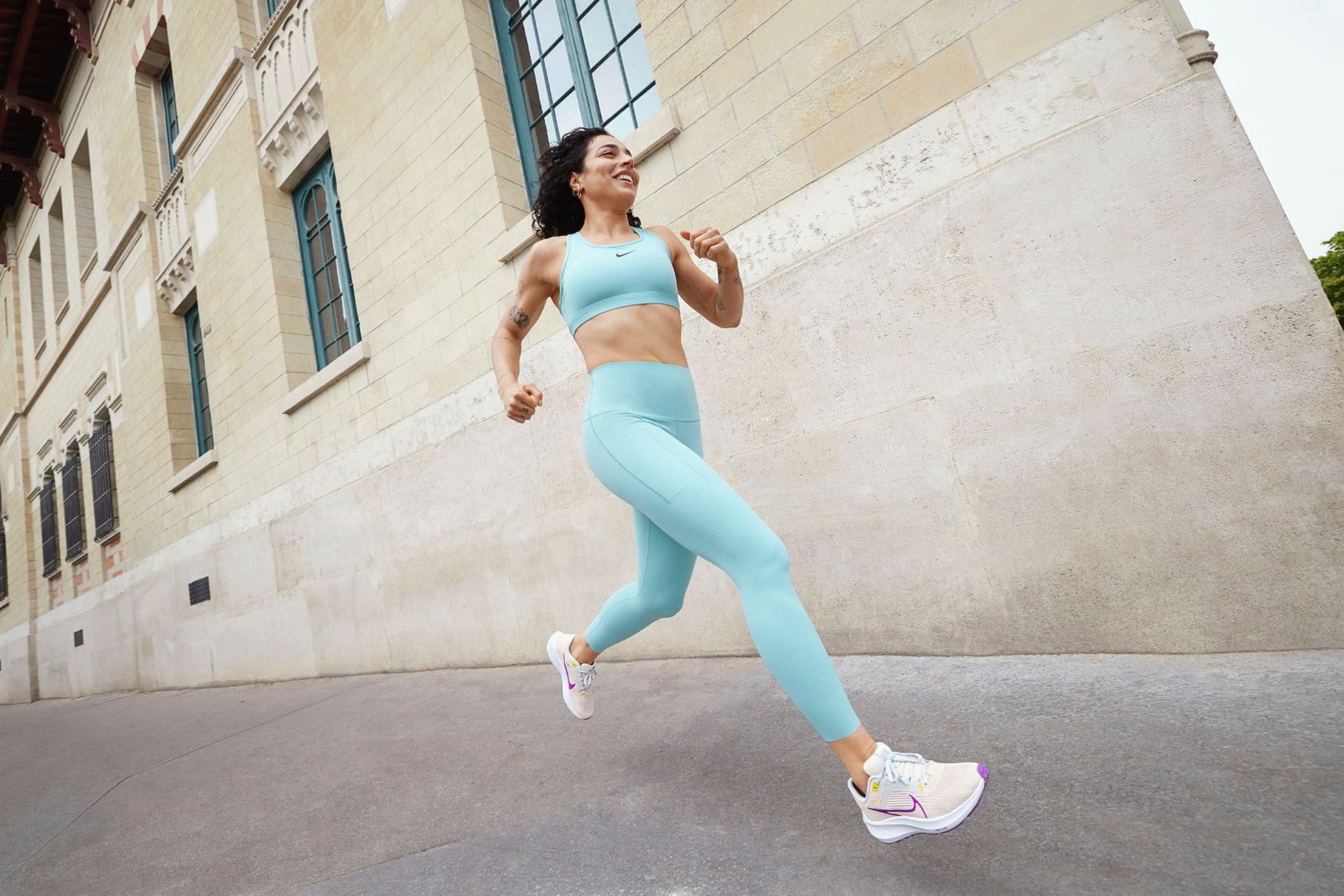
Whether you’re a [beginning runner](https://www.nike.com/a/how-to-start-running) or training for a marathon, running stamina and endurance are valuable assets. In fact, building up stamina and endurance can help you run [longer](https://www.nike.com/a/best-shoes-for-distance-running) without getting tired.
Stamina and endurance can be achieved through a training program that builds a strong aerobic base. Here, we’ll explore how improving your VO2 max and lactate threshold can lead to easier, longer runs. We’ll also offer a training plan to help you get there.
## Quick Takeaways
- Consistency is the best way to build endurance.
- Most runners improve stamina within four to eight weeks of structured training.
- Easy runs should make up about 80% of weekly mileage.
- Intervals and tempo runs improve aerobic capacity and lactate threshold.
- Strength training supports energy demand and reduces fatigue.
## What’s the Difference Between Stamina and Endurance?
Stamina and endurance are terms that both refer to how long you can sustain physical activity. “Commonly, these terms can be used interchangeably,” says Gregory Gordon, MA, C.S.C.S., MATRx, and founder of Exercise Intelligence. “In exercise science, there are distinct differences.”
Gordon explains that, as defined by the American College of Sports Medicine (ACSM), endurance includes both muscular and cardiovascular components. “Both of these categories can be measured objectively,” he explains. “These are quantitative measures.”
## Muscular Endurance
Muscular endurance is the ability of a muscle or muscle group to exert force continuously without producing movement (think plank or wall sits) or repetitively producing movement over a period of time (think running or squats).
## Cardiovascular Endurance
Cardiovascular endurance is the ability of the circulatory and respiratory systems to supply oxygen during sustained physical activity.
Meanwhile, stamina is a term Gordon says is more qualitative, describing it as a “catch-all to describe a combination of an individual's psychological state and their ability to perform endurance activity.”
Sports that require stamina are both physically and mentally demanding, including anything [high-intensity](https://www.nike.com/a/shoes-for-hiit-workouts). That might be football, triathlons, rowing, martial arts, tennis, and basketball. These sports involve bursts of high-intensity exercise followed by active recovery, then going again. Having stamina allows you to keep up, mentally and physically.
Any activity that requires sustained effort over long periods, like marathon running, requires endurance. Your cardiovascular system needs to be efficient at transporting oxygenated blood to your working muscles to maintain movement. The goal in endurance sports isn’t to max out on effort or work at maximum capacity; it’s to be physically capable of persistent activity.
## How to Increase Running Stamina Quickly
There are a few things to consider when you want to increase your running stamina quickly. Focus on having a consistent weekly mileage, primarily doing easy runs, and adding [interval workouts](https://www.nike.com/a/interval-training-running-benefits) to the mix. Gradual progression will help to build your endurance over time and lower the risk of injury.
## How Long Does It Take to Build Running Endurance?
Every person is different, but you will likely see initial improvements in endurance within three to four weeks of beginning a running routine. With consistent training, you should see major gains between eight and 12 weeks.
## The 4-Week Get Started Training Plan
If you’re itching to start running, it’s essential that you start running the right way. You’ll need guidance, motivation, and inspiration when you get to the starting line. Rebuild your fitness gradually with this four-week program from Nike Running Global Head Coach, Coach Bennett.
Coach Bennett is an NRC pioneer who helped build the Nike Run Club from the ground up.
This plan is geared to help you to start running or start to run again. It’s not about minutes or meters. The goal is to enjoy your running and celebrate the gains you make along the way. That way, you keep coming back to the starting line. Coach Bennett will coach, guide, motivate, and inspire you the whole time.
- Four weeks
- Three runs a week (with an optional fourth run)
- Duration-based runs
- Best for: Beginners or anyone starting their running journey again
[Your Get Started Training Plan](https://nikerunclub.sng.link/A6sko/95m6/joya)
## Why Do I Get Tired So Quickly When Running?
Running requires both stamina and endurance because it is physically demanding. That’s why [training is so important](https://www.nike.com/a/run-longer-without-getting-tired). By raising your aerobic endurance, your body is better trained to handle depleted energy and muscle breakdown. Other issues, such as high stress, lack of aerobic base, poor nutrition and hydration, poor sleep, or even overtraining can also lead you to feel more tired when running.
## How Beginners Can Build Running Stamina
If you're a beginner runner, start small with two to three runs per week, allowing your body to adapt. Run at a conversational pace, meaning you can still talk while you’re running. Gradually increase the amount of time you run to build your running stamina and lower the risk of injury.
Follow the 10% rule: Increase your weekly mileage by no more than 10% per week. Small mileage increases help to prevent injury and give your body a chance to adapt without feeling overloaded. So, for example, if you run 10 miles total in one week, the next week, you should run 11 miles maximum.
## The 80/20 Rule in Running
Running hard and fast will improve your speed, but you need a different strategy to build endurance. That’s why many recommend the 80/20 rule for running. That involves doing 80% of your runs at an easy pace and 20% at a higher intensity. This strategy builds endurance and allows for active recovery on slower-paced days.
## What Is VO2 Max and Lactate Threshold?
VO2 max and lactate threshold are common terms used to describe exercise capacity. [VO2 max](https://www.massgeneralbrigham.org/en/patient-care/services-and-specialties/sports-medicine/center-for-sports-performance-and-research/programs-and-services/assessments/vo2-max) measures the maximum amount of oxygen your body can use during exercise, setting the upper limit of your aerobic capacity. [Lactate threshold](https://pmc.ncbi.nlm.nih.gov/articles/PMC10000870/) is the level at which lactate (a byproduct of metabolism and exercise) builds up faster than it can be removed. This measures your ability to maintain a certain pace.
## Purpose of Training Runs
__Easy runs:__ Build aerobic base and endurance
__Long runs:__ Improve stamina and fatigue threshold
__Tempo runs:__ Raise lactate threshold
__Intervals:__ Improve VO2 max and speed endurance
## Does Interval Training Improve Endurance?
Yes, high-intensity interval training ([HIIT](https://www.nike.com/a/benefits-of-hiit-workouts)) is one of the best ways to boost your endurance. A June 2023 [study](https://www.sciencedirect.com/science/article/pii/S2405844023038707) found that interval training improved VO2 max (a marker of endurance) more than endurance training.
[Interval training](https://www.nike.com/a/interval-training-running-benefits) involves alternating between periods of max-effort exercise and rest periods. This might be a hill workout — running up the hill for 30 seconds and walking back down for 60 seconds — or it could be a flat sprint (80% to 95% of your maximum heart rate) with shorter periods of walking or light jogging.
This type of interval workout [strengthens your heart and lungs](https://pmc.ncbi.nlm.nih.gov/articles/PMC10961378/) to handle the demands of longer races. Training at a high intensity will also help your muscles better handle lactic acid, a chemical byproduct of anaerobic respiration, therefore raising your lactate threshold. When lactic acid builds up in the muscles during intense exercise, you might experience a burning sensation, which can be uncomfortable.
## Sample Interval Workout for Beginners
After a short, slow warmup, run fast for 30 seconds, followed by 90 seconds at an easy pace. Repeat this eight to 10 times. If running fast for 30 seconds feels too challenging, start by running fast for 15 seconds and then at a slow pace for 45 seconds. If 30 seconds feels too easy, you can do more reps or stretch the fast pace to 45 seconds.
## The Importance of Aerobic Base Training
Aerobic base training is usually low-intensity training designed to build your endurance. Easy running at a comfortable pace allows you to increase your mileage over time. While running at an easy pace will build up your aerobic base, you can also add in cross-training with other cardio workouts like swimming and cycling to bolster your base.
## How Long Runs Build Stamina
Once you’ve established an aerobic base, you can add in long runs to increase your stamina. These runs build your aerobic capacity and improve fuel efficiency, allowing you to run longer distances more comfortably over time.
It’s important to increase your mileage gradually using the 10% rule. Otherwise, your risk of injury increases. Many running programs will have at least one day of a longer run during the week to improve stamina.
## Recovery Is Crucial for Endurance Development
Training causes microscopic tears in muscle fibers, which leads to a rebuilding process and in turn muscle growth. Recovery allows the body to repair those tears and replenish stores of glycogen, which is your body’s main source of energy.
Focusing on recovery practices like getting seven to nine hours of sleep a night, eating a balanced diet, and taking rest days ultimately supports your training goals, allowing you to push yourself to run even farther over time. Without recovery, you run the risk of injury and burnout.
## Nutrition and Hydration for Endurance Runs
It’s important to fuel your body properly to get the most out of your endurance runs. Be sure to fuel and hydrate correctly. That means aiming for 30 to 60 grams of carbohydrate per hour on runs longer than 60 to 90 minutes. For [longer runs](https://pmc.ncbi.nlm.nih.gov/articles/PMC8336541/), try to drink six to 10 ounces every 10 to 20 minutes to maintain your hydration.
## Fastest Ways to Improve Running Stamina
- Run consistently.
- Increase mileage slowly.
- Add speed intervals.
- Improve recovery.
## What Is Running Economy?
[Running economy](https://pmc.ncbi.nlm.nih.gov/articles/PMC6834697/) is your oxygen consumption at a given running velocity. When you improve your running economy, you’re able to use less oxygen and maintain your pace for longer. [Strength training](https://www.nike.com/a/a-strength-routine-for-runners) should be a part of your training routine regardless of whether you’re an experienced or beginner runner. It’ll improve running economy by increasing power and force production and delaying fatigue as you get stronger.
## Build a Routine:
To build a strength routine, Gordon recommends:
- 2–4 sets of exercise
- 8–15 reps per set
“Control the load at a moderate pace in both directions,” he adds. Some strength training exercises to incorporate specifically for running include:
- Squats
- [Deadlifts](https://www.nike.com/a/deadlift-benefits-and-tips)
- Overhead press
- Lunges
- Bent-over rows
## Set Goals and Stay Motivated With a Nike Training Plan
The easiest way to get moving on a consistent basis is to work toward a goal. And we've got one for whatever feels right for you. Whether you’re new or returning to running, we’ve created a plan for you: Getting Started, 5K, 10K, Half Marathon, and Marathon.
[Find Your Next Training Plan](https://www.nike.com/nrc-app)
## Why Stamina and Endurance Are Important for Running
Running requires stamina and endurance so that you can run for longer without getting tired. That doesn’t mean running a marathon will suddenly be easy. But over time, distances that were once exhausting will become manageable. You’ll be able to run without stopping and maintain a lower heart rate throughout your workout.
Once you’ve mastered endurance, you can increase your pace. Your 5K race pace might become your training pace as your cardiorespiratory system is better able to handle the demands of the work.
__Benefits of Nike Running Shoes for Long-Distance Running__
__Nike Pegasus:__ Lightweight feel and improved energy return
__Nike Vomero:__ Max cushioning for high mileage
__Nike Structure:__ Cushioned, stable ride for long runs
## FAQ:
How long does it take to improve running stamina?
It depends. Running stamina is built through consistently exercising, while also pushing your body’s baseline by increasing your cardiovascular and muscular endurance. This means that it may take between a few weeks and a few months to see improved stamina. Also, improvements are incremental and may not be immediately obvious.
How often should I run to build endurance?
Consistency is important for building running endurance, but not all runners start from the same base point. If you are at a comfortable baseline, plan to run three to five days per week, 20 to 60 minutes at a conversational pace. As you feel more comfortable, you can add longer distance runs or speed work into your routine.
Can beginners do interval training?
Yes, beginners can do interval training. Shorter distances at fast speeds are an important part of building endurance, but the speed and distance are relative to a runner’s ability. That means that beginners can incorporate interval training, but they may start at a slower pace or shorter distance, building their ability over time.
Originally published: March 26, 2026
## Related Stories
- 
[](https://www.nike.com/a/types-of-running-shoes)
# Buying Guide
# The Definitive Guide to Different Types of Running Shoes: Stability, Neutral, and More
- 
[](https://www.nike.com/a/what-muscles-does-running-work)
# Sports & Activity
# What Muscles Does Running Work? Key Muscle Groups and How to Strengthen Them
- 
[](https://www.nike.com/a/nike-melitta-baumeister-special-edition-release-info)
# Product News
# Melitta Baumeister’s Special Edition Nike Vomero and Pegasus Premium: For Those Who Embrace...
- 
[](https://www.nike.com/a/most-comfortable-running-shoes)
# Buying Guide
# The Most Comfortable Running Shoes From Nike (By Cushioning Type and Use)
- 
[](https://www.nike.com/a/running-in-cold-weather)
# Activity
# Running in Cold Weather: Here’s How To Dress, Do a Warm-up Routine and Stay Comfortable
Resources
[Gift Cards](https://www.nike.com/gift-cards)
[Corporate Sales](https://www.nike.com/corporate-sales)
[Find a Store](https://www.nike.com/retail)
[Membership](https://www.nike.com/membership)
[Nike Journal](https://www.nike.com/stories)
[Site Feedback](https://www.nike.com#site-feedback)
Help
[Get Help](https://www.nike.com/help)
[Order Status](https://www.nike.com/orders/details/)
[Shipping and Delivery](https://www.nike.com/help/a/shipping-delivery)
[Returns](https://www.nike.com/help/a/returns-policy)
[Order Cancellation](https://www.nike.com/help/a/change-cancel-order)
[Payment Options](https://www.nike.com/help/a/payment-options)
[Gift Card Balance](https://www.nike.com/orders/gift-card-lookup)
[Contact Us](https://www.nike.com/help/#contact)
Company
[About Nike](https://about.nike.com/en)
[News](http://news.nike.com/)
[Careers](https://jobs.nike.com/)
[Investors](http://investors.nike.com/)
[Purpose](https://purpose.nike.com/)
[Sustainability](https://www.nike.com/sustainability)
[Accessibility](https://www.nike.com/us/en/accessibility/#introduction)
Promotions & Discounts
[Student](https://www.nike.com/help/a/student-discount)
[Military](https://www.nike.com/help/a/military-discount)
[Teacher](https://www.nike.com/help/a/teacher-discount)
[First Responders & Medical Professionals](https://www.nike.com/help/a/first-responder-discount)
[Birthday](https://www.nike.com/help/a/birthday-terms-promo)
[Resources](https://www.nike.com/help)
[Gift Cards](https://www.nike.com/gift-cards)
[Corporate Sales](https://www.nike.com/corporate-sales)
[Find a Store](https://www.nike.com/retail)
[Membership](https://www.nike.com/membership)
[Nike Journal](https://www.nike.com/stories)
[Site Feedback](https://www.nike.com#site-feedback)
[Help](https://www.nike.com/help)
[Get Help](https://www.nike.com/help)
[Order Status](https://www.nike.com/orders/details/)
[Shipping and Delivery](https://www.nike.com/help/a/shipping-delivery)
[Returns](https://www.nike.com/help/a/returns-policy)
[Order Cancellation](https://www.nike.com/help/a/change-cancel-order)
[Payment Options](https://www.nike.com/help/a/payment-options)
[Gift Card Balance](https://www.nike.com/orders/gift-card-lookup)
[Contact Us](https://www.nike.com/help/#contact)
[Company](https://about.nike.com/en)
[About Nike](https://about.nike.com/en)
[News](http://news.nike.com/)
[Careers](https://jobs.nike.com/)
[Investors](http://investors.nike.com/)
[Purpose](https://purpose.nike.com/)
[Sustainability](https://www.nike.com/sustainability)
[Accessibility](https://www.nike.com/us/en/accessibility/#introduction)
[Promotions & Discounts](https://www.nike.com/promo-code)
[Student](https://www.nike.com/help/a/student-discount)
[Military](https://www.nike.com/help/a/military-discount)
[Teacher](https://www.nike.com/help/a/teacher-discount)
[First Responders & Medical Professionals](https://www.nike.com/help/a/first-responder-discount)
[Birthday](https://www.nike.com/help/a/birthday-terms-promo)
United States
- © 2026 Nike, Inc. All Rights Reserved
- Guides
- [Nike Air](https://www.nike.com/air)
- [Nike Air Force 1](https://www.nike.com/air-force-1)
- [Nike Air Max](https://www.nike.com/air-max)
- [Nike FlyEase](https://www.nike.com/flyease)
- [Nike Flyknit](https://www.nike.com/flyknit)
- [Nike Free](https://www.nike.com/free)
- [Nike React](https://www.nike.com/react)
- [Nike Vaporfly](https://www.nike.com/running/vaporfly)
- [Nike ZoomX](https://www.nike.com/zoomx)
- [Space Hippie](https://www.nike.com/space-hippie)
- [Terms of Sale](https://agreementservice.svs.nike.com/us/en_us/rest/agreement?agreementType=termsOfSale&uxId=com.nike.commerce.nikedotcom.web&country=US&language=en&requestType=redirect)
- [Terms of Use](https://agreementservice.svs.nike.com/us/en_us/rest/agreement?agreementType=termsOfUse&uxId=com.nike.commerce.nikedotcom.web&country=US&language=en&requestType=redirect)
- [Nike Privacy Policy](https://agreementservice.svs.nike.com/rest/agreement?agreementType=privacyPolicy&uxId=com.nike.commerce.nikedotcom.web&requestType=redirect)
- [
\
Your Privacy Choices](https://www.nike.com/guest/settings/do-not-share-my-data)
- [CA Supply Chains Act](https://about.nike.com/en/impact-resources/statement-on-forced-labor)
## Africa
- [__Egypt__
\
English](https://www.nike.com/eg/)
- [__Morocco__
\
English](https://www.nike.com/ma/en/)
- [__Maroc__
\
Français](https://www.nike.com/ma/)
- [__South Africa__
\
English](https://www.nike.com/za/)
## Americas
- [__Argentina__
\
Español](https://www.nike.com.ar)
- [__Brasil__
\
Português](https://www.nike.com.br)
- [__Canada__
\
English](https://www.nike.com/ca/)
- [__Canada__
\
Français](https://www.nike.com/ca/fr/)
- [__Chile__
\
Español](https://www.nike.cl)
- [__Colombia__
\
Español](https://www.nike.com.co)
- [__México__
\
Español](https://www.nike.com/mx/)
- [__Peru__
\
Español](https://www.nike.com.pe)
- [__Puerto Rico__
\
Español](https://www.nike.com/pr/)
- [__United States__
\
English](https://www.nike.com)
- [__Estados Unidos__
\
Español](https://www.nike.com/us/es/)
- [__Uruguay__
\
Español](https://www.nike.com.uy)
- [__Latin America__
\
Español](https://www.nike.com/xl/)
## Asia Pacific
- [__Australia__
\
English](https://www.nike.com/au/)
- [__中国大陆__
\
简体中文](https://www.nike.com.cn/)
- [__Hong Kong__
\
English](https://www.nike.com.hk/)
- [__香港__
\
繁體中文](https://www.nike.com.hk/)
- [__India__
\
English](https://www.nike.in/)
- [__Indonesia__
\
English](https://www.nike.com/id/)
- [__Japan__
\
English](https://www.nike.com/jp/en/)
- [__日本__
\
日本語](https://www.nike.com/jp/)
- [__대한민국__
\
한국어](https://www.nike.com/kr/)
- [__Malaysia__
\
English](https://www.nike.com/my/)
- [__New Zealand__
\
English](https://www.nike.com/nz/)
- [__Philippines__
\
English](https://www.nike.com/ph/)
- [__Singapore__
\
English](https://www.nike.com/sg/)
- [__台灣__
\
繁體中文](https://www.nike.com/tw/)
- [__ไทย__
\
ภาษาไทย](https://www.nike.com/th/)
- [__Vietnam__
\
English](https://www.nike.com/vn/)
## Europe
- [__Österreich__
\
Deutsch](https://www.nike.com/at/)
- [__Austria__
\
English](https://www.nike.com/at/en/)
- [__Belgien__
\
Deutsch](https://www.nike.com/be/de/)
- [__Belgium__
\
English](https://www.nike.com/be/en/)
- [__Belgique__
\
Français](https://www.nike.com/be/fr/)
- [__België__
\
Nederlands](https://www.nike.com/be/)
- [__Bulgaria__
\
English](https://www.nike.com/bg/)
- [__Croatia__
\
English](https://www.nike.com/hr/)
- [__Česká republika__
\
Čeština](https://www.nike.com/cz/)
- [__Czech Republic__
\
English](https://www.nike.com/cz/en/)
- [__Danmark__
\
Dansk](https://www.nike.com/dk/)
- [__Denmark__
\
English](https://www.nike.com/dk/en/)
- [__Finland__
\
English](https://www.nike.com/fi/)
- [__France__
\
Français](https://www.nike.com/fr/)
- [__Deutschland__
\
Deutsch](https://www.nike.com/de/)
- [__Ελλάδα__
\
ελληνικά](https://www.nike.com/gr/)
- [__Hungary__
\
English](https://www.nike.com/hu/en/)
- [__Magyarország__
\
Magyar](https://www.nike.com/hu/)
- [__Ireland__
\
English](https://www.nike.com/ie/)
- [__Israel__
\
English](https://www.nike.com/il/)
- [__Italia__
\
Italiano](https://www.nike.com/it/)
- [__Luxemburg__
\
Deutsch](https://www.nike.com/lu/de/)
- [__Luxembourg__
\
English](https://www.nike.com/lu/en/)
- [__Luxembourg__
\
Français](https://www.nike.com/lu/)
- [__Netherlands__
\
English](https://www.nike.com/nl/en/)
- [__Nederland__
\
Nederlands](https://www.nike.com/nl/)
- [__Norway__
\
English](https://www.nike.com/no/en/)
- [__Norge__
\
Norsk](https://www.nike.com/no/)
- [__Polska__
\
Polski](https://www.nike.com/pl/)
- [__Portugal__
\
English](https://www.nike.com/pt/en/)
- [__Portugal__
\
Português](https://www.nike.com/pt/)
- [__Romania__
\
English](https://www.nike.com/ro/)
- [__Россия__
\
Русский](https://www.nike.com/ru/)
- [__Slovakia__
\
English](https://www.nike.com/sk/)
- [__Slovenia__
\
English](https://www.nike.com/si/)
- [__Espanya__
\
Català](https://www.nike.com/es/ca/)
- [__España__
\
Español](https://www.nike.com/es/)
- [__Sweden__
\
English](https://www.nike.com/se/en/)
- [__Sverige__
\
Svenska](https://www.nike.com/se/)
- [__Schweiz__
\
Deutsch](https://www.nike.com/ch/)
- [__Switzerland__
\
English](https://www.nike.com/ch/en/)
- [__Suisse__
\
Français](https://www.nike.com/ch/fr/)
- [__Svizzera__
\
Italiano](https://www.nike.com/ch/it/)
- [__Türkiye__
\
Türkçe](https://www.nike.com/tr/)
- [__United Kingdom__
\
English](https://www.nike.com/gb/)
## Middle East
- [__Saudi Arabia__
\
English](https://www.nike.sa/en/home)
- [__المملكة العربية السعودية__
\
العربية](https://www.nike.sa/ar/home)
- [__United Arab Emirates__
\
English](https://www.nike.ae/en/home)
- [__الإمارات العربية المتحدة__
\
العربية](https://www.nike.ae/ar/home)
- [__Qatar__
\
English](https://www.nike.qa/en/home)
- [__دولة قطر__
\
العربية](https://www.nike.qa/ar/home)
- [__Kuwait__
\
English](https://www.nike.com.kw/en/home)
- [__الكويت__
\
العربية](https://www.nike.com.kw/ar/home)