[Skip to main content](https://www.nike.com#skip-to-content)[Accessibility at Nike](https://www.nike.com/accessibility#introduction)
- [](https://www.nike.com/jordan)
- [](https://www.nike.com/w/converse-akmjx)
- [Find a Store](https://www.nike.com/retail)
- [Help](https://www.nike.com/help)
[Help](https://www.nike.com/help)
- [Order Status](https://www.nike.com/orders/details/)
- [Shipping & Delivery](https://www.nike.com/help/a/shipping-delivery)
- [Returns](https://www.nike.com/help/a/returns-policy)
- [Order Cancellation](https://www.nike.com/help/a/change-cancel-order)
- [Size Charts](https://www.nike.com/help/a/size-charts)
- [Contact Us](https://www.nike.com/help/#contact)
- [Membership](https://www.nike.com/membership)
- [Promotions & Discounts](https://www.nike.com/promo-code)
- [Product Advice](https://www.nike.com/product-advice)
- [Send Us Feedback](https://www.nike.com#site-feedback)
- [Join Us](https://www.nike.com/membership)
- [Sign In](https://www.nike.com/register)
[](https://www.nike.com)
- [Men](https://www.nike.com/men)
- [New & Featured](https://www.nike.com/w/new-mens-3n82yznik1)
- [New Arrivals](https://www.nike.com/w/new-mens-3n82yznik1)
- [Best Sellers](https://www.nike.com/w/mens-best-76m50znik1)
- [Latest Drops](https://www.nike.com/w/new-upcoming-drops-k0gk)
- [Nike Sportswear](https://www.nike.com/w/mens-lifestyle-13jrmznik1)
- [SNKRS Launch Calendar](https://www.nike.com/launch)
- [Shop All Sale](https://www.nike.com/w/mens-sale-3yaepznik1)
- [Shoes](https://www.nike.com/w/mens-shoes-nik1zy7ok)
- [All Shoes](https://www.nike.com/w/mens-shoes-nik1zy7ok)
- [Basketball](https://www.nike.com/w/mens-basketball-shoes-3glsmznik1zy7ok)
- [Jordan](https://www.nike.com/w/mens-jordan-shoes-37eefznik1zy7ok)
- [Running](https://www.nike.com/w/mens-running-shoes-37v7jznik1zy7ok)
- [Sandals & Slides](https://www.nike.com/w/mens-sandals-slides-fl76znik1)
- [Sportswear](https://www.nike.com/w/mens-lifestyle-shoes-13jrmznik1zy7ok)
- [Training & Gym](https://www.nike.com/w/mens-training-gym-shoes-58jtoznik1zy7ok)
- [Custom Shoes](https://www.nike.com/w/mens-nike-by-you-shoes-6ealhznik1zy7ok)
- [Clothing](https://www.nike.com/w/mens-clothing-6ymx6znik1)
- [All Clothing](https://www.nike.com/w/mens-clothing-6ymx6znik1)
- [Fleece](https://www.nike.com/w/mens-fleece-4xh6qznik1)
- [Hoodies & Sweatshirts](https://www.nike.com/w/mens-hoodies-and-pullovers-6riveznik1)
- [Jackets & Vests](https://www.nike.com/w/mens-jackets-vests-50r7yznik1)
- [Pants](https://www.nike.com/w/mens-pants-and-tights-2kq19znik1)
- [Shorts](https://www.nike.com/w/mens-shorts-38fphznik1)
- [Swim](https://www.nike.com/w/mens-surf-swimming-3c2djznik1)
- [Tops & Graphic Tees](https://www.nike.com/w/mens-tops-t-shirts-9om13znik1)
- [Accessories](https://www.nike.com/w/mens-accessories-equipment-awwpwznik1)
- [All Accessories](https://www.nike.com/w/mens-accessories-equipment-awwpwznik1)
- [Bags & Backpacks](https://www.nike.com/w/mens-bags-and-backpacks-9xy71znik1)
- [Hats & Headwear](https://www.nike.com/w/mens-hats-visors-and-headbands-52r49znik1)
- [Socks](https://www.nike.com/w/mens-socks-7ny3qznik1)
- [Sunglasses](https://www.nike.com/w/sunglasses-arlyp)
- [Women](https://www.nike.com/women)
- [New & Featured](https://www.nike.com/w/new-womens-3n82yz5e1x6)
- [New Arrivals](https://www.nike.com/w/new-womens-3n82yz5e1x6)
- [Best Sellers](https://www.nike.com/w/womens-best-5e1x6z76m50)
- [Nike Sportswear](https://www.nike.com/w/womens-lifestyle-13jrmz5e1x6)
- [NikeSKIMS](https://www.nike.com/w/nikeskims-b2asd)
- [SNKRS Launch Calendar](https://www.nike.com/launch)
- [Shop All Sale](https://www.nike.com/w/womens-sale-3yaepz5e1x6)
- [Shop by Color](https://www.nike.com/w/womens-matching-sets-clothing-2lukpz5e1x6z6ymx6)
- [Dark Neutrals](https://www.nike.com/w/womens-color-shop-brown-4elb3z5e1x6)
- [Illusion Green](https://www.nike.com/w/womens-color-shop-green-5e1x6z9cm3q)
- [Midnight Blue](https://www.nike.com/w/womens-color-shop-blues-5e1x6z7wk8r)
- [Pink Rise](https://www.nike.com/w/womens-color-shop-fierce-pinks-4x3uaz5e1x6)
- [Warm Neutrals](https://www.nike.com/w/womens-color-shop-new-neutrals-5e1x6z98ed2)
- [Shoes](https://www.nike.com/w/womens-shoes-5e1x6zy7ok)
- [All Shoes](https://www.nike.com/w/womens-shoes-5e1x6zy7ok)
- [Basketball](https://www.nike.com/w/womens-basketball-shoes-3glsmz5e1x6zy7ok)
- [Jordan](https://www.nike.com/w/womens-jordan-shoes-37eefz5e1x6zy7ok)
- [Running](https://www.nike.com/w/womens-running-shoes-37v7jz5e1x6zy7ok)
- [Sandals & Slides](https://www.nike.com/w/womens-sandals-slides-5e1x6zfl76)
- [Sportswear](https://www.nike.com/w/womens-lifestyle-shoes-13jrmz5e1x6zy7ok)
- [Training & Gym](https://www.nike.com/w/womens-training-gym-shoes-58jtoz5e1x6zy7ok)
- [Custom Shoes](https://www.nike.com/w/womens-nike-by-you-shoes-5e1x6z6ealhzy7ok)
- [Clothing](https://www.nike.com/w/womens-clothing-5e1x6z6ymx6)
- [All Clothing](https://www.nike.com/w/womens-clothing-5e1x6z6ymx6)
- [Bras](https://www.nike.com/w/womens-sports-bras-40qgmz5e1x6)
- [Fleece](https://www.nike.com/w/womens-fleece-4xh6qz5e1x6)
- [Hoodies & Sweatshirts](https://www.nike.com/w/womens-hoodies-and-pullovers-5e1x6z6rive)
- [Jackets & Vests](https://www.nike.com/w/womens-jackets-vests-50r7yz5e1x6)
- [Leggings](https://www.nike.com/w/womens-tights-leggings-29sh2z5e1x6)
- [Matching Sets](https://www.nike.com/w/womens-matching-sets-clothing-2lukpz5e1x6z6ymx6)
- [Pants](https://www.nike.com/w/womens-pants-and-tights-2kq19z5e1x6)
- [Shorts](https://www.nike.com/w/womens-shorts-38fphz5e1x6)
- [Skirts & Dresses](https://www.nike.com/w/womens-skirts-and-dresses-5e1x6z8y3qp)
- [Swim](https://www.nike.com/w/womens-surf-swimming-3c2djz5e1x6)
- [Tops & Graphics Tees](https://www.nike.com/w/womens-tops-t-shirts-5e1x6z9om13)
- [Accessories](https://www.nike.com/w/womens-accessories-equipment-5e1x6zawwpw)
- [All Accessories](https://www.nike.com/w/womens-accessories-equipment-5e1x6zawwpw)
- [Bags & Backpacks](https://www.nike.com/w/womens-bags-and-backpacks-5e1x6z9xy71)
- [Hats & Headwear](https://www.nike.com/w/womens-hats-visors-and-headbands-52r49z5e1x6)
- [Socks](https://www.nike.com/w/womens-socks-5e1x6z7ny3q)
- [Sunglasses](https://www.nike.com/w/sunglasses-arlyp)
- [Kids](https://www.nike.com/kids)
- [New & Featured](https://www.nike.com/w/new-kids-3n82yzv4dh)
- [New Arrivals](https://www.nike.com/w/new-kids-3n82yzv4dh)
- [Best Sellers](https://www.nike.com/w/kids-best-76m50zv4dh)
- [Nike Sportswear](https://www.nike.com/w/kids-lifestyle-13jrmzv4dh)
- [Nike x LEGO®](https://www.nike.com/w/nike-lego-collection-58jr)
- [Teens Collection](https://www.nike.com/teens)
- [Shop All Sale](https://www.nike.com/w/kids-sale-3yaepzv4dh)
- [Shoes](https://www.nike.com/w/kids-shoes-v4dhzy7ok)
- [All Shoes](https://www.nike.com/w/kids-shoes-v4dhzy7ok)
- [Teens (13-15 yrs)](https://www.nike.com/w/teen-collection-shoes-6hguezy7ok)
- [Big Kids (7-12 yrs)](https://www.nike.com/w/big-kids-shoes-agibjzv4dhzy7ok)
- [Little Kids (3-7 yrs)](https://www.nike.com/w/little-kids-shoes-6dacezv4dhzy7ok)
- [Baby & Toddler (0-3 yrs)](https://www.nike.com/w/baby-toddler-kids-shoes-2j488zv4dhzy7ok)
- [Clothing](https://www.nike.com/w/kids-clothing-6ymx6zv4dh)
- [All Clothing](https://www.nike.com/w/kids-clothing-6ymx6zv4dh)
- [Teens (13-15 yrs)](https://www.nike.com/w/teen-collection-clothing-6hguez6ymx6)
- [Big Kids (7-12 yrs)](https://www.nike.com/w/big-kids-clothing-6ymx6zagibjzv4dh)
- [Little Kids (3-7 yrs)](https://www.nike.com/w/little-kids-clothing-6dacez6ymx6zv4dh)
- [Baby & Toddler (0-3 yrs)](https://www.nike.com/w/baby-toddler-kids-clothing-2j488z6ymx6zv4dh)
- [Accessories](https://www.nike.com/w/kids-accessories-equipment-awwpwzv4dh)
- [All Accessories](https://www.nike.com/w/kids-accessories-equipment-awwpwzv4dh)
- [Bags & Backpacks](https://www.nike.com/w/kids-bags-and-backpacks-9xy71zv4dh)
- [Hats & Headwear](https://www.nike.com/w/kids-hats-visors-and-headbands-52r49zv4dh)
- [Socks](https://www.nike.com/w/kids-socks-7ny3qzv4dh)
- Shop By Sport
- [Basketball](https://www.nike.com/w/kids-basketball-3glsmzv4dh)
- [Gymnastics](https://www.nike.com/w/gymnastics-dance-inspired-2obuy)
- [Fan Gear](https://www.nike.com/w/kids-fan-gear-b170ozv4dh)
- [Football](https://www.nike.com/w/kids-football-3hj8mzv4dh)
- [Running](https://www.nike.com/w/kids-running-37v7jzv4dh)
- [Soccer](https://www.nike.com/w/kids-soccer-1gdj0zv4dh)
- [Jordan](https://www.nike.com/jordan)
- [New & Featured](https://www.nike.com/w/new-jordan-37eefz3n82y)
- [New Arrivals](https://www.nike.com/w/new-jordan-37eefz3n82y)
- [Best Sellers](https://www.nike.com/w/best-jordan-37eefz76m50)
- [Heat Check](https://www.nike.com/w/jordan-heat-check-1n7xt)
- [Shop All Sale](https://www.nike.com/w/sale-jordan-37eefz3yaep)
- [Men](https://www.nike.com/w/mens-jordan-37eefznik1)
- [Shop All](https://www.nike.com/w/mens-jordan-37eefznik1)
- [Shoes](https://www.nike.com/w/mens-jordan-shoes-37eefznik1zy7ok)
- [AJ1](https://www.nike.com/w/mens-jordan-1-shoes-4fokyznik1zy7ok)
- [Clothing](https://www.nike.com/w/mens-jordan-clothing-37eefz6ymx6znik1)
- [Accessories](https://www.nike.com/w/jordan-accessories-equipment-37eefzawwpw)
- [Women](https://www.nike.com/w/womens-jordan-37eefz5e1x6)
- [Shop All](https://www.nike.com/w/womens-jordan-37eefz5e1x6)
- [Shoes](https://www.nike.com/w/womens-jordan-shoes-37eefz5e1x6zy7ok)
- [AJ1](https://www.nike.com/w/womens-jordan-1-shoes-4fokyz5e1x6zy7ok)
- [Clothing](https://www.nike.com/w/womens-jordan-clothing-37eefz5e1x6z6ymx6)
- [Accessories](https://www.nike.com/w/jordan-accessories-equipment-37eefzawwpw)
- [Kids](https://www.nike.com/w/kids-jordan-37eefzv4dh)
- [Shop All](https://www.nike.com/w/kids-jordan-37eefzv4dh)
- [Shoes](https://www.nike.com/w/kids-jordan-shoes-37eefzv4dhzy7ok)
- [AJ1](https://www.nike.com/w/jordan-1-shoes-1onraz3aqegz4fokyzy7ok)
- [Clothing](https://www.nike.com/w/kids-jordan-clothing-37eefz6ymx6zv4dh)
- [Accessories](https://www.nike.com/w/kids-jordan-accessories-equipment-37eefzawwpwzv4dh)
- Sport
- [Basketball](https://www.nike.com/w/jordan-basketball-37eefz3glsm)
- [Golf](https://www.nike.com/w/jordan-golf-23q9wz37eef)
- [Cleats](https://www.nike.com/w/jordan-cleats-spikes-37eefz5ufbh)
- [NikeSKIMS](https://www.nike.com/nikeskims)
- [All Shoes](https://www.nike.com/w/nikeskims-shoes-b2asdzy7ok)
- [NikeSKIMS Rift](https://www.nike.com/w/nikeskims-shoes-b2asdzy7ok)
- [All Clothing](https://www.nike.com/w/nikeskims-b2asd)
- [Bras](https://www.nike.com/w/nikeskims-sports-bras-40qgmzb2asd)
- [Jackets](https://www.nike.com/w/nikeskims-jackets-vests-50r7yzb2asd)
- [Leggings](https://www.nike.com/w/nikeskims-tights-leggings-29sh2zb2asd)
- [Shorts](https://www.nike.com/w/nikeskims-shorts-38fphzb2asd)
- [Tops and Tanks](https://www.nike.com/w/nikeskims-tops-t-shirts-9om13zb2asd)
- [Accessories](https://www.nike.com/w/nikeskims-accessories-equipment-awwpwzb2asd)
- [Shop by Color](https://www.nike.com/w/nikeskims-b2asd)
- [Carob Brown](https://www.nike.com/w/nikeskims-brown-557pqzb2asd)
- [Citrine](https://www.nike.com/w/nikeskims-yellow-ayp69zb2asd)
- [Ivory](https://www.nike.com/w/nikeskims-white-4g797zb2asd)
- [Obsidian](https://www.nike.com/w/nikeskims-black-90poyzb2asd)
- [Shop by Material](https://www.nike.com/w/nikeskims-b2asd)
- [Airy](https://www.nike.com/w/nikeskims-nikeskims-airy-5c1qqzb2asd)
- [Matte](https://www.nike.com/w/nikeskims-nikeskims-matte-5s3enzb2asd)
- [Performance Cotton Blend](https://www.nike.com/w/nikeskims-performance-cotton-blend-93ehs)
- [Satin Shine](https://www.nike.com/w/nikeskims-nikeskims-satin-shine-97fc5zb2asd)
- [Seamless](https://www.nike.com/w/nikeskims-nikeskims-seamless-6lh4szb2asd)
- [Stretch Knit 2.0](https://www.nike.com/w/nikeskims-nikeskims-stretch-knit-21jwlzb2asd)
- [Stretch Nylon](https://www.nike.com/w/nikeskims-stretch-nylon-7sut9)
- [Studio Stretch](https://www.nike.com/w/nikeskims-studio-stretch-admbq)
- [Weightless](https://www.nike.com/w/nikeskims-nikeskims-weightless-4csx8zb2asd)
- [NikeSKIMS Guides](https://www.nike.com/w/nikeskims-b2asd)
- [NikeSKIMS Lookbook](https://www.nike.com/nikeskims-lookbook)
- [NikeSKIMS Bra Guide](https://www.nike.com/nikeskims-bra-guide)
- [NikeSKIMS Fabric Guide](https://www.nike.com/nikeskims-collection-guide)
- [Sport](https://www.nike.com/gear-up)
- [Basketball](https://www.nike.com/basketball)
- [Shoes](https://www.nike.com/w/basketball-shoes-3glsmzy7ok)
- [Apparel](https://www.nike.com/w/basketball-clothing-3glsmz6ymx6)
- [Equipment](https://www.nike.com/w/basketball-accessories-equipment-3glsmzawwpw)
- [Kobe](https://www.nike.com/w/kobe-pgd6)
- [Jordan](https://www.nike.com/w/jordan-basketball-37eefz3glsm)
- [Court](https://www.nike.com/tennis)
- [Tennis](https://www.nike.com/w/tennis-ed1q)
- [Pickleball](https://www.nike.com/w/pickleball-273vc)
- [Shoes](https://www.nike.com/w/tennis-shoes-ed1qzy7ok)
- [Apparel](https://www.nike.com/w/tennis-clothing-6ymx6zed1q)
- [Equipment](https://www.nike.com/w/tennis-gear-6bvfkzed1q)
- [Soccer](https://www.nike.com/soccer)
- [Cleats](https://www.nike.com/w/soccer-shoes-1gdj0zy7ok)
- [Indoor Footwear](https://www.nike.com/w/indoor-court-soccer-shoes-1gdj0z8yh10zy7ok)
- [Apparel](https://www.nike.com/w/soccer-clothing-1gdj0z6ymx6)
- [Equipment](https://www.nike.com/w/soccer-accessories-equipment-1gdj0zawwpw)
- [Training](https://www.nike.com/training)
- [Prime](https://www.nike.com/w/prime-7frqv)
- [Train](https://www.nike.com/w/training-gym-58jto)
- [Hybrid](https://www.nike.com/w/hybrid-training-8wvhh)
- [Strength](https://www.nike.com/w/strength-training-45gbi)
- [Studio](https://www.nike.com/w/yoga-pilates-59fco)
- [Recover](https://www.nike.com/w/recover-5vfyy)
- [Running](https://www.nike.com/running)
- [Road](https://www.nike.com/w/road-running-shoes-37v7jz8kwewzy7ok)
- [Race](https://www.nike.com/w/road-racing-shoes-9gdhkzy7ok)
- [Trail](https://www.nike.com/w/acg-trail-running-75jcnz93bsd)
- [Track & Field](https://www.nike.com/w/track-field-shoes-7nem3zy7ok)
- [Apparel](https://www.nike.com/w/running-clothing-37v7jz6ymx6)
- [Equipment](https://www.nike.com/w/running-accessories-equipment-37v7jzawwpw)
- [Running Shoe Finder](https://www.nike.com/us/running-shoe-finder)
- [Golf](https://www.nike.com/golf)
- [Shoes](https://www.nike.com/w/golf-shoes-23q9wzy7ok)
- [Apparel](https://www.nike.com/w/golf-clothing-23q9wz6ymx6)
- [Equipment](https://www.nike.com/w/golf-accessories-equipment-23q9wzawwpw)
- More Sports
- [Baseball](https://www.nike.com/baseball)
- [Cheer](https://www.nike.com/w/cheerleading-1cyjk)
- [Football](https://www.nike.com/us-football)
- [Gymnastics](https://www.nike.com/w/gymnastics-dance-inspired-2obuy)
- [Lacrosse](https://www.nike.com/w/lacrosse-4nvmr)
- [Skateboarding](https://www.nike.com/w/skateboarding-8mfrf)
- [Softball](https://www.nike.com/w/softball-2dlpv)
- [Sportswear](https://www.nike.com/sportswear)
- [Swimming](https://www.nike.com/swim)
- [Volleyball](https://www.nike.com/w/volleyball-tc2u)
- [Wrestling](https://www.nike.com/w/wrestling-52dy6)
- [Locker Room](https://www.nike.com/lockerroom)
- [NBA Gear](https://www.nike.com/w/nba-1vofi)
- [NFL Gear](https://www.nike.com/w/nfl-9bklc)
- [MLB Gear](https://www.nike.com/w/mlb-b0g9x)
- [WNBA Gear](https://www.nike.com/w/wnba-6ef6n)
- [NCAA Gear](https://www.nike.com/w/college-teams-2wq2g)
- [NWSL Gear](https://www.nike.com/w/national-womens-soccer-league-5yy3b)
- [Soccer Club Gear](https://www.nike.com/w/soccer-clubs-6fu9q)
- [Federations Gear](https://www.nike.com/w/national-team-soccer-1gdj0zav9de)
- [All Conditions Gear](https://www.nike.com/acg)
- [Trail Run](https://www.nike.com/w/acg-trail-running-75jcnz93bsd)
- [Hike](https://www.nike.com/w/acg-hiking-90dwjz93bsd)
- [Explore](https://www.nike.com/w/acg-explore-1v964z93bsd)
- [Sportswear](https://www.nike.com/sportswear)
Cancel
Cancel
Ask NikeAI
Popular Search Terms
[caitlin 1](https://www.nike.com/w?q=caitlin%201&vst=caitlin%201)[air force 1](https://www.nike.com/w?q=air%20force%201&vst=air%20force%201)[shoes](https://www.nike.com/w?q=shoes&vst=shoes)[jordan](https://www.nike.com/w?q=jordan&vst=jordan)[soccer cleats](https://www.nike.com/w?q=soccer%20cleats&vst=soccer%20cleats)[air max](https://www.nike.com/w?q=air%20max&vst=air%20max)[basketball shoes](https://www.nike.com/w?q=basketball%20shoes&vst=basketball%20shoes)[socks](https://www.nike.com/w?q=socks&vst=socks)
[](https://www.nike.com/favorites "Favorites")[](https://www.nike.com/cart "Bag Items: 0")
# Is High Intensity Interval Training (HIIT) Overrated?
##### Sports & Activity
The training method focuses on short, intense bursts of exercise followed by active recovery. Here’s how it can — and cannot — benefit your health and athletic performance.
Last updated: December 15, 2025
15 min read

Despite being far from new or cutting-edge, high-intensity interval training (HIIT) is super popular — and for good reason: It’s efficient, accessible and [research](https://pmc.ncbi.nlm.nih.gov/articles/PMC8294064/) shows people tend to find it more engaging than other forms of exercise — especially steady-state cardio. (Think biking at a continuous speed.)
The training protocol involves bouts of high-intensity efforts (like sprints), followed by short periods of active recovery (like a walk or marching in place) that allow your heart rate to come back down before it spikes again. Blocks of work and recovery are often repeated several times, with some folks opting to stick to just two exercises for their entire workout and others choosing to mix it up with a variety of movements.
__Related:__ [What Is a HIIT Workout, Anyway?](https://www.nike.com/a/what-is-hiit-workout)
You may have seen HIIT workout classes at your local gym and understand the gist of what it involves, and you may have some questions — chief among them: Is HIIT even worth your time?
Here, we dig into the pros and cons of HIIT workouts, break down who they can benefit and show you how to put a HIIT workout together if you decide you’d like to give it a go.
## HIIT at a Glance
- __Duration:__ 10 to 25 minutes
- __Intensity:__ The work periods will push you to 80 to 95 percent of your maximal heart rate (MHR), while the recovery periods bring your heart rate down to 40 to 60 percent
- __Benefits:__ Efficient, fat oxidation (aka fat loss), blood sugar control, preserves lean muscle, improved heart health and VO₂ max
- __Ideal for:__ Busy professionals with limited exercise time, endurance athletes who want to build power and speed, and people looking to lose weight
## Shop Nike Training & Gym Pants and Tights
[View All](https://www.nike.com/w/training-gym-pants-and-tights-2kq19z58jto)
- [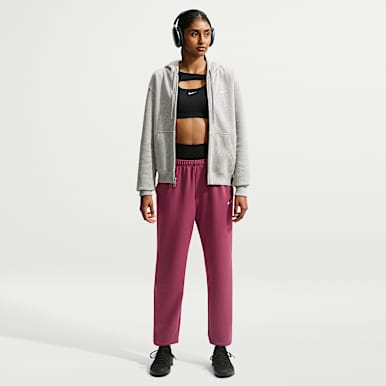
\
Nike Studio Fleece Sport
\
Women's Dri-FIT Mid-Rise Pants
\
__$70__](https://www.nike.com/t/studio-fleece-sport-womens-dri-fit-mid-rise-pants-o8yEsZRa/IO0435-654)
- [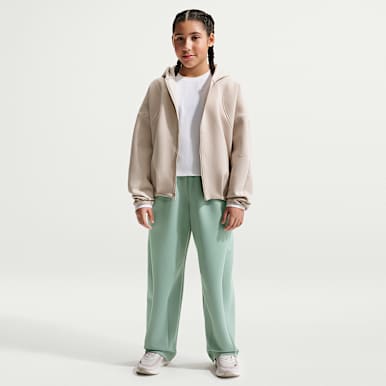
\
Nike Mavn
\
Girls' Therma-FIT High-Waisted Knit Pants
\
__$76.97__
__$90__](https://www.nike.com/t/mavn-girls-therma-fit-high-waisted-knit-pants-5k98Cz8y/IM1764-006)
- [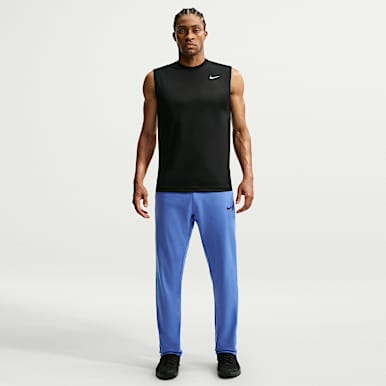
\
Nike Therma
\
Men's Therma-FIT Open Hem Fitness Pants
\
__$70__](https://www.nike.com/t/therma-mens-therma-fit-open-hem-fitness-pants-DbPGBc/DQ4856-411)
- [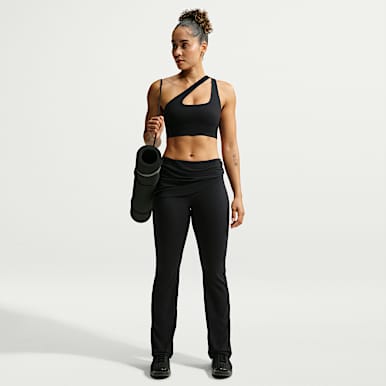
\
Nike Zenvy
\
Women's Dri-FIT Mid-Rise Pants with Layered Skirt
\
__$115__](https://www.nike.com/t/zenvy-womens-dri-fit-mid-rise-pants-with-layered-skirt-wFrK3nAO/IX7281-010)
- [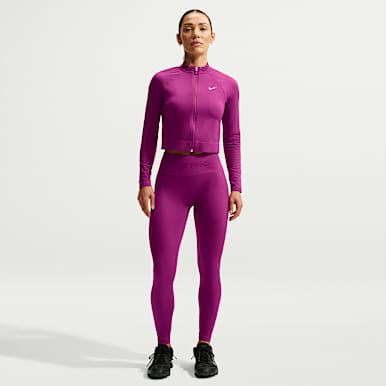
\
Nike Pro Seamless
\
Women's High-Waisted 7/8 Leggings
\
__$70__](https://www.nike.com/t/pro-seamless-womens-high-waisted-7-8-leggings-V2o93GCe/IF1208-630)
- [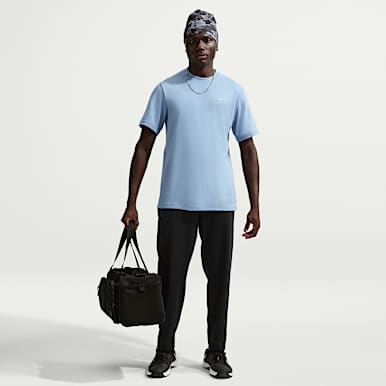
\
Nike Primary NanoKnit
\
Men's Dri-FIT UV Protection Performance Pants
\
__$90__](https://www.nike.com/t/primary-nanoknit-mens-dri-fit-uv-protection-performance-pants-jdfuCuaR/II1306-010)
- [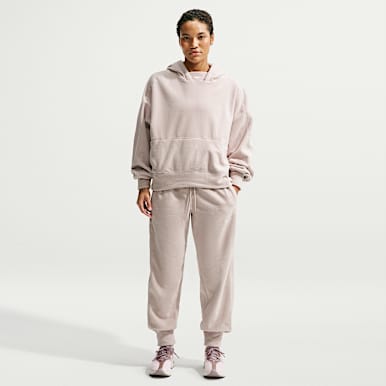
\
Nike One
\
Women's Therma-FIT Mid-Rise Fleece Joggers
\
__$85__](https://www.nike.com/t/one-womens-therma-fit-mid-rise-fleece-joggers-T1mBSlYU/IO1050-236)
- [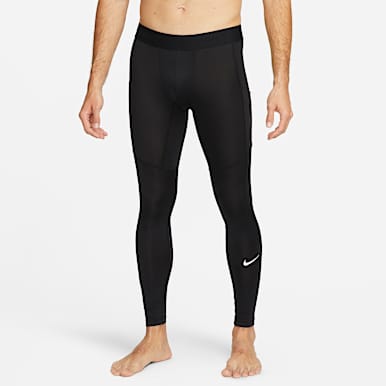
\
Nike Pro
\
Men's Dri-FIT Fitness Tights
\
__$27.97__
__$37__](https://www.nike.com/t/pro-mens-dri-fit-fitness-tights-5sfVn9/FB7952-010)
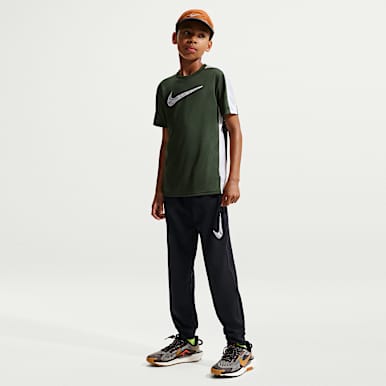
- [
\
Nike Multi
\
Big Kids' (Boys') Knit Training Pants
\
__$39.97__
__$45__](https://www.nike.com/t/multi-big-kids-boys-knit-training-pants-NgML7DU3/IF2429-010)
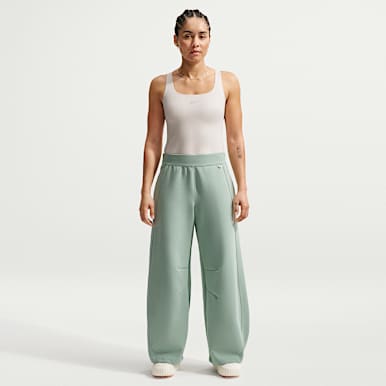
- [
\
Nike 24.7 ImpossiblySoft
\
Women's High-Waisted Wide-Leg Pants
\
__$79.97__
__$115__](https://www.nike.com/t/24-7-impossiblysoft-womens-high-waisted-wide-leg-pants-FPbp6H9H/IR1932-006)
## How To Do a HIIT Workout
Before lacing up your sneakers to start a HIIT workout, there are a few things to figure out, including your work-to-rest ratio, total workout time and exercises. Here’s how to piece it all together.
## Determine the Structure of Your Workout
Alternating between sprint intervals and active recovery is the foundation of a HIIT workout, says New Jersey-based trainer [Tina Tang](https://www.ironstrongfitness.net/), CPT, NASM. “Because the effort is so high, sessions are short and should only last between 10 and 25 minutes.”
New York City-based trainer [Vanessa Liu](https://www.gutstogains.com/), NASM, CPT, agrees and says that, generally speaking, the “work” intervals should last anywhere from 20 to 40 seconds, while the recovery periods should last 20 to 60 seconds. However, to make HIIT workouts scalable, she recommends thinking in terms of ratios rather than exact times.
“For beginners and intermediate athletes, I recommend a 1:2 or 1:3 work-to-rest ratio. So if you go hard for 20 seconds, you recover for 40 to 60 seconds. For more advanced athletes, I recommend a 2:1 ratio — for example, 40 seconds of intensity followed by 20 seconds of recovery,” she says.
You should repeat this pattern of back-to-back work and recovery exercises until you’ve reached your desired total workout time. If you’re newer to HIIT, aim to work out for about 10 minutes, and add more rounds as you get more conditioned and need an extra challenge. A workout-specific timer (like this one from [Gymboss](https://www.amazon.com/Gymboss-Interval-Timer-Stopwatch-SOFTCOAT/dp/B00CO8HO6O)) or an app like [Seconds](https://apps.apple.com/us/app/seconds-interval-timer/id475816966) can help you keep track of each circuit, says Liu.
## Choose Your Exercises
When building a HIIT workout, there are two different “buckets” of exercises you should be thinking about. Moves you can go all out on, and easier ones you can slot in during your recovery blocks. Within these two categories, there is a fair amount of flexibility. “HIIT isn’t about the specific exercise — it’s about working near your max effort for short bursts with recovery in between. Essentially, anything can be part of a HIIT workout if it gets your heart rate up quickly and challenges you without risking your form. This can include cardio, bodyweight and resistance exercises,” Tang explains.
Liu agrees, noting that activities like incline walking, stair climbing or rowing are all great because they can generally be performed safely as athletes fatigue. “I recommend avoiding anything super technical or risky like heavy barbell lifts or advanced plyometrics,” she adds. “Once you’re fatigued, the margin for error gets smaller, and that’s when form can break down, and injuries can happen. HIIT works best with movements you can push hard and do safely,” Liu says.
The rest period is meant for active recovery. “An analogy I like to use is it’s like turning the volume down, not muting the sound. You’re keeping your body ‘on’ but easing the intensity so you can recover,” says Liu. Practically speaking, this means you don’t stop moving, but you are doing slower, more controlled movements that help your heart rate come down, she says. “For example, if you do 20 seconds of high knees, your 40 seconds of recovery might be marching in place,” she says.
Tang and Liu recommend the following exercises for your work and recovery intervals:
__High-Intensity Intervals__
- Sprinting
- Jumping rope
- Stationary biking
- Rowing
- SkiErg
- Jumping movements like squat jumps and burpees
- Strength training exercises (using dumbbells, kettlebells, etc.)
- Plank jacks
- Plank shoulder taps
- Mountain climbers
__Recovery Intervals__
- Marching in place
- Light pedaling on a bike
- Slowly rowing on a rower
- Standing mobility exercises like hip or shoulder circles
- Walking around the gym
- Side steps
- Butt kicks
- Bodyweight squats
- Lateral shuffle
## Example HIIT Workouts
All HIIT workouts have work and recovery blocks, but there are a few different ways to piece the moves together; they’re highly scalable and customizable. “What matters in HIIT is intensity, not the number of movements,” says Tang. “The 'one exercise and rest' format is the simplest version of HIIT, but not the only one. A lot of people also do multi-exercise HIIT circuits because it keeps things interesting and avoids overworking one muscle group,” she says.
Which is right for you? If you plan on doing, say, a 10-minute workout, it makes sense to stick to just one or two high-intensity moves and a recovery exercise or two. However, if you plan to work out longer, it might make sense to pick three to four heart-thumping moves and three to four recovery moves to mix things up and stay engaged, Liu says. In practice, this might look a bit like one of these workouts.
## Cardio HIIT Workout
__Equipment needed:__ Assault bike or treadmill
__Work:__ Sprint
__Active Recovery:__ Easy pedaling or walking
__Rounds:__ 10
__Total time:__ 10 minutes (assuming 20-second sprints and 40 seconds of recovery)
Tang says this format allows athletes to go all-out during the high-intensity blocks while providing adequate time for rest. “Short sprint intervals like these are one of the most research-supported forms of HIIT,” says Tang. “They're great for people who want to get a lot of benefit without a long workout.”
If you’re a beginner, doing HIIT on a cardio machine, such as a treadmill or bike, can also be helpful. “Because the movement is controlled, consistent, and measurable, it’s easier to know how hard you’re working,” Tang points out.
## Weight and Cardio HIIT Workout
__Equipment needed:__ Dumbbells and a treadmill
__Set 1: Upper Body__
__Work:__ Dumbbell bent-over rows
__Active Recovery:__ Marching in place
__Work:__ Push-ups or incline push-ups
__Active Recovery:__ Marching in place
__Rounds:__ 3
__Set 2: Lower Body__
__Work:__ Goblet squat
__Active Recovery:__ Glute bridge hold
__Work:__ Dumbbell deadlifts
__Active Recovery:__ Slow-paced lateral bodyweight lunges
__Rounds:__ 3
__Set 3: Cardio__
__Work:__ Walk on a treadmill with an incline of 10 percent or greater
__Active Recovery:__ Slow walking on a treadmill at an incline of 1 percent
__Rounds:__ 4
__Total time:__ 10 minutes (assuming 30-second sprints and 30 seconds of recovery)
“Mixing cardio and strength in a HIIT circuit is a great way to get more done in less time. The cardio spikes your heart rate, while the strength moves help you maintain — or even build — muscle,” says Tang.
When choosing which weights to use, Tang recommends selecting weights based on your rate of perceived exertion (RPE). The exercises should feel like a seven out of 10 on the RPE scale. “It should be challenging, but you can still move with control,” Tang says. “If your technique starts to fall apart or the weight slows you down so much that you can’t move explosively, it’s too heavy for a HIIT setting.”
## No Equipment HIIT Workout
__Work:__ High knees
__Active Recovery:__ March in place
__Work:__ Mountain climbers
__Active Recovery:__ Modified plank hold (knees on ground)
__Rounds:__ 5
__Total time:__ 10 minutes total (assuming 20 seconds of work and 40 seconds of recovery)
“No equipment workouts are great for beginners, travelers and anyone who needs something simple and quick. You can do them in your living room, a hotel room or a park,” says Liu. “The most accessible workout is the one you can actually stick to — which makes these perfect for anyone with an unpredictable schedule.”
Related: [3 Simple Tips for an At-Home HIIT Workout](https://www.nike.com/a/at-home-hiit-workouts)
## What Are the Benefits of HIIT?
During HIIT workouts, your body reaches its anaerobic threshold. This happens when the body doesn’t have time to bring in enough oxygen to keep up with what it’s being asked to do. When this happens, your fast-twitch muscles draw on the energy stored in your muscles and liver called glycogen. This is valuable because it allows your body to produce instant power for sprinting and jumping. “If your muscles had to wait for oxygen first, you wouldn’t be able to do any quick, explosive movements,” Liu explains.
When the body draws on glycogen for energy, it triggers an uncomfortable burning sensation that signals the brain to slow down and take a break. That’s why you alternate between work and rest with high-intensity interval training. During the recovery period, your heart rate comes down just enough so you can repeat the next burst with good form. That back-and-forth between hard effort and recovery yields several benefits.
“Broadly speaking, HIIT is beneficial because it simultaneously challenges both your cardiovascular and muscular systems,” says Liu. “As a result, it improves how well your body can use oxygen, how quickly you can produce power, and how efficiently you recover — all in a short workout.” These perks are just the tip of the iceberg, though.
## 1. It Temporarily Boosts Metabolism Post-Workout
After a HIIT workout, your body experiences an increase in oxygen uptake known as excess post-exercise oxygen consumption (EPOC). This elevated oxygen demand helps do everything from lowering your heart rate and repairing muscle to replenishing energy stores and aiding recovery, says Liu. All of this requires energy in the form of calories and fat, which gives your metabolic rate a slight boost even after you’re done working out.
“This is called the 'afterburn effect.’ It’s real, but it’s short-term and not as dramatic as it’s sometimes made out to be," says Liu. “Think of it as a small, temporary metabolic bump.” (Some [studies show](https://www.nature.com/articles/s41598-024-59893-9) this impact lasts only about 10 minutes after exercise.) This is a perk you don’t get from a steady-state cardio workout, such as a run, a bike ride or a row.
## 2. It Preserves Lean Muscle and Encourages Fat Oxidation
HIIT isn’t the best method for building muscle because the goal is to go quickly to spike your heart rate, not move heavy weights. However, it can help you hold onto muscle, especially when compared to other forms of cardio. This is important because the more muscle you have, the more calories you'll burn while at rest.
“Cardio-style HIIT can help preserve muscle. The high intensity of these intervals recruits fast-twitch muscle fibers and triggers human growth hormone (HGH), which helps muscles stay strong,” explains Tang. Cardio, on the other hand, prolongs muscle stress, which can increase the likelihood of muscle loss over time, Tang adds.
## 3. It Strengthens the Heart
HIIT pushes the upper limits of what your heart can do — which may sound a little scary, but is actually a good thing.
“When you work at a higher intensity, you’re training your heart to handle stress and then recover from it, which is one of the most important indicators of long-term cardiovascular health,” Tang says. “If we never challenge that capacity, it naturally declines with age. HIIT gives your heart the stimulus it needs to stay capable.”
Putting your heart through this type of cardiovascular challenge has been shown to lower [blood pressure](https://www.frontiersin.org/journals/physiology/articles/10.3389/fphys.2025.1636792/full) and [resting heart rate](https://www.frontiersin.org/journals/physiology/articles/10.3389/fphys.2025.1636792/full) in obese adults, which in turn lowers the risk of heart attack and heart failure. When the heart can pump blood throughout the body more easily, it experiences less wear and tear and can function better for longer.
## 4. It Improves Endurance and VO₂ Max
VO₂ max (sometimes called oxygen uptake) is a measure of the volume of oxygen your body can take in and use during maximal exertion. When you improve your VO₂ max, you can work out at a higher intensity with greater ease, improving your overall endurance.
“Because you’re working near your max, HIIT is one of the most effective ways to raise VO₂ max in a relatively short amount of time,” says Tang. A [randomized controlled trial](https://www.ncbi.nlm.nih.gov/pubmed/27368057) published in 2016 found that after just five weeks of HIIT, participants improved their VO₂ max by 9 percent, which may not sound like much, but can actually make a big difference in athletic performance. For example, it can help you run faster and more efficiently, with [research](https://books.google.com/books?id=ZYiLDQAAQBAJ&pg=PA50&lpg=PA50&dq=Research%20has%20shown%20that%20VO2max%20accounts%20for%20roughly%2070%20percent%20of%20the%20variation%20in%20race%20performances%20among%20individual%20runners.&source=bl&ots=JTdDoVhL4Q&sig=ACfU3U0tasnKCNndHzPhSslt66NvouVBfQ&hl=en&sa=X&ved=2ahUKEwi1wbrKmJjzAhUYgp4KHScvCbIQ6AF6BAgjEAM#v=onepage&q=Research%20has%20shown%20that%20VO2max%20accounts%20for%20roughly%2070%20percent%20of%20the%20variation%20in%20race%20performances%20among%20individual%20runners.&f=false) showing that your VO₂ max accounts for 70 percent of the variation in race performance.
## 5. It Can Lower Blood Sugar
Another perk of HIIT is its impact on blood sugar levels in people with pre-diabetes and [type 2 diabetes](https://pubmed.ncbi.nlm.nih.gov/38978627/).
In a [12-week study](https://diabetesjournals.org/spectrum/article/32/2/125/32476/Effects-of-Different-Dosages-of-Interval-Training) of people with prediabetes, researchers found that when combined with a reduced-calorie diet, performing HIIT workouts three times a week for 12 weeks reduced fasting blood glucose and A1C levels. The study authors noted that this may prevent the progression of pre-diabetes to type 2 diabetes.
How does it work? “HIIT has been shown to improve insulin sensitivity, which means your body uses glucose more efficiently. For people with diabetes or prediabetes, this is important because their bodies either don’t make enough insulin or don’t respond to insulin well — so glucose (the sugar from the foods you eat) stays in the bloodstream instead of moving into the muscles for energy,” explains Tang. “When you do HIIT, your muscles become more responsive to insulin, and they also pull in more glucose on their own during and after the workout. That helps lower blood sugar and keeps it more stable, even hours after the session is over.”
## 6. It’s Really Efficient
One of the key benefits of HIIT is its time-efficiency. If you can only commit to 15-minute workouts, it’s a great option. You’ll reap many of the same health benefits as you would in a longer, less intense workout, [research](https://pmc.ncbi.nlm.nih.gov/articles/PMC8294064/) shows.
“You can get meaningful cardiovascular benefits in short sessions because the effort is so high,” explains Tang. The payout is similar for weight-related markers as well. For example, one [review](https://pubmed.ncbi.nlm.nih.gov/28401638/) of 13 studies that included a total of 424 overweight and obese adults found that both HIIT and moderate-intensity exercise reduced body fat and waist circumference at comparable amounts, but HIIT required roughly 40 percent less exercise time.
HIIT is also an efficient way to improve your athletic performance. “Regularly pushing near your anaerobic threshold trains your body to tolerate and clear fatigue better. Over time, you can work harder with less effort,” Liu explains.
## Shop Nike Training & Gym Shoes
[View All](https://www.nike.com/w/training-gym-shoes-58jtozy7ok)
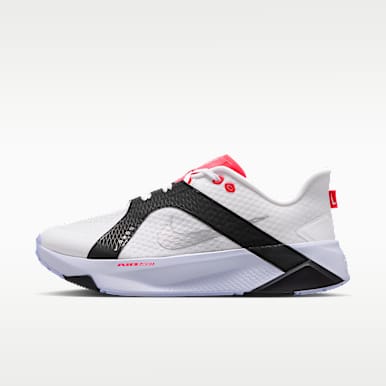
- [
\
Nike Hybrid RN
\
Men's Training Shoes
\
__$145__](https://www.nike.com/t/hybrid-rn-mens-training-shoes-QL2955lw/IV5066-101)
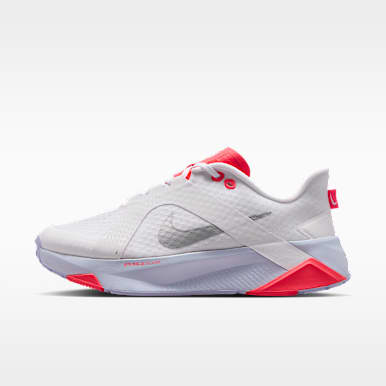
- [
\
Nike Hybrid RN
\
Women's Training Shoes
\
__$145__](https://www.nike.com/t/hybrid-rn-womens-training-shoes-gNDq4Wkp/IO3815-102)
- [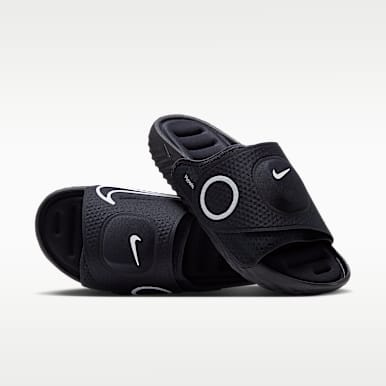
\
Nike x Hyperice
\
Nike Air Zoom Hyperslide
\
__$249__](https://www.nike.com/t/hyperice-nike-air-zoom-hyperslide-Cn5YuLqU/66000-001)
- [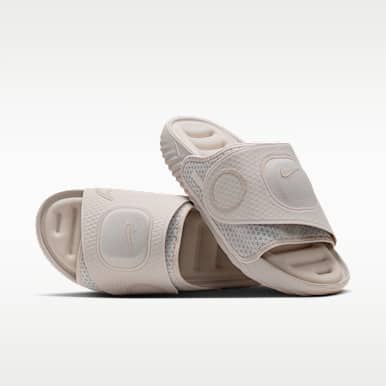
\
Nike x Hyperice
\
Nike Air Zoom Hyperslide
\
__$249__](https://www.nike.com/t/hyperice-nike-air-zoom-hyperslide-wsA6NgaD/66005-001)
- [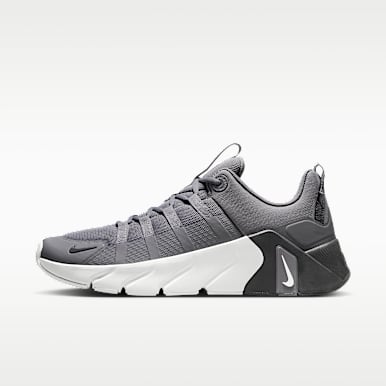
\
Nike Free Metcon 7
\
Men's Training Shoes
\
__$114.97__
__$125__](https://www.nike.com/t/free-metcon-7-mens-training-shoes-uocNJ5bo/II7405-005)
- [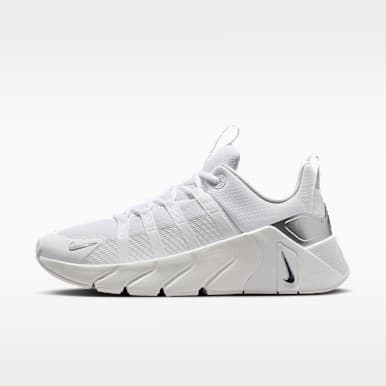
\
Nike Free Metcon 7
\
Women's Training Shoes
\
__$125__](https://www.nike.com/t/free-metcon-7-womens-training-shoes-qPXiqGVl/II7406-102)
- [
\
Nike 24.7
\
Women's Shoes
\
__$140__](https://www.nike.com/t/24-7-womens-shoes-j9v0Ciab/IR0448-001)
- [
\
Nike 24.7
\
Men's Shoes
\
__$140__](https://www.nike.com/t/24-7-mens-shoes-1UaK9D44/IR0447-001)
- [
\
Nike Metcon 10
\
Men's Workout Shoes
\
__$155__](https://www.nike.com/t/metcon-10-mens-workout-shoes-WWGl2m1D/HJ1875-102)
- [
\
Nike Air Max Alpha Trainer 6
\
Men's Workout Shoes
\
__$100__](https://www.nike.com/t/air-max-alpha-trainer-6-mens-workout-shoes-SnIsaSyH/FQ1833-001)
## So, Does HIIT Really Work?
Numerous studies have concluded that high-intensity interval training really does improve your fitness and health. Incorporating it into your workout routine can help you achieve the results you're looking for, plus it only takes 10 to 15 minutes a session.
## HIIT FAQS
How long should a HIIT workout last?
Because the intensity is so high, HIIT sessions are short — only about 10 to 25 minutes total, Tang says.
Why are HIIT workouts so short?
“HIIT workouts are short because the energy systems that power high-intensity effort can only fuel the body for about 30 seconds to two minutes at a time,” Tang explains. After that, there’s no more fuel in the tank, making it risky to keep pushing. “When you’re tired, your risk of injury and cardiovascular strain increases. This is especially the case for beginners and people with health conditions,” Tang says.
Is HIIT better than cardio?
Liu says neither option is inherently better — they simply do different things for the body. “They serve different purposes, and both have their trade-offs,” she says.
“HIIT is great for building power and quickly pushing your heart rate up, so you get a lot out of a short workout. The downside is that it can be harder to recover from, especially if you do it too often. Steady-state cardio, on the other hand, is excellent for building your aerobic base and improving overall endurance. It takes a bit longer (generally 20 to 60 minutes per workout, if you’re following the Centers for Disease Control and Prevention’s recommendations), but it’s easier on your joints and something most people can do more regularly, ” Liu says.
That said, what’s “better” for you really comes down to what you enjoy and your goals, whether that be speed and power, or consistency and endurance. “Some people enjoy the intensity of HIIT, while others prefer the steadiness of cardio,” Liu says. “Most people benefit from a mix of both. Ultimately, you’ll be more consistent with what you enjoy, making that the ‘better’ option for you.”
Can beginners do HIIT safely?
Liu says HIIT is best suited for intermediate and advanced athletes. However, HIIT can be fun for beginners as well and provides many health benefits. Those new to fitness, though, should keep these tips in mind to ensure their workouts remain safe and appropriate for their fitness level.
1. __Stick to low-impact exercises.__ “For my beginner clients, I’ll often use a modified, low-impact version of a HIIT workout to ease them in. So instead of a full jump, for example, I’ll have them do a controlled squat with a calf raise at the top. It lets them practice the movement pattern safely while still getting their heart rate up,” says Liu. Tang recommends other low-impact beginner-friendly exercises such as brisk cycling, rowing or modified burpees.
2. __Keep your workouts short (about 10 minutes) and use extended recovery periods:__ For beginners, Tang recommends a 1:3 or 1:4 work-to-rest ratio. In practice, this might look like 15 seconds of work paired with 45 to 60 seconds of rest. “This gives your heart rate time to come down so you can repeat the next burst with good form,” she says.
3. __Consider sticking to cardio equipment.__ “Cardio machines are often easier for beginners or tracking intensity. Because the movement is controlled, consistent and measurable, it’s easier to know how hard you’re working,” Tang says.
4. __Progress slowly.__ “High-intensity interval training is effective, but the intensity needs to match your current fitness and health status. Gradual progression makes it safe for most beginners,” Tang says. Progression may come in the form of increasing your speed, reducing your recovery time, or increasing your weight, resistance or incline, Tang says.
When should you avoid HIIT workouts?
“HIIT pushes your heart and muscles to near-max effort, so it’s not for everyone all the time,” Tang says. She says it’s best to ask a doctor if it’s safe for you to do HIIT workouts if you have:
- A heart condition or other cardiovascular concerns
- Joint or muscle problems, or recurring injuries
- Acute injuries or pain that high-intensity movements could worsen
- Extreme deconditioning, where even moderate effort puts you at risk for potential injury
How often should I do HIIT workouts?
If you’re new to HIIT, start with one session a week. Those who are more advanced can do up to three sessions a week, says Tang. “HIIT is incredibly effective, but it’s also demanding on your muscles and your nervous system. The magic actually happens in the recovery — that’s when your body adapts, gets stronger, and builds better cardio capacity,” she says.
[](https://niketrainingclub.sng.link/Ara19/3ocq/gnbq?pcn=OGC%20Articles%20HO21&_dl=niketrainingclub%3A%2F%2Fx-callback-url%2Fworkout%2Ffeatured)
### Move Daily with Nike Training Club
Get free guidance from trainers and experts to strengthen your body and mind.
[Explore NTC](https://niketrainingclub.sng.link/Ara19/3ocq/gnbq?pcn=OGC%20Articles%20HO21&_dl=niketrainingclub%3A%2F%2Fx-callback-url%2Fworkout%2Ffeatured)
Originally published: December 15, 2025
## Related Stories
- 
[](https://www.nike.com/a/best-outdoor-workout)
# Sports & Activity
# 7 Expert-Approved Outdoor Workout Ideas, Backed by Science
- 
[](https://www.nike.com/a/hip-mobility-exercises-stretches)
# Sports & Activity
# The Top Exercises and Stretches for Hip Mobility, According to Physical Therapists
- 
[](https://www.nike.com/a/air-zoom-hyperslide-recovery-slide)
# Product News
# Nike Air Zoom Hyperslide: The Nike x Hyperice Recovery Slide, Explained
- 
[](https://www.nike.com/a/how-to-pick-the-right-nike-fleece)
# Buying Guide
# How to Pick the Right Nike Fleece: Your Studio Fleece Guide
- 
[](https://www.nike.com/a/what-is-cadence-running)
# Sports & Activity
# What Is a Good Running Cadence? How to Find Your Optimal Step Rate
Resources
[Gift Cards](https://www.nike.com/gift-cards)
[Corporate Sales](https://www.nike.com/corporate-sales)
[Find a Store](https://www.nike.com/retail)
[Membership](https://www.nike.com/membership)
[Nike Journal](https://www.nike.com/stories)
[Site Feedback](https://www.nike.com#site-feedback)
Help
[Get Help](https://www.nike.com/help)
[Order Status](https://www.nike.com/orders/details/)
[Shipping and Delivery](https://www.nike.com/help/a/shipping-delivery)
[Returns](https://www.nike.com/help/a/returns-policy)
[Order Cancellation](https://www.nike.com/help/a/change-cancel-order)
[Payment Options](https://www.nike.com/help/a/payment-options)
[Gift Card Balance](https://www.nike.com/orders/gift-card-lookup)
[Contact Us](https://www.nike.com/help/#contact)
Company
[About Nike](https://about.nike.com/en)
[News](http://news.nike.com/)
[Careers](https://jobs.nike.com/)
[Investors](http://investors.nike.com/)
[Purpose](https://purpose.nike.com/)
[Sustainability](https://www.nike.com/sustainability)
[Accessibility](https://www.nike.com/us/en/accessibility/#introduction)
Promotions & Discounts
[Student](https://www.nike.com/help/a/student-discount)
[Military](https://www.nike.com/help/a/military-discount)
[Teacher](https://www.nike.com/help/a/teacher-discount)
[First Responders & Medical Professionals](https://www.nike.com/help/a/first-responder-discount)
[Birthday](https://www.nike.com/help/a/birthday-terms-promo)
[Resources](https://www.nike.com/help)
[Gift Cards](https://www.nike.com/gift-cards)
[Corporate Sales](https://www.nike.com/corporate-sales)
[Find a Store](https://www.nike.com/retail)
[Membership](https://www.nike.com/membership)
[Nike Journal](https://www.nike.com/stories)
[Site Feedback](https://www.nike.com#site-feedback)
[Help](https://www.nike.com/help)
[Get Help](https://www.nike.com/help)
[Order Status](https://www.nike.com/orders/details/)
[Shipping and Delivery](https://www.nike.com/help/a/shipping-delivery)
[Returns](https://www.nike.com/help/a/returns-policy)
[Order Cancellation](https://www.nike.com/help/a/change-cancel-order)
[Payment Options](https://www.nike.com/help/a/payment-options)
[Gift Card Balance](https://www.nike.com/orders/gift-card-lookup)
[Contact Us](https://www.nike.com/help/#contact)
[Company](https://about.nike.com/en)
[About Nike](https://about.nike.com/en)
[News](http://news.nike.com/)
[Careers](https://jobs.nike.com/)
[Investors](http://investors.nike.com/)
[Purpose](https://purpose.nike.com/)
[Sustainability](https://www.nike.com/sustainability)
[Accessibility](https://www.nike.com/us/en/accessibility/#introduction)
[Promotions & Discounts](https://www.nike.com/promo-code)
[Student](https://www.nike.com/help/a/student-discount)
[Military](https://www.nike.com/help/a/military-discount)
[Teacher](https://www.nike.com/help/a/teacher-discount)
[First Responders & Medical Professionals](https://www.nike.com/help/a/first-responder-discount)
[Birthday](https://www.nike.com/help/a/birthday-terms-promo)
United States
- © 2026 Nike, Inc. All Rights Reserved.
- Guides
- [Nike Air](https://www.nike.com/air)
- [Nike Air Force 1](https://www.nike.com/air-force-1)
- [Nike Air Max](https://www.nike.com/air-max)
- [Nike FlyEase](https://www.nike.com/flyease)
- [Nike Flyknit](https://www.nike.com/flyknit)
- [Nike Free](https://www.nike.com/free)
- [Nike React](https://www.nike.com/react)
- [Nike Vaporfly](https://www.nike.com/running/vaporfly)
- [Nike ZoomX](https://www.nike.com/zoomx)
- [Space Hippie](https://www.nike.com/space-hippie)
- [Terms of Sale](https://agreementservice.svs.nike.com/us/en_us/rest/agreement?agreementType=termsOfSale&uxId=com.nike.commerce.nikedotcom.web&country=US&language=en&requestType=redirect)
- [Terms of Use](https://agreementservice.svs.nike.com/us/en_us/rest/agreement?agreementType=termsOfUse&uxId=com.nike.commerce.nikedotcom.web&country=US&language=en&requestType=redirect)
- [Nike Privacy Policy](https://agreementservice.svs.nike.com/rest/agreement?agreementType=privacyPolicy&uxId=com.nike.commerce.nikedotcom.web&requestType=redirect)
- [
\
Your Privacy Choices](https://www.nike.com/guest/settings/do-not-share-my-data)
- [CA Supply Chains Act](https://about.nike.com/en/impact-resources/statement-on-forced-labor)
## Africa
- [__Egypt__
\
English](https://www.nike.com/eg/)
- [__Morocco__
\
English](https://www.nike.com/ma/en/)
- [__Maroc__
\
Français](https://www.nike.com/ma/)
- [__South Africa__
\
English](https://www.nike.com/za/)
## Americas
- [__Argentina__
\
Español](https://www.nike.com.ar)
- [__Brasil__
\
Português](https://www.nike.com.br)
- [__Canada__
\
English](https://www.nike.com/ca/)
- [__Canada__
\
Français](https://www.nike.com/ca/fr/)
- [__Chile__
\
Español](https://www.nike.cl)
- [__Colombia__
\
Español](https://www.nike.com.co)
- [__México__
\
Español](https://www.nike.com/mx/)
- [__Peru__
\
Español](https://www.nike.com.pe)
- [__Puerto Rico__
\
Español](https://www.nike.com/pr/)
- [__United States__
\
English](https://www.nike.com)
- [__Estados Unidos__
\
Español](https://www.nike.com/us/es/)
- [__Uruguay__
\
Español](https://www.nike.com.uy)
- [__Latin America__
\
Español](https://www.nike.com/xl/)
## Asia Pacific
- [__Australia__
\
English](https://www.nike.com/au/)
- [__中国大陆__
\
简体中文](https://www.nike.com.cn/)
- [__Hong Kong__
\
English](https://www.nike.com.hk/)
- [__香港__
\
繁體中文](https://www.nike.com.hk/)
- [__India__
\
English](https://www.nike.in/)
- [__Indonesia__
\
English](https://www.nike.com/id/)
- [__Japan__
\
English](https://www.nike.com/jp/en/)
- [__日本__
\
日本語](https://www.nike.com/jp/)
- [__대한민국__
\
한국어](https://www.nike.com/kr/)
- [__Malaysia__
\
English](https://www.nike.com/my/)
- [__New Zealand__
\
English](https://www.nike.com/nz/)
- [__Philippines__
\
English](https://www.nike.com/ph/)
- [__Singapore__
\
English](https://www.nike.com/sg/)
- [__台灣__
\
繁體中文](https://www.nike.com/tw/)
- [__ไทย__
\
ภาษาไทย](https://www.nike.com/th/)
- [__Vietnam__
\
English](https://www.nike.com/vn/)
## Europe
- [__Österreich__
\
Deutsch](https://www.nike.com/at/)
- [__Austria__
\
English](https://www.nike.com/at/en/)
- [__Belgien__
\
Deutsch](https://www.nike.com/be/de/)
- [__Belgium__
\
English](https://www.nike.com/be/en/)
- [__Belgique__
\
Français](https://www.nike.com/be/fr/)
- [__België__
\
Nederlands](https://www.nike.com/be/)
- [__Bulgaria__
\
English](https://www.nike.com/bg/)
- [__Croatia__
\
English](https://www.nike.com/hr/)
- [__Česká republika__
\
Čeština](https://www.nike.com/cz/)
- [__Czech Republic__
\
English](https://www.nike.com/cz/en/)
- [__Danmark__
\
Dansk](https://www.nike.com/dk/)
- [__Denmark__
\
English](https://www.nike.com/dk/en/)
- [__Finland__
\
English](https://www.nike.com/fi/)
- [__France__
\
Français](https://www.nike.com/fr/)
- [__Deutschland__
\
Deutsch](https://www.nike.com/de/)
- [__Ελλάδα__
\
ελληνικά](https://www.nike.com/gr/)
- [__Hungary__
\
English](https://www.nike.com/hu/en/)
- [__Magyarország__
\
Magyar](https://www.nike.com/hu/)
- [__Ireland__
\
English](https://www.nike.com/ie/)
- [__Israel__
\
English](https://www.nike.com/il/)
- [__Italia__
\
Italiano](https://www.nike.com/it/)
- [__Luxemburg__
\
Deutsch](https://www.nike.com/lu/de/)
- [__Luxembourg__
\
English](https://www.nike.com/lu/en/)
- [__Luxembourg__
\
Français](https://www.nike.com/lu/)
- [__Netherlands__
\
English](https://www.nike.com/nl/en/)
- [__Nederland__
\
Nederlands](https://www.nike.com/nl/)
- [__Norway__
\
English](https://www.nike.com/no/en/)
- [__Norge__
\
Norsk](https://www.nike.com/no/)
- [__Polska__
\
Polski](https://www.nike.com/pl/)
- [__Portugal__
\
English](https://www.nike.com/pt/en/)
- [__Portugal__
\
Português](https://www.nike.com/pt/)
- [__Romania__
\
English](https://www.nike.com/ro/)
- [__Россия__
\
Русский](https://www.nike.com/ru/)
- [__Slovakia__
\
English](https://www.nike.com/sk/)
- [__Slovenia__
\
English](https://www.nike.com/si/)
- [__Espanya__
\
Català](https://www.nike.com/es/ca/)
- [__España__
\
Español](https://www.nike.com/es/)
- [__Sweden__
\
English](https://www.nike.com/se/en/)
- [__Sverige__
\
Svenska](https://www.nike.com/se/)
- [__Schweiz__
\
Deutsch](https://www.nike.com/ch/)
- [__Switzerland__
\
English](https://www.nike.com/ch/en/)
- [__Suisse__
\
Français](https://www.nike.com/ch/fr/)
- [__Svizzera__
\
Italiano](https://www.nike.com/ch/it/)
- [__Türkiye__
\
Türkçe](https://www.nike.com/tr/)
- [__United Kingdom__
\
English](https://www.nike.com/gb/)
## Middle East
- [__Saudi Arabia__
\
English](https://www.nike.sa/en/home)
- [__المملكة العربية السعودية__
\
العربية](https://www.nike.sa/ar/home)
- [__United Arab Emirates__
\
English](https://www.nike.ae/en/home)
- [__الإمارات العربية المتحدة__
\
العربية](https://www.nike.ae/ar/home)
- [__Qatar__
\
English](https://www.nike.qa/en/home)
- [__دولة قطر__
\
العربية](https://www.nike.qa/ar/home)
- [__Kuwait__
\
English](https://www.nike.com.kw/en/home)
- [__الكويت__
\
العربية](https://www.nike.com.kw/ar/home)