The Mountain That Made ACG
In 1978, K2 was already known by its reputation alone. The Savage Mountain. At 28,251 feet, it stood just 779 feet shy of Everest, but height was never the point. K2 was steeper, more technical, harder to descend, and far less forgiving. Weather windows were rare. Exposure was relentless. Mistakes compounded quickly. By the late 1970s, the mountain carried a sobering reality: roughly one in four climbers who attempted its upper reaches would not return.
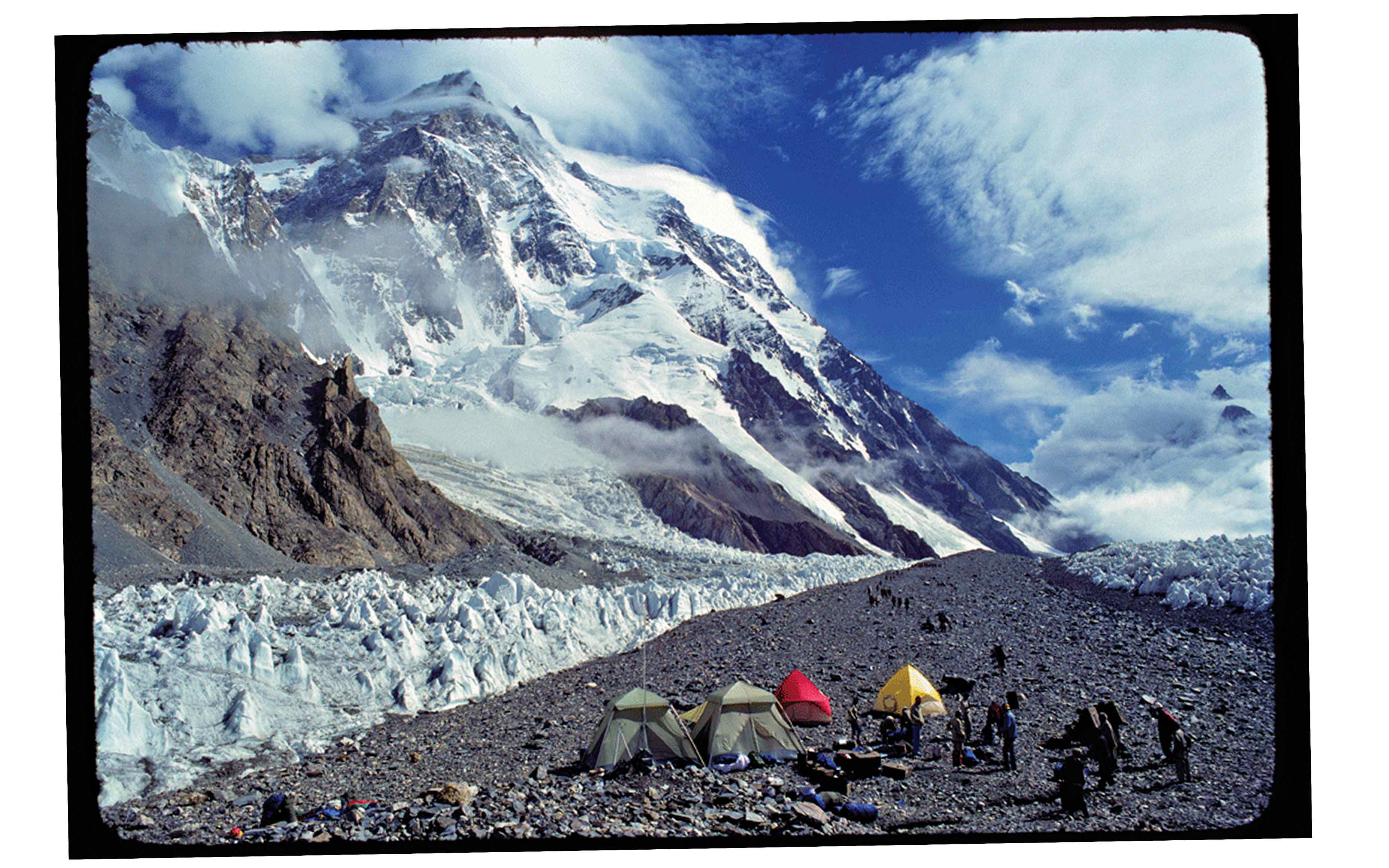
By 1978, K2 had been summited only twice in history. Both ascents relied on supplemental oxygen. No one was crazy enough to prove the mountain could be climbed without it. And yet, that was exactly the plan.
An American expedition set out to attempt something that, at the time, many believed bordered on the impossible: a summit of K2 without oxygen. In an era when oxygen was considered mandatory above 8,000 meters (26,200 ft.), choosing to go without it was not simply bold — it was wild.
The only thing thinner than the air was their resources.
To fund the expedition, expedition leader Jim Whittaker and his wife, Dianne Roberts, who also happened to be a very talented photojournalist, reached out wherever they could, cold-calling brands for support. Roberts made a simple promise: proof. In turn for resources, sponsors' products would be photographed on the mountain.
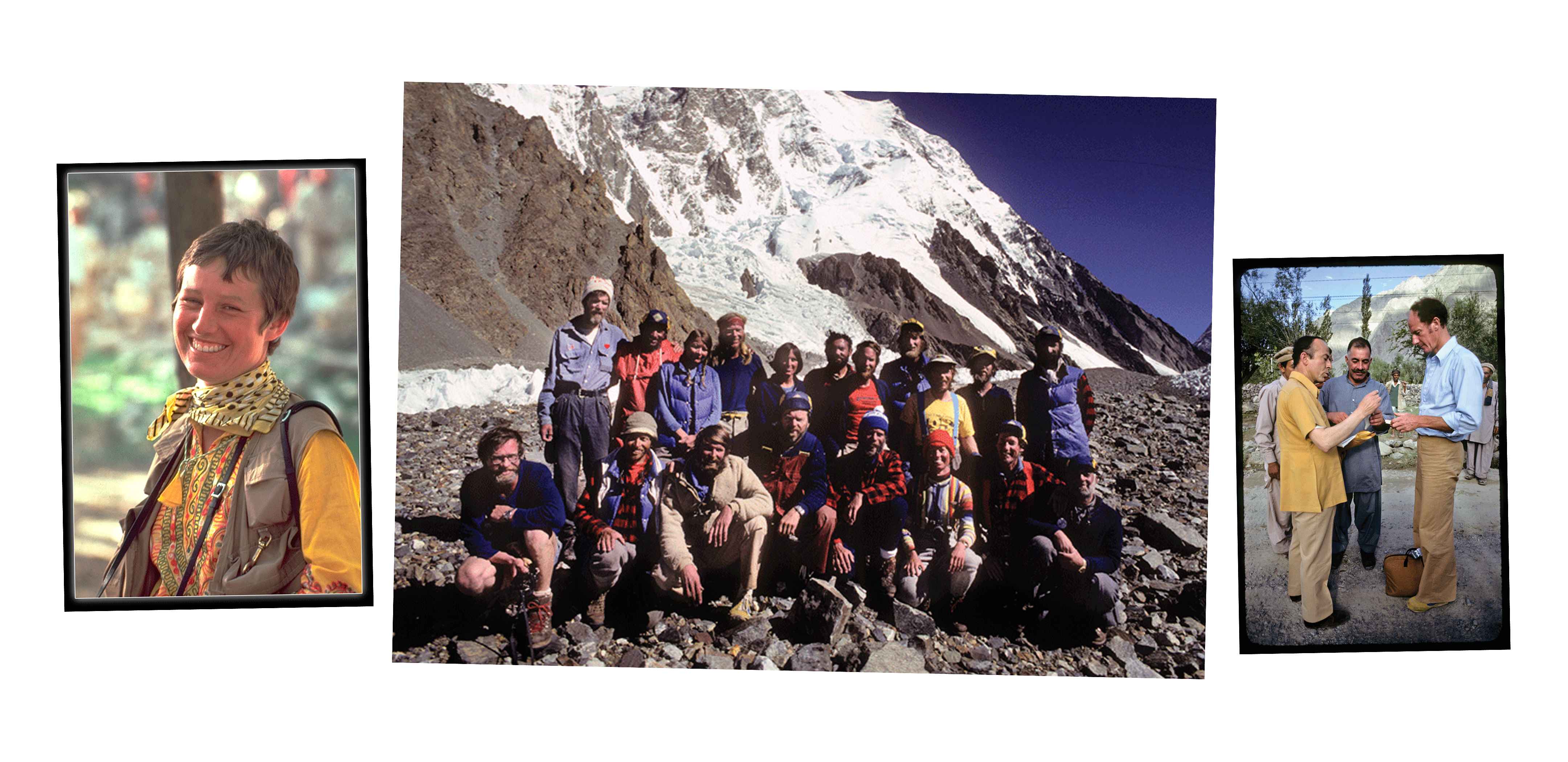
Nike was still a young company then — growing, but far from flush. It couldn’t contribute much cash, but what it could contribute was conviction and product, supplying every member of the expedition—including climbers John Roskelley and Rick Ridgeway—with a pair of its newest performance running shoe: the Nike LDV. At the time, no one imagined those shoes would be the catalyst for mountaineering history, let alone spark a new way of innovating for the outdoors.
The summit would come later. First, there was the journey just to reach K2.
The approach to base camp spanned 130 miles of rough terrain — gravel paths, glacial crossings, unstable rock fields, and long stretches without trail at all. It was not a warm-up. It was a test in its own right, demanding stamina, grit and a wild sensibility long before the climb began.
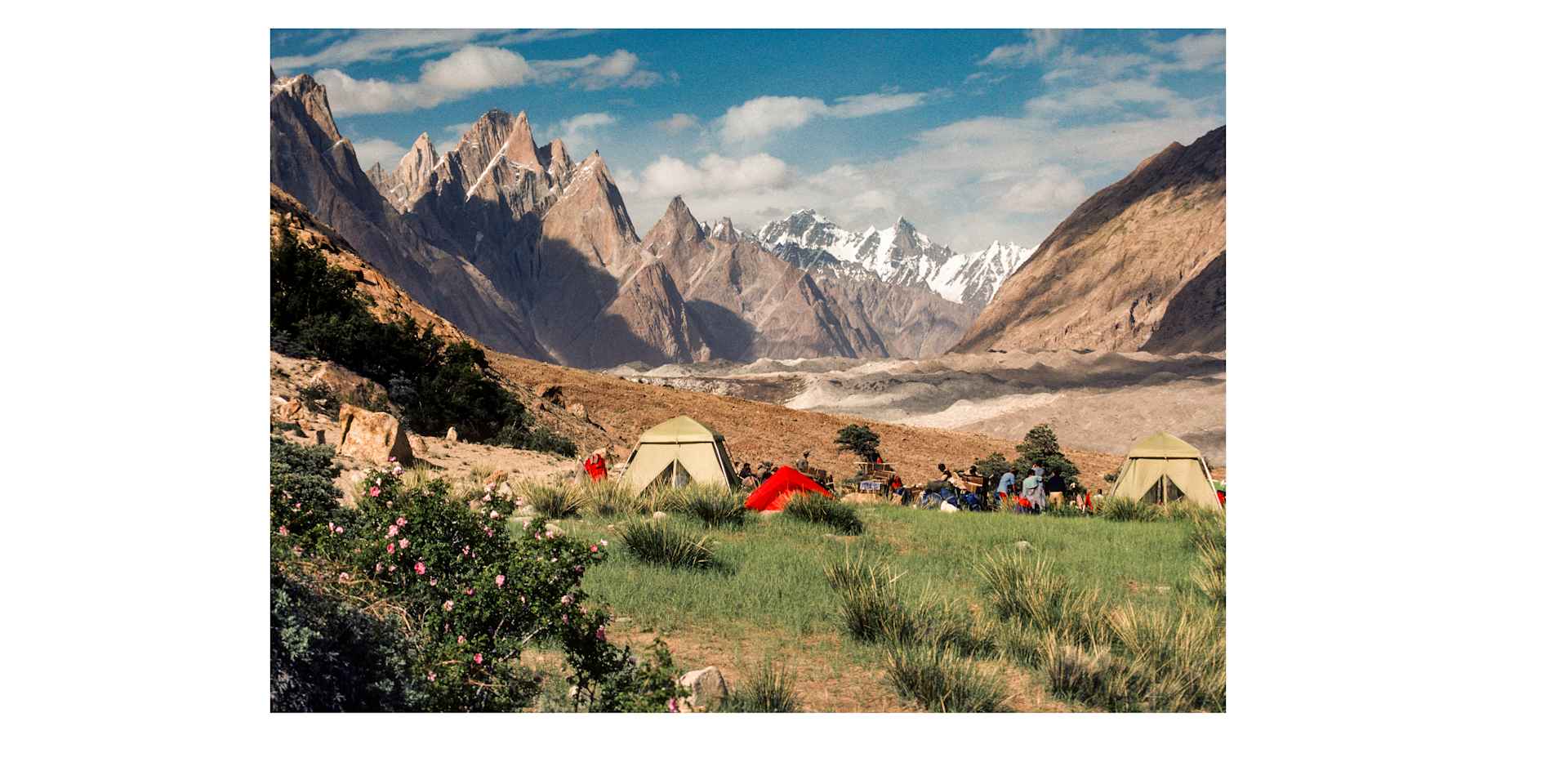
And thanks to Nike, the 1978 crew had something different in their packs. Rejecting the default heavy leather boots, many members of the team blazed their own trail, completing the entire approach hike in LDVs.
Originally designed for running, the LDV, full name Long Distance Vector, represented an evolution of Nike’s Bill Bowerman–designed waffle outsole, first introduced with the 1974 Waffle Trainer. But the innovation ran deeper. The LDV’s straight last, originally designed to protect runners by increasing stability and motion control, provided the ideal platform for athletes navigating the world's toughest terrain.
And thanks to Nike, the 1978 crew had something different in their packs. Rejecting the default heavy leather boots, many members of the team blazed their own trail, completing the entire approach hike in LDVs.
Originally designed for running, the LDV, full name Long Distance Vector, represented an evolution of Nike’s Bill Bowerman–designed waffle outsole, first introduced with the 1974 Waffle Trainer. But the innovation ran deeper. The LDV’s straight last, originally designed to protect runners by increasing stability and motion control, provided the ideal platform for athletes navigating the world's toughest terrain.
On the approach to K2, the LDVs' benefits became tangible. Most climbers at the time were setting out to climb mountains in what Nike Running Historian Rick Lower describes as “bricks on their feet” — heavy boots with rigid outsoles, little to no midsole, and almost no forgiveness. The LDV represented a radical departure. Nearly half the weight of traditional hiking footwear, it delivered comparable, if not better, traction while dramatically reducing the energy cost of each step. Rooted in Bowerman’s belief that weight compounds over distance, the LDV’s lightweight
construction meant less work, fewer calories burned, and more efficiency over long miles. Its waffle outsole introduced a level of compliance and ride that hikers simply weren’t used to. The LDVs allowed the K2 climbers to move efficiently across broken terrain, hopping rocks and navigating debris without the fatigue that accumulated ounce by ounce in traditional boots.
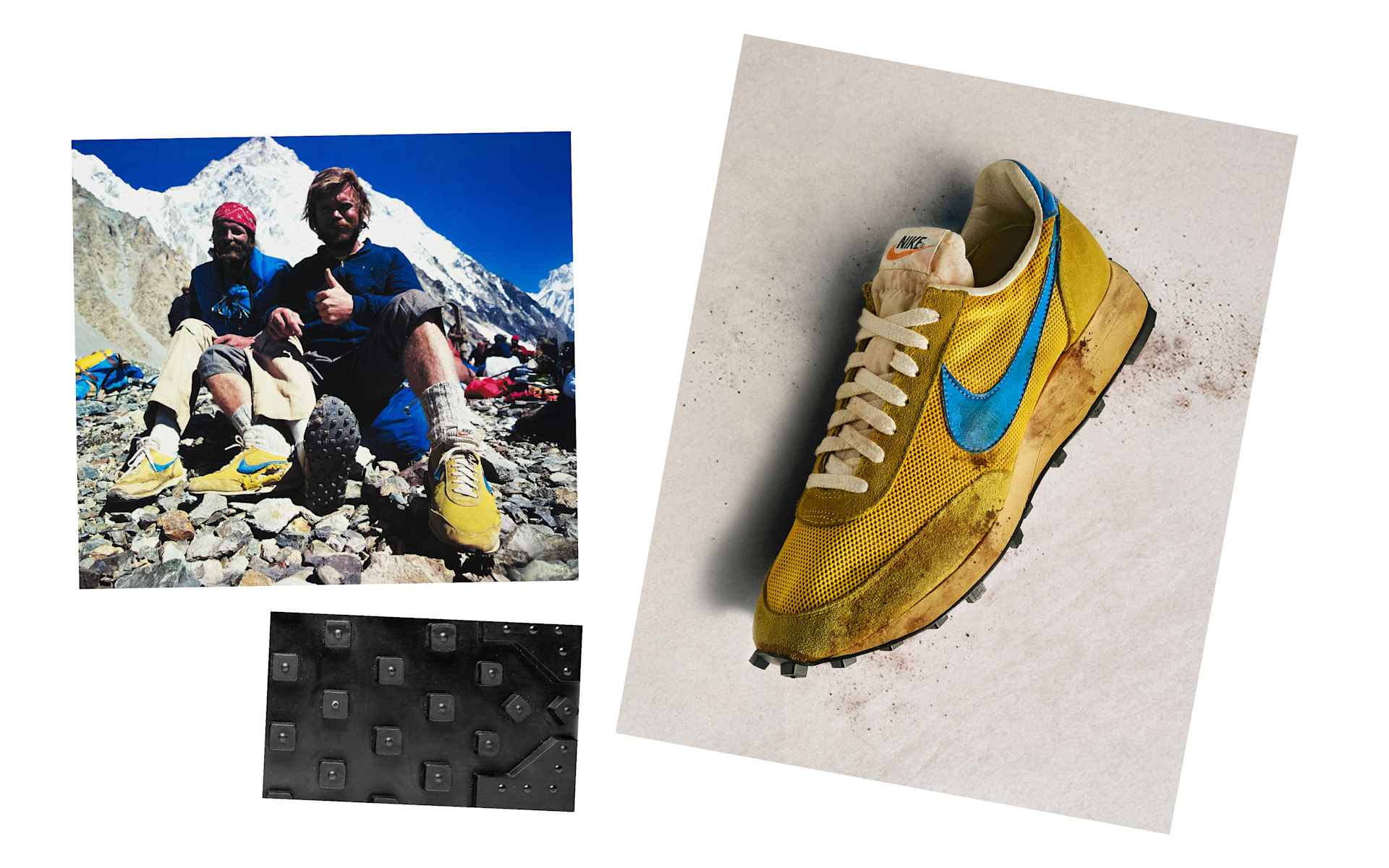
“That’s why we wore those things up and back,” Rick Ridgeway later said.
“They were just more flexible and more comfortable. You could boulder hop. They breathed better. In my view, they were functionally superior to the more rigid traditional trekking shoe.”
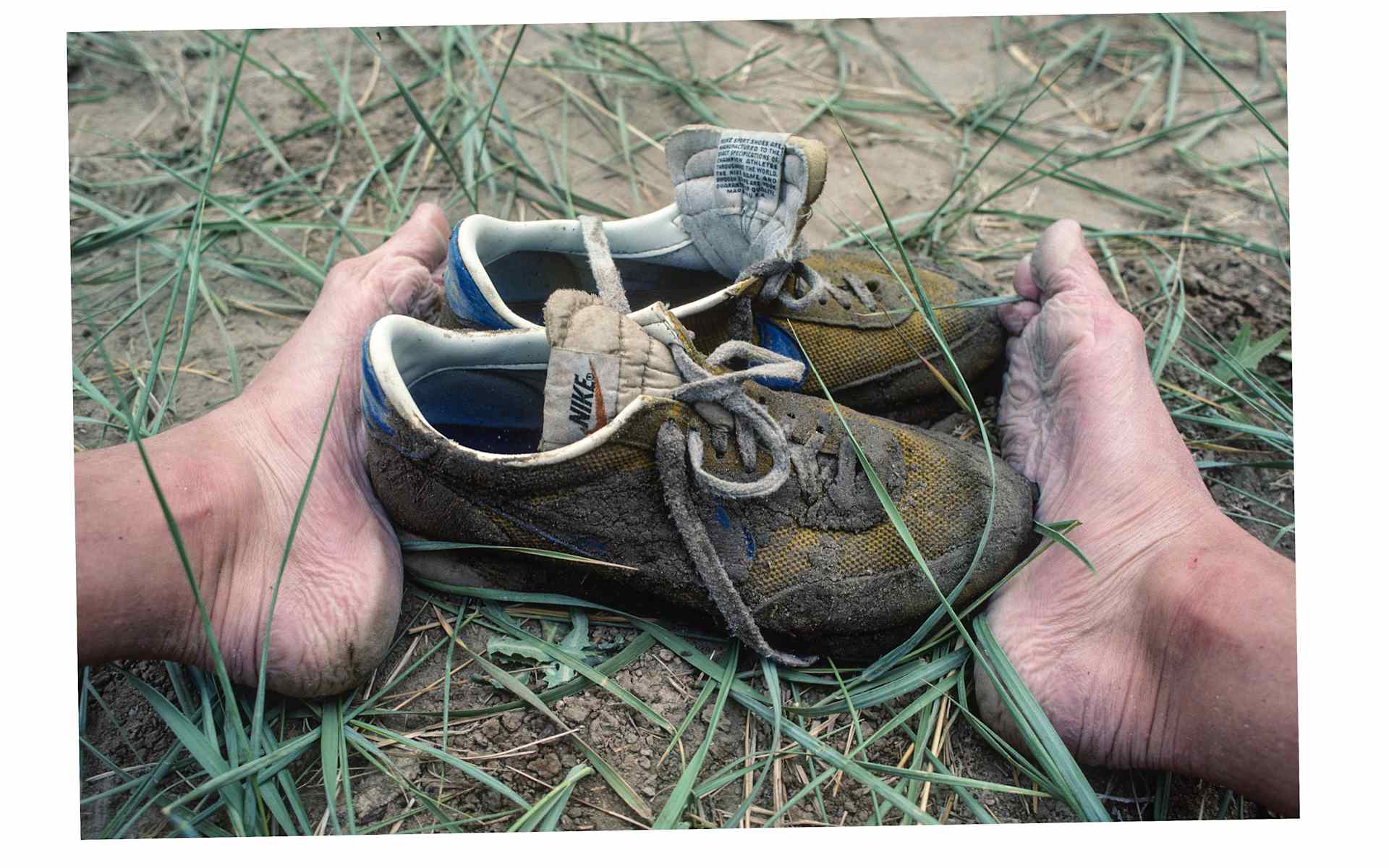
By the time the team reached base camp, the LDVs were battered. But the climbers arrived with something far more valuable: fresh legs for what came next. What followed was nearly ten weeks of survival.
Storms pinned the team down. Avalanches reshaped routes. Fatigue and tension accumulated alongside the altitude.
The only thing holding the plan together was the team mindset. Some carried extra-heavy loads, while some sacrificed their own chances so that others could grab glory. Success depended not on individual strength, but collective commitment.
After 68 days on the mountain, five days in the death zone without supplemental oxygen, Jim Wickwire and Louis Reichardt reached the summit first. The following day, Roskelley and Ridgeway stood on top of the Savage Mountain — the first people ever to do so unassisted by oxygen.
And remarkably, thanks in large part to selfless teamwork, every member of the expedition survived.
On the approach to K2, the LDVs' benefits became tangible. Most climbers at the time were setting out to climb mountains in what Nike Running Historian Rick Lower describes as “bricks on their feet” — heavy boots with rigid outsoles, little to no midsole, and almost no forgiveness. The LDV represented a radical departure. Nearly half the weight of traditional hiking footwear, it delivered comparable, if not better, traction while dramatically reducing the energy cost of each step. Rooted in Bowerman’s belief that weight compounds over distance, the LDV’s lightweight construction meant less work, fewer calories burned, and more efficiency over long miles. Its waffle outsole introduced a level of compliance and ride that hikers simply weren’t used to. The LDVs allowed the K2 climbers to move efficiently across broken terrain, hopping rocks and navigating debris without the fatigue that accumulated ounce by ounce in traditional boots.
“That’s why we wore those things up and back,” Rick Ridgeway later said.
“They were just more flexible and more comfortable. You could boulder hop. They breathed better. In my view, they were functionally superior to the more rigid traditional trekking shoe.”
By the time the team reached base camp, the LDVs were battered. But the climbers arrived with something far more valuable: fresh legs for what came next.
What followed was nearly ten weeks of survival.
Storms pinned the team down. Avalanches reshaped routes. Fatigue and tension accumulated alongside the altitude.
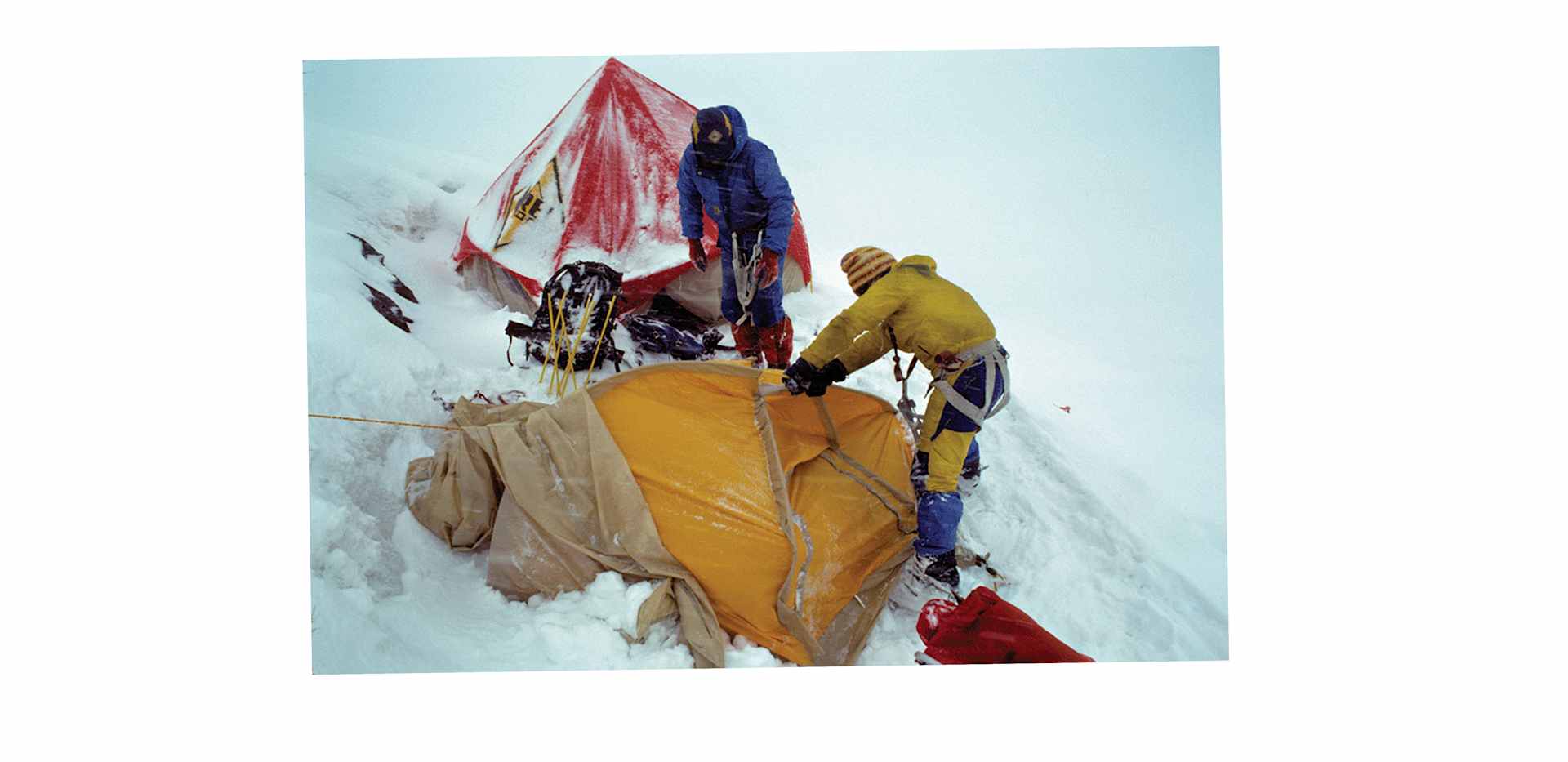
After weeks at altitude, Roskelley and Ridgeway descended to lower elevations and pulled the LDVs back on for the journey out. The shoes were blown out, held together with tape and glue, but they carried them the entire way back down the mountain.
It was during that exhausted walk, depleted, elated, but alive, that the conversation began.
What if a shoe existed specifically for this space? Lightweight enough for long approaches. Flexible enough for unpredictable terrain. Breathable enough to sustain effort over distance. Built not just for the summit, but for every wild turn it would take to get there.
The only thing holding the plan together was the team mindset. Some carried extra-heavy loads, while some sacrificed their own chances so that others could grab glory. Success depended not on individual strength, but collective commitment.
After 68 days on the mountain, five days in the death zone without supplemental oxygen, Jim Wickwire and Louis Reichardt reached the summit first. The following day, Roskelley and Ridgeway stood on top of the Savage Mountain — the first people ever to do so unassisted by oxygen.
And remarkably, thanks in large part to selfless teamwork, every member of the expedition survived.
When they returned home, Roskelley and Ridgeway sent the destroyed LDVs back to Nike, along with detailed suggestions for how the shoe could be adapted into a true trekking model.
This field-tested feedback, forged under real consequence, led to real performance insights. What began as a running shoe adapted by athletes in the wild became the seed of an entirely new way of thinking about outdoor performance, ultimately shaping what became All Conditions Gear. Lightweight construction. Breathable materials. Flexibility over rigidity. Cushioning designed to go the distance.
The LDVs never climbed K2. They were never meant to.
But they made it possible to arrive ready. To leave alive. To imagine a better product for those wild enough to take Mother Nature head-on.
A chance donation. The best running shoe on the market. A mountain that demanded
everything. This was the moment Nike met the wild — not as a brand, but as a proving ground. And it’s why, almost fifty years later, the LDV’s legacy still matters.
Because the wilder the athlete, the more likely they are to leave a legacy.
And before there was ACG, there was K2.
Would the 1978 American expedition have made it to the top without the LDV?
I guess we’ll never know.
A special thank-you to Dianne Roberts for providing her photos taken on the expedition.
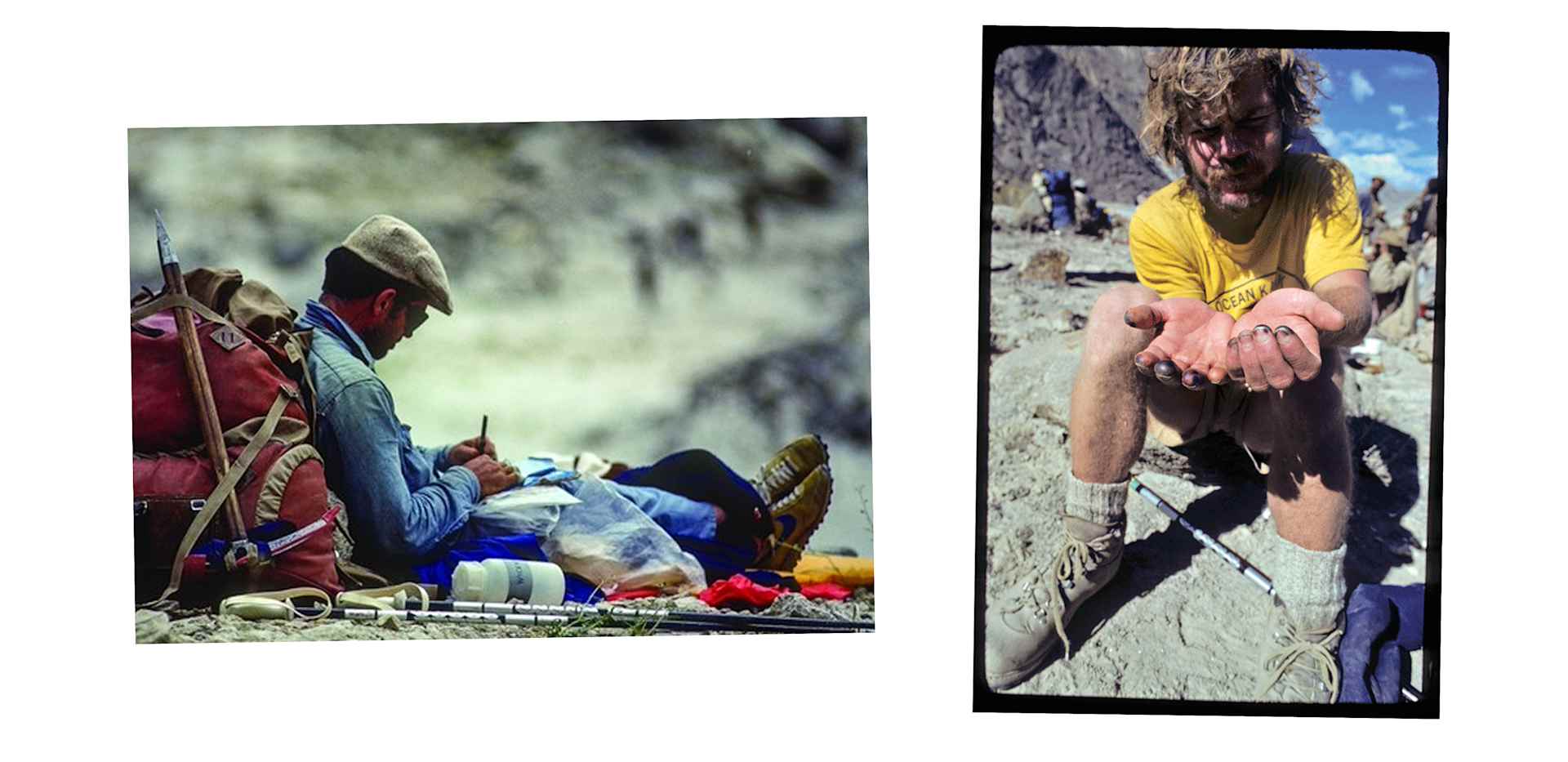
When they returned home, Roskelley and Ridgeway sent the destroyed LDVs back to Nike, along with detailed suggestions for how the shoe could be adapted into a true trekking model.
This field-tested feedback, forged under real consequence, led to real performance insights. What began as a running shoe adapted by athletes in the wild became the seed of an entirely new way of thinking about outdoor performance, ultimately shaping what became All Conditions Gear. Lightweight construction. Breathable materials. Flexibility over rigidity. Cushioning designed to go the distance.
The LDVs never climbed K2. They were never meant to.
But they made it possible to arrive ready. To leave alive. To imagine a better product for those wild enough to take Mother Nature head-on.
A chance donation. The best running shoe on the market. A mountain that demanded everything. This was the moment Nike met the wild — not as a brand, but as a proving ground. And it’s why, almost fifty years later, the LDV’s legacy still matters.
Because the wilder the athlete, the more likely they are to leave a legacy.
And before there was ACG, there was K2.
Would the 1978 American expedition have made it to the top without the LDV?
I guess we’ll never know.
A special thank-you to Dianne Roberts for providing her photos taken on the expedition.