How to Choose the Right Running Shoes: Fit, Cushioning and Support Explained
Buying Guide
Learn how to choose running shoes that fit properly, match your gait, provide the right cushioning and support your training—plus signs that your shoes are worn out or too tight.

When considering how to choose running shoes, especially how they should fit, the good news is that there really are shoes that will make you want to run—shoes that will support you through hundreds of miles, safeguarding your feet and bettering your workouts. Yes, you can even find shoes that feel like they're doing some of the hard work for you.
How do you find these Cinderella shoes? "You choose a shoe that protects and supports your unique anatomy", says Ian Klein, an exercise physiologist specialising in cross-training and injury prevention at Ohio University. For starters, that means don't pick a shoe just based on looks (though, let's be honest, that does matter) or reviews. Read on for a deeper dive into how to find the right running shoes and how running shoes should fit.
Quick Takeaways
- The right running shoes should match your gait, training style and foot shape.
- You should be able to wiggle your toes, even after a long run.
- Cushioning level depends on factors like planned distance and terrain.
- Choose stability and comfort, especially if you have pronation.
- Plan to retire your running shoes after 300 to 500 miles.
Shop Nike Running Shoes
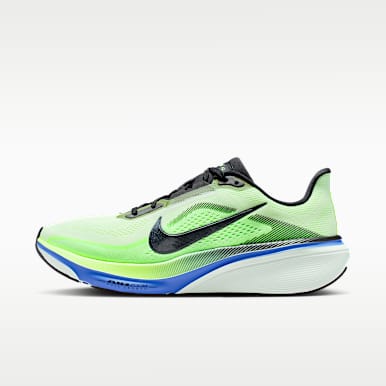
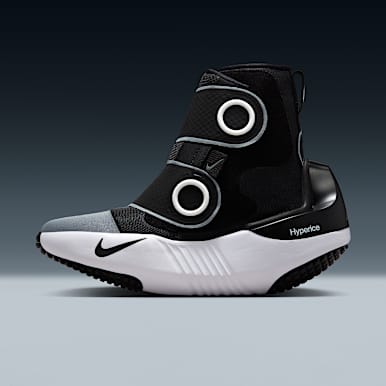
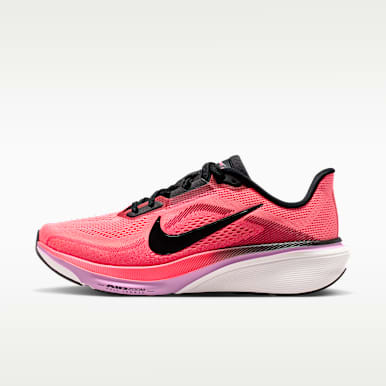
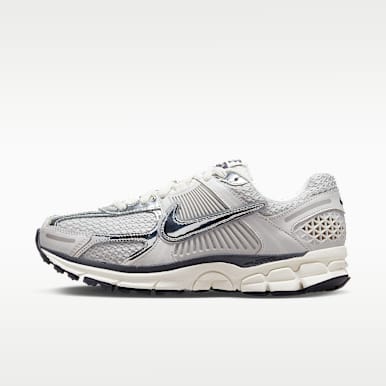
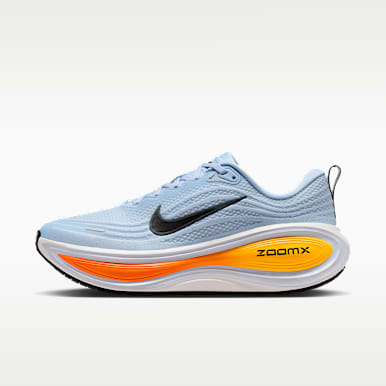
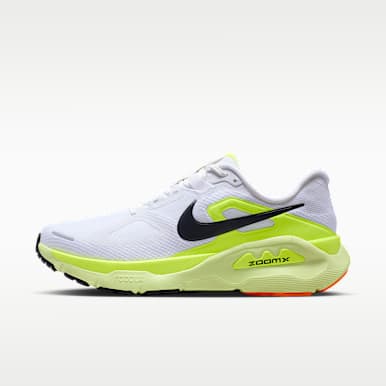
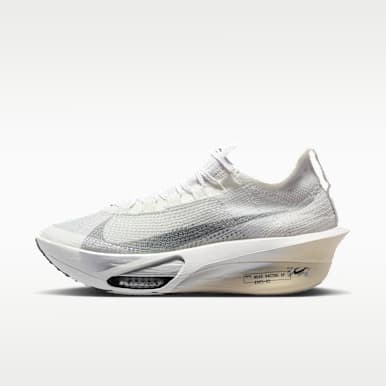
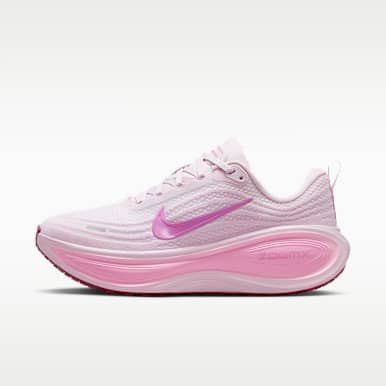
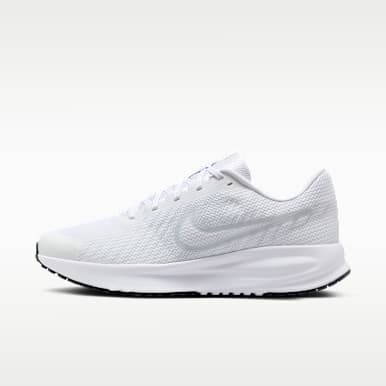
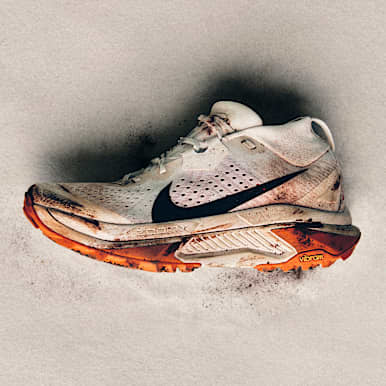
Narrow Your Options
A running shoe is designed for linear movement and should be cushioned and comfortable to support you as you work throughout that movement pattern, says Nike Run Club Chicago Coach Emily Hutchins. A training shoe, on the other hand, provides stability for multidirectional movements, such as squats, lunges and side shuffles.
- Running shoes: linear movement and forward propulsion
- Training shoes: multidirectional stability
- Walking shoes: smooth heel-to-toe transition
Focus on Feel
Just-right running shoes should feel like a natural extension of your body. "If your shoes are uncomfortable, you're going to anticipate that discomfort with every footfall", says Nike Running Club Coach Chris Bennett. That causes your body to make compensations in your form, which can affect your natural gait and, he adds, may lead to injuries.
- Shoes should feel comfortable immediately.
- Hot spots (areas of heat, friction and redness) are red flags.
- Don't rely on a break-in period.
Get Your Fit Fine-Tuned
Wear a pair that's too small, and you could wind up with blisters and black toenails. Run in a pair that's too big, and you'll be sliding around, unable to absorb impact and maximise your push off the ground.
Pro tip: whether you're in a store or you ordered online, make sure you try on shoes after a run or in the evening. Your feet swell over the course of the day in the same way they swell during running. If you try on shoes before a workout or early in the morning, you may end up with a pair that's too tight.
How Should Running Shoes Fit?
- Ability to wiggle your toes
- No pressure points or hot spots
- Snug heel without slipping
- Thumb-width space in front of toes
- Fit well even after activity or later in the day when feet have swelled slightly
Consider Any Foot Issues
Your foot anatomy and running style can make a difference when choosing the best shoe. Here's how to deal with some common problems:
- Overpronation or Underpronation
Everyone needs some degree of pronation. When a person runs, the foot naturally moves into a pronated (inward) position as it hits the ground, then into a supinated (outward) position as the runner pushes away from the ground. This natural shifting keeps us nimble on our feet and able to navigate uneven terrain, says Welch, and, most importantly, "it's a way for your body to absorb force so you don't hurt yourself".
Issues strike when that amount of pronation is excessive. Overpronators tend to prefer stability shoes with a firmer midsole that helps prevent their foot from caving in too much. Underpronators typically fare better in neutral shoes, which provide more cushioning (but less support) and more shock absorption.
- Flat Feet or High Arches
If you have flat feet, consider a shoe with a bit more support, says Welch. People with high arches "can often wear whatever they want and do well in a neutral shoe", he says.
- Plantar Fasciitis
Plantar fasciitis is an injury to the plantar fascia, a strong band of tissue that runs down the middle of your foot and supports your arch, says Klein. It's often caused by excessive stress, like overtraining or a sudden increase in mileage. The inflammation typically creates a stabbing pain along the bottom of your foot, from your heel to your toes.
If your fasciitis is mild and/or caught and treated early, you can usually continue to run as long as you don't overdo it on mileage. If that's the case, the more supportive the shoe, the better. A stability shoe that provides extra cushioning at the heel may help lessen the pain.
How Do You Know If You Overpronate or Underpronate?
With overpronation, the foot rolls inward, leading to more wear on the inner edge of your shoe. With underpronation (also called supination), the foot rolls outward, showing more outer-edge wear.
One easy way to tell is to wet your feet and stand on a piece of cardboard. With overpronation, you'll see a full, flat footprint with very little arch. With underpronation, you'll only see a thin line connecting the heel and ball of the foot.
If your foot overpronates or collapses excessively inward, you could be at risk for plantar fasciitis, IT band friction, piriformis syndrome, knee pain or shin splints, says Welch. If your foot underpronates, the joints of your foot don't move to absorb shock, and the majority of your weight falls on the outer edge of your foot, which could lead to stress fractures. Any of these injuries can potentially sideline you for weeks or months, so you want to avoid them at all costs.
Stability vs Neutral Running Shoes: Which Do You Need?
- Overpronation: shoes with stability
- Underpronation: neutral, cushioned shoes
- Neutral gait: neutral shoe
How Much Cushioning Do You Need?
"For casual, everyday runs, a somewhat cushioned, neutral shoe can do it all", says Jason Fitzgerald, a USA Track & Field–certified coach. Most neutral shoes have a mix of cushioning and responsiveness that eases you through long runs while still giving you ample energy return when you want to pick up the pace. During races or speed workouts, a lighter shoe can be awesome, says Bennett. (When you're gunning for an all-out effort, the less weight your foot has to pick up with each stride, the better.)
How To Compare Running Shoes for Different Surfaces
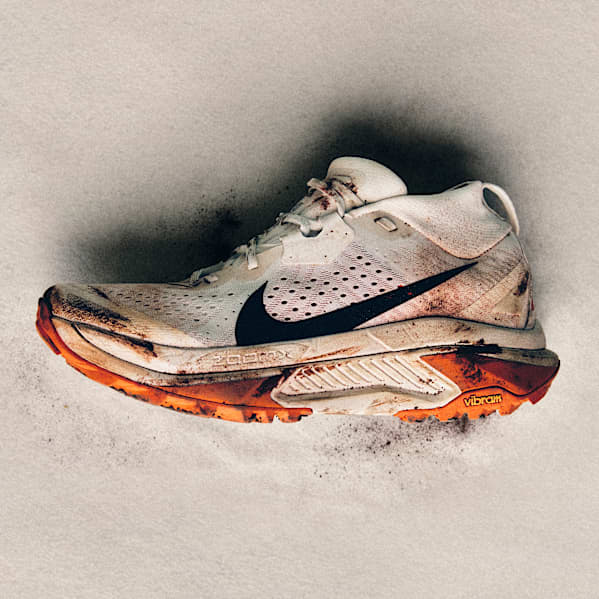
Going off-road? You'll likely need a pair of trail-running shoes to help you better navigate roots, pebbles and boulders as well as softer, uneven surfaces, says Nike Run Club Chicago Coach Robyn LaLonde. These types of shoes have a durable sole and a wider base with a grippy tread for better traction.
You may also want to look for a trail-running shoe that's either water-resistant or waterproof and has an ankle collar to keep out debris. If you're going to be running trails that are especially rock-laden or steep, LaLonde recommends a shoe with a rock plate built into the midsole, which helps protect your feet from sudden stubs and awkward landings and makes it easier to run tougher grades.
When Should You Replace Running Shoes?
Most running shoes are safe to sport for 300 to 500 miles, depending on how you run, says Welch. But overstriding, excessive pronation and landing too far forward or too far back on the shoe can all cause the outsole to wear out faster, he says.
A simple way to determine when to replace your shoes is to pay attention to the feel. Ask yourself, are your shoes still giving your feet and lower legs the support and cushion that they used to give you? If not, or if you can see visible signs of wear in the sole, it's time for a new pair.
If you're lucky, your go-to style is still available, and you can just pick up a fresh pair. But if the version has been updated, you probably want to try the updated shoes out to make sure any changes to the fit still work for you. The good news is that since you've already gone through this list, you know what to look for.
FAQs
How do I choose the right running shoes?
The right running shoes should match your gait, training style and foot shape. Your preferred cushioning will depend on factors like planned distance and terrain.
How should running shoes fit?
When trying on running shoes, be sure that you can wiggle your toes and you're not feeling any pressure points or hot spots. The heel should be snug but not pinching, and there should be a thumb-width space in front of the toes.
Do I need stability or neutral running shoes?
The answer depends on whether you have pronation issues. For those who overpronate, stability shoes will be key, while those who underpronate require a neutral, cushioned shoe. If you have a neutral gait, a neutral running shoe is best.
How many miles do running shoes last?
Most running shoes last for 300 to 500 miles, but over-striding, excessive pronation and landing too far forward or too far back on the shoe can all cause the outsole to wear out faster.
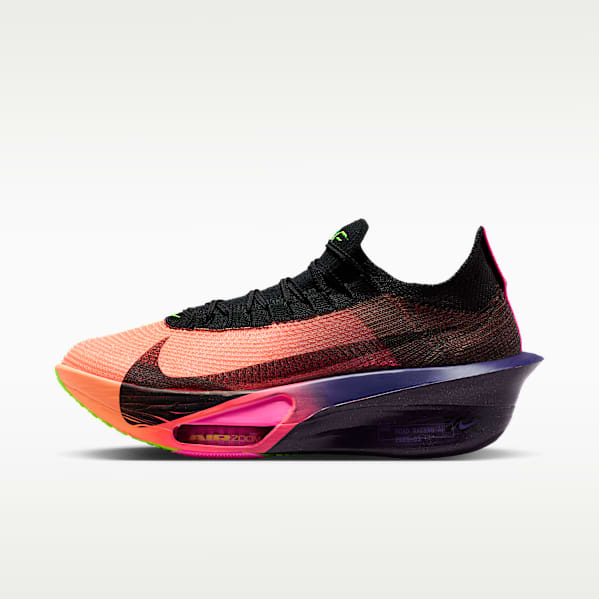
Shop Nike Running

Related Stories

Sports & Activity
How to Start Running Again After a Break
This Is Nike (M)
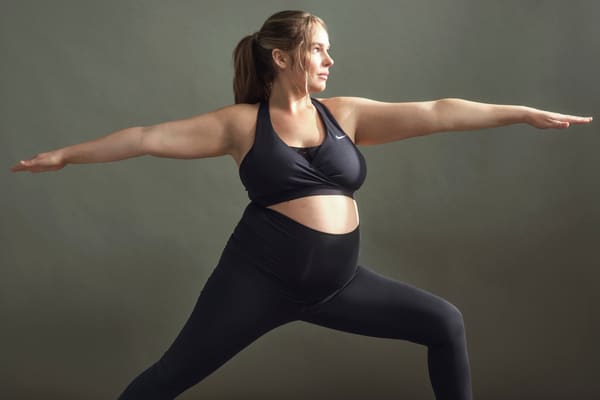
Is Antenatal Yoga the Workout You've Been Waiting For?
This Is Nike (M)
How Hard Should Your Pregnancy Workouts Really Be?

This Is Nike (M)
Energy-Boosting Tips to Help You Manage First-Trimester Fatigue

This Is Nike (M)
Overcome These Common Mental Blocks to Post-partum Training