[Skip to main content](https://www.nike.com#skip-to-content)
- [](https://www.nike.com/za/jordan)
- [Find a Store](https://www.nike.com/za/retail)
- [Help](https://www.nike.com/za/help)
[Help](https://www.nike.com/za/help)
- [Order Status](https://www.nike.com/za/orders)
- [Dispatch and Delivery](https://www.nike.com/za/help/a/shipping-delivery-gs)
- [Returns](https://www.nike.com/za/help/a/returns-policy-gs)
- [Contact Us](https://www.nike.com/za/help/#contact)
- [Privacy Policy](https://agreementservice.svs.nike.com/za/en_gb/rest/agreement?agreementType=privacyPolicy&uxId=com.nike.unite&country=ZA&language=en&requestType=redirect)
- [Terms of Sale](https://www.eshopworld.com/shoppers/help/retailer/nike/terms-and-conditions-of-sale-en/)
- [Terms of Use](https://agreementservice.svs.nike.com/za/en_gb/rest/agreement?agreementType=termsOfUse&uxId=com.nike.unite&country=ZA&language=en&requestType=redirect)
- [Send Us Feedback](https://www.nike.com#site-feedback)
- [Join Us](https://www.nike.com/za/membership)
- [Sign In](https://www.nike.com/za/register)
[](https://www.nike.com/za/)
- [New](https://www.nike.com/za/w/new-3n82y)
- [New](https://www.nike.com/za/w/new-3n82y)
- [New Arrivals](https://www.nike.com/za/w/new-3n82y)
- [Best Sellers](https://www.nike.com/za/w/best-76m50)
- [SNKRS Launch Calendar](https://www.nike.com/gb/launch/upcoming)
- [Highlights](https://www.nike.com/za/w/new-just-in-3apgqz3n82y)
- [Jordan: Love Letter Collection](https://www.nike.com/za/w/love-letter-7xkbw)
- [Best of Jordan](https://www.nike.com/za/w/best-of-jordan-brand-j0oa)
- [Jordan Fleece](https://www.nike.com/za/w/jordan-fleece-37eefz4xh6q)
- [Football: New Club Kits 26/27](https://www.nike.com/za/w/club-football-teams-6fu9q)
- [After Dark Tour London](https://www.nike.com/za/w/after-dark-tour-6bo5l)
- [Trending](https://www.nike.com/za/w/best-76m50)
- [Hybrid Training](https://www.nike.com/za/w/hybrid-training-8wvhh)
- [Marathon Shoes](https://www.nike.com/za/w/marathon-distance-shoes-6vbyfzy7ok)
- [Elite Football Boots](https://www.nike.com/za/w/elite-football-shoes-1gdj0z9vmnhzy7ok)
- [Sportswear Clothing](https://www.nike.com/za/w/sportswear-clothing-43h4uz6ymx6)
- [Waterproof Running Jackets](https://www.nike.com/za/w/water-resistant-running-jackets-gilets-37v7jz50r7yzo08u)
- [Brands](https://www.nike.com/za/w/37eefz43h4uz93bsdzpgd6)
- [Nike Sportswear](https://www.nike.com/za/w/lifestyle-13jrm)
- [ACG: All Conditions Gear](https://www.nike.com/za/acg)
- [Jordan](https://www.nike.com/za/w/jordan-37eef)
- [Kobe](https://www.nike.com/za/w/kobe-pgd6)
- [NOCTA](https://www.nike.com/za/w/nocta-25nhb)
- [Men](https://www.nike.com/za/men)
- [Highlights](https://www.nike.com/za/w/new-mens-3n82yznik1)
- [New Arrivals](https://www.nike.com/za/w/new-mens-3n82yznik1)
- [Best Sellers](https://www.nike.com/za/w/mens-best-76m50znik1)
- [Streetwear Clothing](https://www.nike.com/za/w/streetwear-clothing-97qn8)
- [Football: New Club Kits 26/27](https://www.nike.com/za/w/club-football-teams-6fu9q)
- [Clothing Essentials](https://www.nike.com/za/w/mens-essentials-4jjpuznik1)
- [Shoes](https://www.nike.com/za/w/mens-shoes-nik1zy7ok)
- [All Shoes](https://www.nike.com/za/w/mens-shoes-nik1zy7ok)
- [Lifestyle](https://www.nike.com/za/w/mens-lifestyle-shoes-13jrmznik1zy7ok)
- [Jordan](https://www.nike.com/za/w/mens-jordan-shoes-37eefznik1zy7ok)
- [Running](https://www.nike.com/za/w/mens-running-shoes-37v7jznik1zy7ok)
- [Football](https://www.nike.com/za/w/mens-football-shoes-1gdj0znik1zy7ok)
- [Basketball](https://www.nike.com/za/w/mens-basketball-shoes-3glsmznik1zy7ok)
- [Training and Gym](https://www.nike.com/za/w/mens-training-gym-shoes-58jtoznik1zy7ok)
- [Skateboarding](https://www.nike.com/za/w/mens-skateboarding-shoes-8mfrfznik1zy7ok)
- [Custom Shoes](https://www.nike.com/za/w/mens-nike-by-you-shoes-6ealhznik1zy7ok)
- [Clothing](https://www.nike.com/za/w/mens-clothing-6ymx6znik1)
- [All Clothing](https://www.nike.com/za/w/mens-clothing-6ymx6znik1)
- [Hoodies and Sweatshirts](https://www.nike.com/za/w/mens-hoodies-sweatshirts-6riveznik1)
- [Jackets](https://www.nike.com/za/w/mens-jackets-gilets-50r7yznik1)
- [Tracksuits](https://www.nike.com/za/w/mens-tracksuits-1ll2wznik1)
- [Trousers and Tights](https://www.nike.com/za/w/mens-trousers-tights-2kq19znik1)
- [Tops and T-Shirts](https://www.nike.com/za/w/mens-tops-t-shirts-9om13znik1)
- [Shorts](https://www.nike.com/za/w/mens-shorts-38fphznik1)
- [Kits and Jerseys](https://www.nike.com/za/w/mens-football-kits-jerseys-1gdj0z3a41eznik1)
- [Accessories](https://www.nike.com/za/w/mens-accessories-equipment-awwpwznik1)
- [Sport](https://www.nike.com/za/w/mens-performance-3k7dgznik1)
- [Running](https://www.nike.com/za/running)
- [Football](https://www.nike.com/za/football)
- [Basketball](https://www.nike.com/za/basketball)
- [Training and Gym](https://www.nike.com/za/training)
- [Tennis](https://www.nike.com/za/tennis)
- [Skateboarding](https://www.nike.com/za/w/mens-skateboarding-8mfrfznik1)
- [Golf](https://www.nike.com/za/golf)
- Brands
- [Nike Sportswear](https://www.nike.com/za/sportswear)
- [ACG: All Conditions Gear](https://www.nike.com/za/acg)
- [Jordan](https://www.nike.com/za/w/mens-jordan-37eefznik1)
- [Kobe](https://www.nike.com/za/w/mens-kobe-nik1zpgd6)
- [NOCTA](https://www.nike.com/za/w/mens-nocta-25nhbznik1)
- [Women](https://www.nike.com/za/women)
- [Highlights](https://www.nike.com/za/w/new-womens-3n82yz5e1x6)
- [New Arrivals](https://www.nike.com/za/w/new-womens-3n82yz5e1x6)
- [Best Sellers](https://www.nike.com/za/w/womens-best-5e1x6z76m50)
- [Nike Fleece Essentials](https://www.nike.com/za/w/nike-studio-fleece-s531)
- [Seasonal Clothing Packs](https://www.nike.com/za/w/seasonal-clothing-packs-9yawh)
- [Football Player Edition: Sam Kerr](https://www.nike.com/za/w/sam-kerr-4mbmv)
- [Clothing Essentials](https://www.nike.com/za/w/womens-essentials-4jjpuz5e1x6)
- [After Dark Tour London](https://www.nike.com/za/w/after-dark-tour-6bo5l)
- [Shoes](https://www.nike.com/za/w/womens-shoes-5e1x6zy7ok)
- [All Shoes](https://www.nike.com/za/w/womens-shoes-5e1x6zy7ok)
- [Lifestyle](https://www.nike.com/za/w/womens-lifestyle-shoes-13jrmz5e1x6zy7ok)
- [Jordan](https://www.nike.com/za/w/womens-jordan-shoes-37eefz5e1x6zy7ok)
- [Running](https://www.nike.com/za/w/womens-running-shoes-37v7jz5e1x6zy7ok)
- [Training and Gym](https://www.nike.com/za/w/womens-training-gym-shoes-58jtoz5e1x6zy7ok)
- [Football](https://www.nike.com/za/w/womens-football-shoes-1gdj0z5e1x6zy7ok)
- [Custom Shoes](https://www.nike.com/za/w/womens-nike-by-you-shoes-5e1x6z6ealhzy7ok)
- [Clothing](https://www.nike.com/za/w/womens-clothing-5e1x6z6ymx6)
- [All Clothing](https://www.nike.com/za/w/womens-clothing-5e1x6z6ymx6)
- [Hoodies and Sweatshirts](https://www.nike.com/za/w/womens-hoodies-sweatshirts-5e1x6z6rive)
- [Jackets](https://www.nike.com/za/w/womens-jackets-gilets-50r7yz5e1x6)
- [Trousers](https://www.nike.com/za/w/womens-trousers-tights-2kq19z5e1x6)
- [Leggings](https://www.nike.com/za/w/womens-tights-leggings-29sh2z5e1x6)
- [Matching Sets](https://www.nike.com/za/w/womens-matching-sets-2lukpz5e1x6)
- [Tops and T-Shirts](https://www.nike.com/za/w/womens-tops-t-shirts-5e1x6z9om13)
- [Shorts](https://www.nike.com/za/w/womens-shorts-38fphz5e1x6)
- [Sports Bras](https://www.nike.com/za/w/womens-sports-bras-40qgmz5e1x6)
- [Accessories](https://www.nike.com/za/w/womens-accessories-equipment-5e1x6zawwpw)
- [Sport](https://www.nike.com/za/w/womens-performance-3k7dgz5e1x6)
- [Training and Gym](https://www.nike.com/za/training)
- [Running](https://www.nike.com/za/running)
- [Football](https://www.nike.com/za/football)
- [Basketball](https://www.nike.com/za/basketball)
- [Tennis](https://www.nike.com/za/tennis)
- [Skateboarding](https://www.nike.com/za/w/womens-skateboarding-5e1x6z8mfrf)
- [Golf](https://www.nike.com/za/golf)
- Brands
- [NikeSKIMS](https://www.nike.com/za/nikeskims)
- [Nike Sportswear](https://www.nike.com/za/sportswear)
- [ACG: All Conditions Gear](https://www.nike.com/za/acg)
- [Jordan](https://www.nike.com/za/w/womens-jordan-37eefz5e1x6)
- [Kobe](https://www.nike.com/za/w/womens-kobe-5e1x6zpgd6)
- [Kids](https://www.nike.com/za/kids)
- [Highlights](https://www.nike.com/za/w/new-kids-3n82yzv4dh)
- [New Arrivals](https://www.nike.com/za/w/new-kids-3n82yzv4dh)
- [Best Sellers](https://www.nike.com/za/w/kids-best-76m50zv4dh)
- [Teen Destination](https://www.nike.com/za/teens)
- [Nike x LEGO® Collection](https://www.nike.com/za/lego)
- [Clothing Essentials](https://www.nike.com/za/w/kids-essentials-4jjpuzv4dh)
- [Shoes](https://www.nike.com/za/w/kids-shoes-v4dhzy7ok)
- [All Shoes](https://www.nike.com/za/w/kids-shoes-v4dhzy7ok)
- [Lifestyle](https://www.nike.com/za/w/kids-lifestyle-shoes-13jrmzv4dhzy7ok)
- [Jordan](https://www.nike.com/za/w/kids-jordan-shoes-37eefzv4dhzy7ok)
- [Football](https://www.nike.com/za/w/kids-football-shoes-1gdj0zv4dhzy7ok)
- [Running](https://www.nike.com/za/w/kids-running-shoes-37v7jzv4dhzy7ok)
- [Basketball](https://www.nike.com/za/w/kids-basketball-shoes-3glsmzv4dhzy7ok)
- [Physical Education](https://www.nike.com/za/w/kids-performance-shoes-3k7dgzv4dhzy7ok)
- [Clothing](https://www.nike.com/za/w/kids-clothing-6ymx6zv4dh)
- [All Clothing](https://www.nike.com/za/w/kids-clothing-6ymx6zv4dh)
- [Hoodies and Sweatshirts](https://www.nike.com/za/w/kids-hoodies-sweatshirts-6rivezv4dh)
- [Jackets](https://www.nike.com/za/w/kids-jackets-gilets-50r7yzv4dh)
- [Tracksuits](https://www.nike.com/za/w/kids-tracksuits-1ll2wzv4dh)
- [Trousers and Leggings](https://www.nike.com/za/w/kids-trousers-tights-2kq19zv4dh)
- [Matching Sets](https://www.nike.com/za/w/kids-matching-sets-2lukpzv4dh)
- [Tops and T-Shirts](https://www.nike.com/za/w/kids-tops-t-shirts-9om13zv4dh)
- [Shorts](https://www.nike.com/za/w/kids-shorts-38fphzv4dh)
- [Kits & Jerseys](https://www.nike.com/za/w/kids-football-kits-jerseys-1gdj0z3a41ezv4dh)
- [Accessories](https://www.nike.com/za/w/kids-accessories-equipment-awwpwzv4dh)
- [Kids by age](https://www.nike.com/za/w/kids-v4dh)
- [Teens (13–17 years)](https://www.nike.com/za/w/teen-collection-6hgue)
- [Older Kids (7–12 years)](https://www.nike.com/za/w/older-kids-agibjzv4dh)
- [Younger Kids (3–7 years)](https://www.nike.com/za/w/little-kids-6dacezv4dh)
- [Baby & Toddler (0–3 years)](https://www.nike.com/za/w/baby-toddlers-kids-2j488zv4dh)
- [Sport](https://www.nike.com/za/w/kids-performance-3k7dgzv4dh)
- [Running](https://www.nike.com/za/w/kids-running-37v7jzv4dh)
- [Football](https://www.nike.com/za/w/kids-football-1gdj0zv4dh)
- [Basketball](https://www.nike.com/za/w/kids-basketball-3glsmzv4dh)
- [Physical Education](https://www.nike.com/za/w/kids-training-gym-58jtozv4dh)
- [Skateboarding](https://www.nike.com/za/w/skateboarding-8mfrf)
- [Sport](https://www.nike.com/za/lockerroom)
- [Highlights](https://www.nike.com/za/w/new-performance-3k7dgz3n82y)
- [New Arrivals](https://www.nike.com/za/w/new-performance-3k7dgz3n82y)
- [Best Sellers](https://www.nike.com/za/w/best-performance-3k7dgz76m50)
- [Jordan Basketball](https://www.nike.com/za/w/jordan-basketball-37eefz3glsm)
- [Football: New Club Kits 26/27](https://www.nike.com/za/w/club-football-teams-6fu9q)
- [Discover: Nike Hybrid RN](https://www.nike.com/za/w/hybrid-training-8wvhh)
- [Running](https://www.nike.com/za/running)
- [All Running](https://www.nike.com/za/w/running-37v7j)
- [Shoes](https://www.nike.com/za/w/running-shoes-37v7jzy7ok)
- [Clothing](https://www.nike.com/za/w/running-clothing-37v7jz6ymx6)
- [Accessories](https://www.nike.com/za/w/running-accessories-equipment-37v7jzawwpw)
- [Football](https://www.nike.com/za/football)
- [All Football](https://www.nike.com/za/w/football-1gdj0)
- [Shoes](https://www.nike.com/za/w/football-shoes-1gdj0zy7ok)
- [Clothing](https://www.nike.com/za/w/football-clothing-1gdj0z6ymx6)
- [Accessories](https://www.nike.com/za/w/football-accessories-equipment-1gdj0zawwpw)
- [Training and Gym](https://www.nike.com/za/training)
- [All Training and Gym](https://www.nike.com/za/w/training-gym-58jto)
- [Shoes](https://www.nike.com/za/w/training-gym-shoes-58jtozy7ok)
- [Clothing](https://www.nike.com/za/w/training-gym-clothing-58jtoz6ymx6)
- [Accessories](https://www.nike.com/za/w/training-gym-accessories-equipment-58jtozawwpw)
- [More Sports](https://www.nike.com/za/w/performance-3k7dg)
- [All Sport](https://www.nike.com/za/w/performance-3k7dg)
- [Basketball](https://www.nike.com/za/basketball)
- [Outdoor](https://www.nike.com/za/w/acg-93bsd)
- [Tennis](https://www.nike.com/za/tennis)
- [Nike SB](https://www.nike.com/za/w/skateboarding-8mfrf)
- [Golf](https://www.nike.com/za/golf)
- [Swimming](https://www.nike.com/za/w/swimming-3c2dj)
- [NikeSKIMS](https://www.nike.com/za/nikeskims)
- [NikeSKIMS Guides](https://www.nike.com/za/nikeskims-lookbook)
- [NikeSKIMS Lookbook](https://www.nike.com/za/nikeskims-lookbook)
- [NikeSKIMS Bra Guide](https://www.nike.com/za/nikeskims-bra-guide)
- [NikeSKIMS Collection Guide](https://www.nike.com/za/nikeskims-collection-guide)
- [Clothing](https://www.nike.com/za/w/nikeskims-b2asd)
- [All Clothing](https://www.nike.com/za/w/nikeskims-clothing-6ymx6zb2asd)
- [Bras](https://www.nike.com/za/w/nikeskims-sports-bras-40qgmzb2asd)
- [Tops and Tanks](https://www.nike.com/za/w/nikeskims-tops-t-shirts-9om13zb2asd)
- [Leggings](https://www.nike.com/za/w/nikeskims-tights-leggings-29sh2zb2asd)
- [Shorts](https://www.nike.com/za/w/nikeskims-shorts-38fphzb2asd)
- [Shoes](https://www.nike.com/za/w/nikeskims-shoes-b2asdzy7ok)
- [Accessories](https://www.nike.com/za/w/nikeskims-accessories-equipment-awwpwzb2asd)
- [Collections](https://www.nike.com/za/nikeskims-collection-guide)
- [All Collections](https://www.nike.com/za/w/nikeskims-b2asd)
- [Satin Shine](https://www.nike.com/za/w/nikeskims-satin-shine-97fc5)
- [Matte](https://www.nike.com/za/w/nikeskims-nikeskims-matte-5s3enzb2asd)
- [Airy](https://www.nike.com/za/w/nikeskims-nikeskims-airy-5c1qqzb2asd)
- [Ribbed Seamless](https://www.nike.com/za/w/nikeskims-nikeskims-seamless-6lh4szb2asd)
- [Studio Stretch](https://www.nike.com/za/w/nikeskims-studio-stretch-admbq)
- [Stretch Nylon](https://www.nike.com/za/w/nikeskims-stretch-nylon-7sut9)
- [Weightless](https://www.nike.com/za/w/nikeskims-nikeskims-weightless-4csx8zb2asd)
- [Shop By Color](https://www.nike.com/za/w/nikeskims-b2asd)
- [Obsidian](https://www.nike.com/za/w/nikeskims-black-90poyzb2asd)
- [Dark Sepia](https://www.nike.com/za/w/nikeskims-dark-sepia-81pvm)
- [Phoenix](https://www.nike.com/za/w/nikeskims-phoenix-1jhtj)
- [Ivory](https://www.nike.com/za/w/nikeskims-white-4g797zb2asd)
- [Citrine](https://www.nike.com/za/w/nikeskims-yellow-ayp69zb2asd)
- [Carob](https://www.nike.com/za/w/nikeskims-brown-557pqzb2asd)
Cancel
Cancel
Popular Search Terms
[jordan](https://www.nike.com/za/w?q=jordan&vst=jordan)[p6000](https://www.nike.com/za/w?q=p6000&vst=p6000)[air force 1](https://www.nike.com/za/w?q=air%20force%201&vst=air%20force%201)[air max](https://www.nike.com/za/w?q=air%20max&vst=air%20max)[jordan 1](https://www.nike.com/za/w?q=jordan%201&vst=jordan%201)[nike shox](https://www.nike.com/za/w?q=nike%20shox&vst=nike%20shox)[air max 95](https://www.nike.com/za/w?q=air%20max%2095&vst=air%20max%2095)[dunk low](https://www.nike.com/za/w?q=dunk%20low&vst=dunk%20low)
[](https://www.nike.com/za/favorites "Favourites")[](https://www.nike.com/za/cart "Bag Items: 0")
# How to Do Crunches: Form Tips and Variations
##### Sports & Activity
Learn how to perform Crunches efficiently, and level up with variations like Butterfly and Bicycle Crunches to boost total core strength and control.
Last updated: 12 January 2026
10 min read
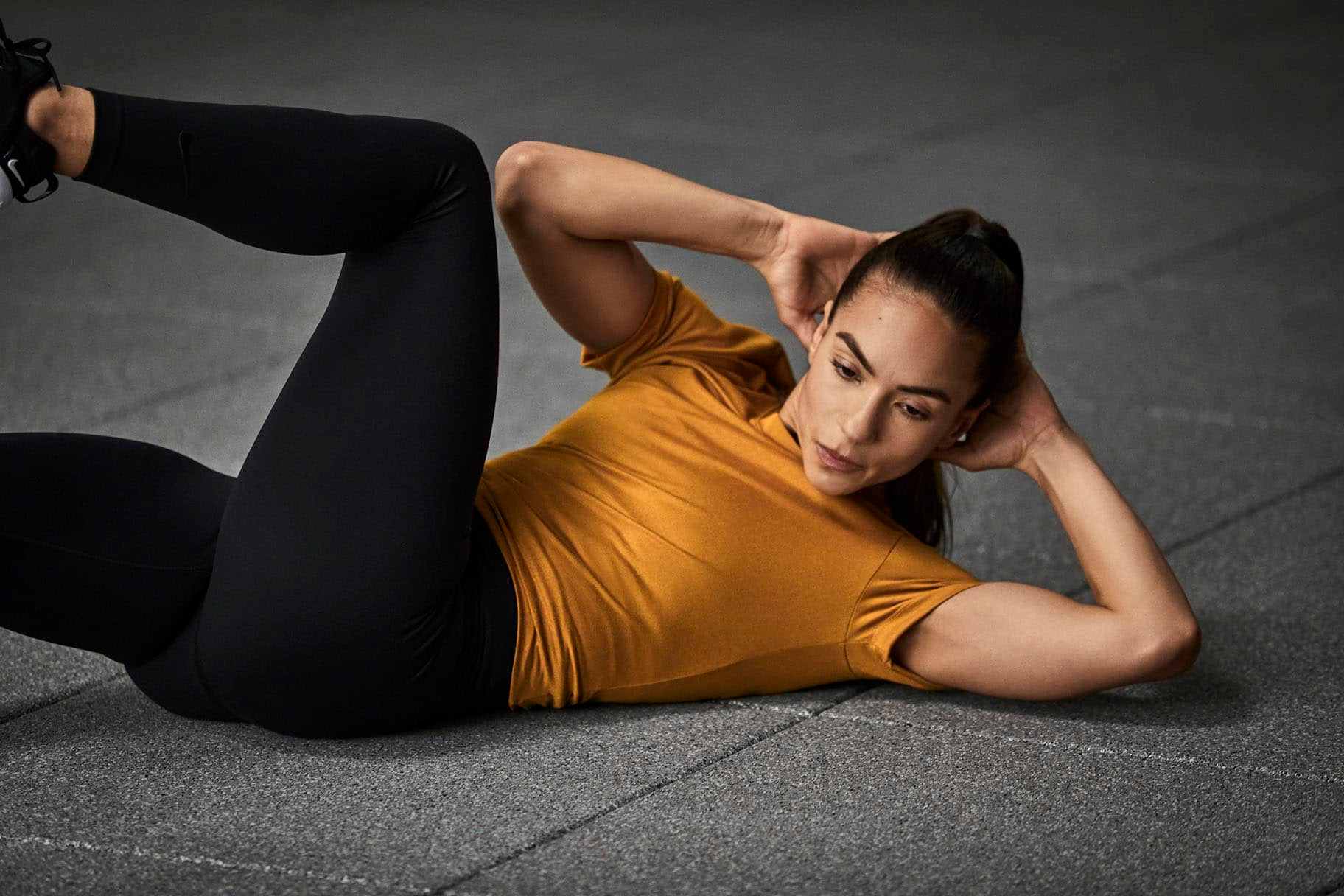
When's the last time you did crunches? With countless core machines and ab-training programmes available today, you may wonder whether this classic move still deserves a place in your routine. The answer is yes, trainers stand by crunches because they're a foundational movement that helps build core strength and improve abdominal engagement at any fitness level.
"Crunches can absolutely be a solid core exercise, especially when you do them with intention and with good form", says [Phillip Solomon](https://www.instagram.com/phillipsolomon_/?hl=en), NASM-certified personal trainer and Barry's instructor. "They're simple, accessible and they teach you how to actually activate your abs instead of letting your low back or hip flexors do the heavy lifting during your workout".
Ahead, learn how to do crunches so you get the most out of the exercise, plus variations that strengthen different parts of your core.
## Shop Nike Training & Gym Clothing
[View All](https://www.nike.com/za/w/training-gym-clothing-58jtoz6ymx6)
- [Nike Pro
\
Men's Dri-FIT Tight Short-Sleeve Fitness Top
\
__R 749,95__](https://www.nike.com/za/t/pro-mens-dri-fit-tight-short-sleeve-fitness-top-4Hk1th/FB7932-100)
- [Nike Pro Training
\
Men's Dri-FIT 15cm (approx.) Shorts
\
__R 1 099,95__](https://www.nike.com/za/t/pro-training-mens-dri-fit-15cm-approx-shorts-bcRFGX/HV0411-010)
- [Nike Indy Strappy
\
Women's Light-Support Sports Bra
\
__R 949,95__](https://www.nike.com/za/t/indy-strappy-womens-light-support-sports-bra-q1IEFbwK/IV4912-644)
- [Nike Pro
\
Men's Dri-FIT Training Tank
\
__R 849,95__](https://www.nike.com/za/t/pro-mens-dri-fit-training-tank-You6xpYY/IF2805-644)
- [Nike Pro
\
Men's Dri-FIT Fitness Long Shorts
\
__R 749,95__](https://www.nike.com/za/t/pro-mens-dri-fit-fitness-long-shorts-w8HDNr/FB7963-644)
- [Nike Universa Pulse
\
Women's Medium-Support Padded Sports Bra
\
__R 1 499,95__](https://www.nike.com/za/t/universa-pulse-womens-medium-support-padded-sports-bra-27RomARo/HM5229-010)
- [Nike Universa
\
Women's High-Waisted 12.5cm (approx.) Biker Shorts with No Front Seam
\
__R 1 399,95__](https://www.nike.com/za/t/universa-womens-high-waisted-12-5cm-approx-biker-shorts-with-no-front-seam-BzPHnp/HQ6832-010)
- [Nike Pro Sculpt
\
Women's Dri-FIT Long-Sleeve Top
\
__R 1 199,95__](https://www.nike.com/za/t/pro-sculpt-womens-dri-fit-long-sleeve-top-EBxJHZ24/IM9970-010)
- [Nike Universa
\
Women's High-Waisted 7/8 Leggings with No Front Seam
\
__R 2 199,95__](https://www.nike.com/za/t/universa-womens-high-waisted-7-8-leggings-with-no-front-seam-QBPbCq/HQ6813-010)
- [Nike Pro
\
Men's Dri-FIT Tight Sleeveless Fitness Top
\
__R 749,95__](https://www.nike.com/za/t/pro-mens-dri-fit-tight-sleeveless-fitness-top-PXn7Sf/FB7914-084)
## What Muscles Do Crunches Work?
"While crunches are often dismissed as 'just an ab exercise', they're actually a very effective move to target a key muscle of the core: the rectus abdominis", says [Cori Lefkowith](https://redefiningstrength.com/private-coaching/), NASM-CPT, CES, FNS, PES, founder and head coach of Redefining Strength and author of [*The STRONG System: Transform Your Mindset and Build Your Best Body at Any Age*](https://www.amazon.com/STRONG-System-Transform-Mindset-Build/dp/1628606606).
The rectus abdominis is also referred to as your "six-pack" muscles. They're responsible for spinal flexion or when you bend your spine forward and round your back.
"These muscles not only help control your spine during running, lifting, carrying, and rotational movements, but also prevent your hip flexors and lower back from taking on extra work and risking injury", explains Solomon.
## Benefits of Crunches
Not only can crunches enhance your athletic performance on the track and in the gym, but they also make everyday movements, like walking on uneven terrain or sitting upright in a chair for long periods, feel easier. The top benefits of crunches include:
- __Improved core stability.__ "Strong abs help control ribcage and pelvic positioning to improve your posture and reduce excessive spinal extension during lifting and running", Lefkowith says.
- __Enhances balance and coordination.__ When your rectus abdominis and accompanying ab muscles are strong, they improve torso control, which supports acceleration, deceleration, agility and quick directional changes, Lefkowith explains.
- __Builds mind-muscle connection.__ Your mind and body are more connected than you may realise. "Crunches teach you how to actually feel and isolate your abs so future movements become stronger and more intentional", Solomon says.
- __Improves ab strength and definition.__ "Crunches train the abs through their full range of motion, helping develop strength and muscle definition", Lefkowith says.
- __Supports better breathing mechanics__. Strengthening your abs improves ribcage control and helps you manage intra-abdominal pressure more efficiently, which can support smoother breathing during running, lifting or high-intensity training, Lefkowith explains. However, crunches are just one tool. [R](https://pmc.ncbi.nlm.nih.gov/articles/PMC4668176/)[esearch suggests](https://pmc.ncbi.nlm.nih.gov/articles/PMC4668176/) that integrating core work with diaphragmatic breathing may enhance respiratory function and abdominal strength more than traditional ab exercises alone.
- __Reduces risk of overuse injuries.__ When your core muscles are strong, your hips and lower back don't have to take on as much load, which helps ease pressure on these areas during long runs or endurance sessions, Solomon explains.
## Why Form Matters for Core Strength
As with any strengthening movement, your technique matters—not only for maximising the benefits of the exercise but also for preventing surrounding muscles and joints from taking on unnecessary stress.
"Even small adjustments, like keeping a posterior pelvic tilt or rolling up one vertebra at a time, can dramatically increase abdominal activation", Lefkowith explains. "These form cues help make sure the abs do the work instead of the neck, hip flexors or lower back, which not only improves your results but also reduces the risk of discomfort or injury".
## How to Do Crunches
Follow these cues from Lefkowith and Solomon to get the most out of a standard crunch and keep the work where it belongs—your core muscles.
1. Lie on your back with your knees bent and feet flat on the floor (or lift your legs into a tabletop position if you're more advanced).
2. Place your hands behind your head with your elbows wide and gently press your head back into your hands to avoid tucking your chin.
3. Press your lower back towards the floor and draw your pelvis slightly towards your ribs to engage your abs.
4. Exhale and lift your shoulder blades off the ground, rolling up one vertebra at a time using your abdominal muscles—not your neck.
5. Pause at the top and maintain engagement through your midsection.
6. Inhale as you slowly lower back down with control, rolling down one vertebra at a time and keeping your pelvis slightly tucked.
## Common Mistakes with Crunches
While there's more than one way to do a crunch, using suboptimal technique can limit the exercise's effectiveness and cause unnecessary strain. Below are common mistakes—and how to avoid them—with tips from Lefkowith and Solomon.
- __Rushing through reps.__ When you move too quickly, momentum takes over, meaning your abs do less work, Lefkowith explains__.__ Slow, controlled movements are the name of the game with crunches. "I love to advise clients to use a 1-2-3 method for timing", Solomon says. "To do this, lift off the ground in one count, hold for two counts and slowly release your shoulders back to the ground for three counts".
- __Straining your neck.__ "Tucking your chin pulls the work out of your abs", Lefkowith says. "To help avoid your neck from engaging, press your head gently into your hands and focus on rolling up to lift your shoulder blades off the ground". Another helpful cue: look up toward the sky, Solomon adds. "The space between your chin and chest should be about the size of your fist".
- __Using your hip flexors and lower-back muscles.__ If you feel discomfort in your hip flexors (front of hip muscles), that's usually a sign you're relying on these muscles, plus those in your lower back, instead of your rectus abdominis muscles, Solomon says. You can easily tweak this by lying flat on your back, pulling your ribs down, and as you exhale, "imagine pulling the abdominal wall back towards the spine", Solomon says. "As you leave the ground, keep the elbows, shoulders and chest spread as wide as possible, ensuring that there is no weight on the top of the vertebrae".
- __Turning the crunch into a sit-up.__ "Coming up too high and performing a sit-up will also engage your hip flexors more", Lefkowith says. To engage your abs, lift just until your shoulder blades are about to leave the floor and think about drawing your ribs toward your pelvis, she notes.
- __Holding your breath.__ "Holding your breath can create unnecessary tension in your neck and lower back and lead to poor intra-abdominal pressure", Lefkowith explains. "Exhale as you lift to keep your abs engaged".
## 6 Crunch Variations
There are many ways you can do crunches. Here are several options, based on fitness level and comfort.
## Beginner Variations
## Heels-on-Bench Crunch
1. Place your heels on a bench with your knees bent to about 90 degrees.
2. Press your lower back into the floor and place your hands behind your head.
3. Gently push down into the bench to reduce hip-flexor involvement and maintain a posterior pelvic tilt.
4. Curl your shoulder blades up using your abs, rolling up one vertebra at a time.
__Why this variation works for beginners:__ elevating your heels on the bench allows you to push down and reduce your hip flexors' involvement in the move, Lefkowith says. "It also makes it easier to maintain a posterior pelvic tilt, so your abs do more of the work".
## Butterfly Crunch
1. Lie on your back with the soles of your feet together and knees open wide.
2. Press your lower back towards the ground and place your hands behind your head with elbows open.
3. Engage your abs and glutes for stability in the externally rotated position.
4. Slowly roll up, lifting your shoulder blades by curling your ribs towards your pelvis.
__Why this variation works for beginners:__ "Opening your knees out wide with your feet together relaxes your hip flexors and helps isolate true spinal flexion, so beginners can better feel their abs working", Lefkowith says. "This can also help you engage your glutes for stability, due to the external hip rotation".
## Lower Body Crunch March
1. Lie on your back and press your lower back into the floor.
2. Engage your abs and tuck one knee towards your chest.
3. Lower that leg, then repeat with the opposite knee, keeping your pelvis stable.
4. Focus on curling through your lower back rather than moving only at your hips.
5. To increase the challenge, lift your upper body into a slight crunch and hold while marching your legs.
__Why this variation works for beginners:__ "By lifting one knee at a time, this crunch teaches beginners how to keep their pelvis steady and target their abs instead of their hip flexors", Lefkowith says. It's a useful stepping stone toward more advanced core moves, such as lower body crunches and leg raises.
## Advanced Variations
## Bicycle Crunch
1. Lie on your back with your hands behind your head and elbows wide.
2. Lift your shoulder blades off the floor and draw your knees into a tabletop position.
3. Extend your right leg out while simultaneously bringing your left knee in.
4. Rotate your torso to bring your right elbow towards your left knee.
5. Switch sides—extend your left leg and draw your right knee in as you rotate your torso to meet it with your left elbow.
6. Continue alternating sides in a smooth, controlled pedalling motion.
__Why this variation works for those looking for a challenge:__ This movement requires a bit more coordination than the beginner-friendly variations above. "Bringing the elbow to the opposite knee activates the oblique muscles", Solomon explains, so you're also working those core muscles in addition to your rectus abdominis.
## BOSU Crunch
1. Place the BOSU ball under your mid-back while sitting and gently lean back until your spine arches over the dome.
2. Position your feet firmly on the floor and place your hands behind your head with your elbows wide.
3. Allow your torso to extend over the ball to create a longer range of motion.
4. Press your lower back into the BOSU to engage your abs.
5. Roll up one vertebra at a time, lifting your shoulder blades off the ball.
6. Pause briefly at the top, then slowly lower back into the extended position with control.
__Why this variation works for those looking for a challenge:__ "Using a BOSU[](https://www.nike.com/a/bosu-ball-exercises) [ball](https://www.nike.com/za/a/bosu-ball-exercises) increases your range of motion by allowing more spinal extension before the crunch, creating a deeper contraction", says Lefkowith.
## Full-Body Crunch
1. Lie on your back with your knees bent and hands behind your head.
2. Engage your abs and press your lower back gently towards the floor.
3. Exhale as you lift your shoulder blades off the ground and curl your knees towards your chest, rounding through your lower back.
4. Pause briefly at the top, keeping the focus on your abs rather than your hip flexors.
5. Extend your legs close to the floor as you lower your shoulder blades back down with control.
6. Repeat, maintaining the rounded spine as you draw your knees in to keep the work in your abs—not just at the hips.
__Why this variation works for those looking for a challenge:__ "A full-body crunch incorporates lower body movement to challenge your abs through spinal flexion and boost overall core engagement", Lefkowith says.
## Shop Nike Metcon Training & Gym Shoes
[View All](https://www.nike.com/za/w/metcon-training-gym-shoes-3yxqsz58jtozy7ok)
- [Nike Metcon 10
\
Men's Workout Shoes
\
__R 2 799,95__](https://www.nike.com/za/t/metcon-10-mens-workout-shoes-HGsqH5/HJ1875-002)
- [Nike Metcon 10 AMP
\
Men's Training Shoes
\
__R 2 999,95__](https://www.nike.com/za/t/metcon-10-amp-mens-training-shoes-wBOcc5vs/IM3571-001)
- [Nike Metcon 10
\
Women's Training Shoes
\
__R 2 799,95__](https://www.nike.com/za/t/metcon-10-womens-training-shoes-Fcz372/HQ2620-102)
- [Nike Metcon 10 SE
\
Women's Training Shoes
\
__R 2 799,95__](https://www.nike.com/za/t/metcon-10-se-womens-training-shoes-HPaw1aiQ/IM4322-001)
- [Nike Metcon 10 By You
\
Custom Women's Workout Shoes
\
__R 3 299,95__](https://www.nike.com/za/u/custom-nike-metcon-10-by-you-10002211/1638039107)
- [Nike Metcon 10 By You
\
Custom Men's Workout Shoes
\
__R 3 299,95__](https://www.nike.com/za/u/custom-nike-metcon-10-by-you-10002209/2074203201)
- [Nike Metcon 10
\
Women's Workout Shoes
\
__R 1 999,99__
__R 2 799,95__](https://www.nike.com/za/t/metcon-10-womens-workout-shoes-AMYx8UFd/IB6545-700)
## Beginner Crunch Routine
If you're new to crunches—regardless of your current fitness level—consider trying this beginner crunch routine, courtesy of Solomon.
1. Begin with a 30- to 60-second plank to activate the abdominal muscles.
2. Next, do one set of 8 to 10 sit-ups with hand reaches, extending the arms towards the sky and holding at the top for three to five counts.
3. Perform two sets of 15 to 20 basic crunches, maintaining a 1-2-3 tempo (lift in one count, hold for two, lower for three).
4. Take rest as needed in between sets.
## FAQs
How do you do a crunch correctly?
While there is no one single "right" way to do a crunch, it's important to keep technique and form top of mind. "Form is probably the most important component of good crunches", Solomon says. When you engage your abs, you build strength more effectively while protecting your neck and lower back from excess strain.
Are crunches good for beginners?
Absolutely. Beginner variations, like the butterfly and heels-on-bench crunches, can help make the movement even more accessible. "Crunches are an underrated exercise for building core strength", Lefkowith says. "No matter your fitness level, the basic crunch shouldn't be ignored".
What muscles do crunches work?
Standard crunches mainly target the rectus abdominis muscles, aka the "six-pack" muscles, though certain variations recruit other core muscles, including the obliques.
What's the difference between crunches and sit-ups?
Crunches mainly target the "six-pack" muscles and involve a smaller range of motion, lifting just the shoulders off the floor or bench, Solomon says. Sit-ups, on the other hand, engage a broader group of muscles—including the abs, obliques, hip flexors and back—and require greater body control.
[](https://niketrainingclub.sng.link/Ara19/3ocq/gnbq?pcn=OGC%20Articles%20HO21&_dl=niketrainingclub%3A%2F%2Fx-callback-url%2Fworkout%2Ffeatured)
### Tips to maximise your training
Get free guidance from trainers and experts to strengthen your body and mind.
[Explore NTC](https://niketrainingclub.sng.link/Ara19/3ocq/gnbq?pcn=OGC%20Articles%20HO21&_dl=niketrainingclub%3A%2F%2Fx-callback-url%2Fworkout%2Ffeatured)
## Words by Cheyenne Buckingham
Originally published: 23 November 2021
## Related Stories
- 
[](https://www.nike.com/za/a/best-outdoor-workout)
# Sports & Activity
# 7 Expert-Approved Outdoor Workout Ideas, Backed by Science
- 
[](https://www.nike.com/za/a/bench-press-muscles-worked)
# Sport & activity
# Everything You Need to Know About Barbell Bench Presses, According to Trainers
- 
[](https://www.nike.com/za/a/best-crossfit-gifts)
# Buying guide
# The Best Nike CrossFit Gifts to Shop Now
- 
[](https://www.nike.com/za/a/compound-exercise)
# Sport & Activity
# Everything You Need To Know About Compound Exercises
- 
[](https://www.nike.com/za/a/how-to-do-power-clean)
# Sport & Activity
# How to Master the Power Clean: 4 Steps for Beginners
Resources
[Find a Store](https://www.nike.com/za/retail/)
[Nike Journal](https://www.nike.com/za/stories)
[Become a Member](https://www.nike.com/za/membership)
[Feedback](https://www.nike.com#site-feedback)
[Promo Codes](https://www.nike.com/za/promo-code)
[Product Advice](https://www.nike.com/za/product-advice)
[Running Shoe Finder](https://www.nike.com/za/running/shoe-finder)
Help
[Get Help](https://www.nike.com/za/help)
[Order Status](https://www.nike.com/za/orders/details)
[Shipping and Delivery](https://www.nike.com/za/help/a/shipping-delivery-gs)
[Returns](https://www.nike.com/za/help/a/returns-policy-gs)
[Payment Options](https://www.nike.com/za/help/a/payment-options-gs)
[Contact Us](https://www.nike.com/za/help/#contact)
[Reviews](https://www.nike.com/za/help/a/reviews)
Company
[About Nike](https://about.nike.com/)
[News](https://news.nike.com/)
[Careers](https://jobs.nike.com/)
[Investors](https://investors.nike.com/)
[Sustainability](https://www.nike.com/za/sustainability)
[Purpose](https://www.nike.com/za/purpose)
[Nike Coaching](https://www.nike.com/za/coaching)
[Report a concern](https://secure.ethicspoint.com/domain/media/en/gui/56821/index.html)
Community Discounts
[Student](https://urldefense.com/v3/__https://services.sheerid.com/verify/68d55e7b273c5b3a03a5b76d/?locale=en-GB__%3B%21%21KLCbKzk%21nTvDkRbY-BbSpoWsFhAQdmMrehEzU3loDux4_exRVjO9--Ik_EbQNJ3bX2gkEwR7F9cVVROFKqLxE4B8uW6bnx4IPOiRLg%24)
[Teacher](https://urldefense.com/v3/__https://services.sheerid.com/verify/68dcfa39c3f2fd1cd3069932/?locale=en-GB__%3B%21%21KLCbKzk%21nTvDkRbY-BbSpoWsFhAQdmMrehEzU3loDux4_exRVjO9--Ik_EbQNJ3bX2gkEwR7F9cVVROFKqLxE4B8uW6bnx5n4vwR-Q%24)
[Resources](https://www.nike.com/za/help)
[Find a Store](https://www.nike.com/za/retail/)
[Nike Journal](https://www.nike.com/za/stories)
[Become a Member](https://www.nike.com/za/membership)
[Feedback](https://www.nike.com#site-feedback)
[Promo Codes](https://www.nike.com/za/promo-code)
[Product Advice](https://www.nike.com/za/product-advice)
[Running Shoe Finder](https://www.nike.com/za/running/shoe-finder)
[Help](https://www.nike.com/za/help)
[Get Help](https://www.nike.com/za/help)
[Order Status](https://www.nike.com/za/orders/details)
[Shipping and Delivery](https://www.nike.com/za/help/a/shipping-delivery-gs)
[Returns](https://www.nike.com/za/help/a/returns-policy-gs)
[Payment Options](https://www.nike.com/za/help/a/payment-options-gs)
[Contact Us](https://www.nike.com/za/help/#contact)
[Reviews](https://www.nike.com/za/help/a/reviews)
[Company](https://about.nike.com/en)
[About Nike](https://about.nike.com/)
[News](https://news.nike.com/)
[Careers](https://jobs.nike.com/)
[Investors](https://investors.nike.com/)
[Sustainability](https://www.nike.com/za/sustainability)
[Purpose](https://www.nike.com/za/purpose)
[Nike Coaching](https://www.nike.com/za/coaching)
[Report a concern](https://secure.ethicspoint.com/domain/media/en/gui/56821/index.html)
## Community Discounts
[Student](https://urldefense.com/v3/__https://services.sheerid.com/verify/68d55e7b273c5b3a03a5b76d/?locale=en-GB__%3B%21%21KLCbKzk%21nTvDkRbY-BbSpoWsFhAQdmMrehEzU3loDux4_exRVjO9--Ik_EbQNJ3bX2gkEwR7F9cVVROFKqLxE4B8uW6bnx4IPOiRLg%24)
[Teacher](https://urldefense.com/v3/__https://services.sheerid.com/verify/68dcfa39c3f2fd1cd3069932/?locale=en-GB__%3B%21%21KLCbKzk%21nTvDkRbY-BbSpoWsFhAQdmMrehEzU3loDux4_exRVjO9--Ik_EbQNJ3bX2gkEwR7F9cVVROFKqLxE4B8uW6bnx5n4vwR-Q%24)
South Africa
- © 2026 Nike, Inc. All rights reserved.
- Guides
- [Nike Air](https://www.nike.com/za/air)
- [Nike Air Max](https://www.nike.com/za/air-max)
- [Nike FlyEase](https://www.nike.com/za/flyease)
- [Nike Pegasus](https://www.nike.com/za/running/runningzoom-pegasus-37)
- [Nike React](https://www.nike.com/za/react)
- [Nike Vaporfly](https://www.nike.com/za/running/vaporfly)
- [Terms of Use](https://agreementservice.svs.nike.com/za/en_gb/rest/agreement?agreementType=termsOfUse&uxId=com.nike.unite&country=ZA&language=en&requestType=redirect)
- [Terms of Sale](https://www.eshopworld.com/shoppers/help/terms-and-conditions-of-sale-en/)
- [Company Details](https://www.nike.com/za/help/a/company-details)
- [Privacy & Cookie Policy](https://agreementservice.svs.nike.com/za/en_gb/rest/agreement?agreementType=privacyPolicy&uxId=com.nike.unite&country=ZA&language=en&requestType=redirect)
- [Privacy & Cookie Settings](https://www.nike.com/za/guest/settings/privacy)
## Africa
- [__Egypt__
\
English](https://www.nike.com/eg/)
- [__Morocco__
\
English](https://www.nike.com/ma/en/)
- [__Maroc__
\
Français](https://www.nike.com/ma/)
- [__South Africa__
\
English](https://www.nike.com/za/)
## Americas
- [__Argentina__
\
Español](https://www.nike.com.ar)
- [__Brasil__
\
Português](https://www.nike.com.br)
- [__Canada__
\
English](https://www.nike.com/ca/)
- [__Canada__
\
Français](https://www.nike.com/ca/fr/)
- [__Chile__
\
Español](https://www.nike.cl)
- [__Colombia__
\
Español](https://www.nike.com.co)
- [__México__
\
Español](https://www.nike.com/mx/)
- [__Peru__
\
Español](https://www.nike.com.pe)
- [__Puerto Rico__
\
Español](https://www.nike.com/pr/)
- [__United States__
\
English](https://www.nike.com)
- [__Estados Unidos__
\
Español](https://www.nike.com/us/es/)
- [__Uruguay__
\
Español](https://www.nike.com.uy)
- [__Latin America__
\
Español](https://www.nike.com/xl/)
## Asia Pacific
- [__Australia__
\
English](https://www.nike.com/au/)
- [__中国大陆__
\
简体中文](https://www.nike.com.cn/)
- [__Hong Kong__
\
English](https://www.nike.com.hk/)
- [__香港__
\
繁體中文](https://www.nike.com.hk/)
- [__India__
\
English](https://www.nike.in/)
- [__Indonesia__
\
English](https://www.nike.com/id/)
- [__Japan__
\
English](https://www.nike.com/jp/en/)
- [__日本__
\
日本語](https://www.nike.com/jp/)
- [__대한민국__
\
한국어](https://www.nike.com/kr/)
- [__Malaysia__
\
English](https://www.nike.com/my/)
- [__New Zealand__
\
English](https://www.nike.com/nz/)
- [__Philippines__
\
English](https://www.nike.com/ph/)
- [__Singapore__
\
English](https://www.nike.com/sg/)
- [__台灣__
\
繁體中文](https://www.nike.com/tw/)
- [__ไทย__
\
ภาษาไทย](https://www.nike.com/th/)
- [__Vietnam__
\
English](https://www.nike.com/vn/)
## Europe
- [__Österreich__
\
Deutsch](https://www.nike.com/at/)
- [__Austria__
\
English](https://www.nike.com/at/en/)
- [__Belgien__
\
Deutsch](https://www.nike.com/be/de/)
- [__Belgium__
\
English](https://www.nike.com/be/en/)
- [__Belgique__
\
Français](https://www.nike.com/be/fr/)
- [__België__
\
Nederlands](https://www.nike.com/be/)
- [__Bulgaria__
\
English](https://www.nike.com/bg/)
- [__Croatia__
\
English](https://www.nike.com/hr/)
- [__Česká republika__
\
Čeština](https://www.nike.com/cz/)
- [__Czech Republic__
\
English](https://www.nike.com/cz/en/)
- [__Danmark__
\
Dansk](https://www.nike.com/dk/)
- [__Denmark__
\
English](https://www.nike.com/dk/en/)
- [__Finland__
\
English](https://www.nike.com/fi/)
- [__France__
\
Français](https://www.nike.com/fr/)
- [__Deutschland__
\
Deutsch](https://www.nike.com/de/)
- [__Ελλάδα__
\
ελληνικά](https://www.nike.com/gr/)
- [__Hungary__
\
English](https://www.nike.com/hu/en/)
- [__Magyarország__
\
Magyar](https://www.nike.com/hu/)
- [__Ireland__
\
English](https://www.nike.com/ie/)
- [__Israel__
\
English](https://www.nike.com/il/)
- [__Italia__
\
Italiano](https://www.nike.com/it/)
- [__Luxemburg__
\
Deutsch](https://www.nike.com/lu/de/)
- [__Luxembourg__
\
English](https://www.nike.com/lu/en/)
- [__Luxembourg__
\
Français](https://www.nike.com/lu/)
- [__Netherlands__
\
English](https://www.nike.com/nl/en/)
- [__Nederland__
\
Nederlands](https://www.nike.com/nl/)
- [__Norway__
\
English](https://www.nike.com/no/en/)
- [__Norge__
\
Norsk](https://www.nike.com/no/)
- [__Polska__
\
Polski](https://www.nike.com/pl/)
- [__Portugal__
\
English](https://www.nike.com/pt/en/)
- [__Portugal__
\
Português](https://www.nike.com/pt/)
- [__Romania__
\
English](https://www.nike.com/ro/)
- [__Россия__
\
Русский](https://www.nike.com/ru/)
- [__Slovakia__
\
English](https://www.nike.com/sk/)
- [__Slovenia__
\
English](https://www.nike.com/si/)
- [__Espanya__
\
Català](https://www.nike.com/es/ca/)
- [__España__
\
Español](https://www.nike.com/es/)
- [__Sweden__
\
English](https://www.nike.com/se/en/)
- [__Sverige__
\
Svenska](https://www.nike.com/se/)
- [__Schweiz__
\
Deutsch](https://www.nike.com/ch/)
- [__Switzerland__
\
English](https://www.nike.com/ch/en/)
- [__Suisse__
\
Français](https://www.nike.com/ch/fr/)
- [__Svizzera__
\
Italiano](https://www.nike.com/ch/it/)
- [__Türkiye__
\
Türkçe](https://www.nike.com/tr/)
- [__United Kingdom__
\
English](https://www.nike.com/gb/)
## Middle East
- [__Saudi Arabia__
\
English](https://www.nike.sa/en/home)
- [__المملكة العربية السعودية__
\
العربية](https://www.nike.sa/ar/home)
- [__United Arab Emirates__
\
English](https://www.nike.ae/en/home)
- [__الإمارات العربية المتحدة__
\
العربية](https://www.nike.ae/ar/home)
- [__Qatar__
\
English](https://www.nike.qa/en/home)
- [__دولة قطر__
\
العربية](https://www.nike.qa/ar/home)
- [__Kuwait__
\
English](https://www.nike.com.kw/en/home)
- [__الكويت__
\
العربية](https://www.nike.com.kw/ar/home)