How to Kick a Football, According to Coaches: Step-by-Step Guide to Low Pass, Chip and Goal Shot Techniques
Activity
Football coaches break down how to kick a footbal with proper technique, along with sharing drills to practice.
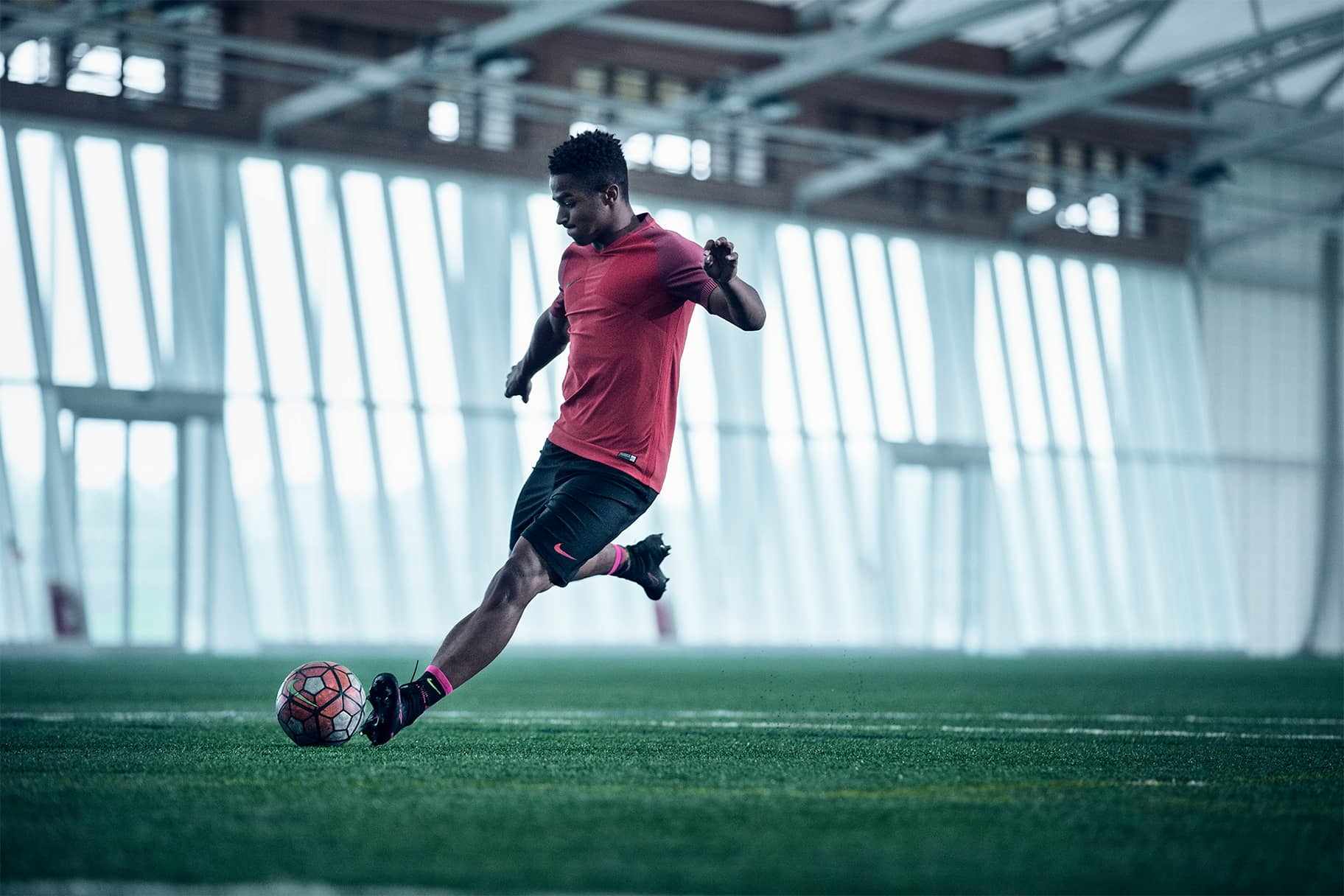
In a sport like football, footwork can make or break a game. If you're just learning how to play, you may want to begin by learning how to kick a football. There are three foundational kick techniques every beginner should learn and practice, according to certified football coach Ben Nabers. These can help with passing a ball to teammates, kicking a ball into the air for longer distances and generating power for goal shots.
Quick Takeaways:
- There are three foundational kicks every beginner should learn: the ground pass, chip shot and goal shot.
- The ground pass keeps the ball on the ground and is used for short-distance passes to teammates.
- The chip shot launches the ball into the air using an upward scooping motion and is useful for longer passes over opponents.
- The goal shot uses the laces to generate power and is the primary technique for scoring.
- Coaches recommend practicing kicking drills three to five days a week for 10 to 20 minutes.
Shop Nike Football
How to Do a Ground Pass in Football
This is a basic kick you can use to pass the football to your teammate over shorter distances. Like the name suggests, the ball remains on the ground. Here are the steps suggested by Brandon Busbee, NSCAA D-licensed football coach, for building better technique:
- Run up to or step next to the football so the inside of your kicking foot is right beside the ball. Your knee should be bent slightly.
- Lean forwards slightly and engage your ankle to swing the foot (not leg) through the ball while keeping the ankle locked in place.
- Aim to hit the middle of the ball with the inside of the foot. If you're making contact with the bottom of the ball, adjust your foot position.
How to Chip a Football
Also known as an aerial pass, this is where you kick the football from underneath to launch it high into the air. Use this technique to pass the ball to a teammate over greater distances or when your opponents are in the way. Nabers recommends these steps for learning to chip properly:
- Run up to or step next to the ball so the inside of your kicking foot is right beside the ball. Your knee should be bent slightly.
- Point the toe down on the kicking foot and bend the kicking leg so the foot hits the very bottom of the ball.
- When you kick, scoop the foot underneath the ball to kick with the inside of your foot and lean backwards slightly to help get the ball in the air.
How to Shoot a Football (Goal Shot)
This is one way to score a goal during games. It's a very powerful kick that can send the football past a goalie. Busbee suggests these steps when you're refining your goal shot technique:
- Run up to or step next to the ball. The toes of your kicking foot should be pointed down.
- Bend the kicking leg and kick so the laces at the top of your shoe hit the middle of the ball. Lean your torso forwards slightly as you kick to stop the ball from going too high.
- You want to apply force so the ball gets off the ground but not so much force that it goes too high and flies over the goal. Practise so you can learn how much force to use.
Football Drills to Improve Technique
The only way to get better at kicking is to practise. This is where kicking drills come into play, says Busbee. Grab two cones and find a wall you don't mind kicking a ball against. Or, partner with someone to run through these kicking drills.
Aim to practise these drills three to five days a week for a total of 10 to 20 minutes.
Ground Pass Wall Drill
- Place two cones right next to the wall, about 3 to 4 metres apart. That may seem very wide. However, Nabers says it's best to start here instead of a more narrow gap so you don't get discouraged.
- Stand 4.5 to 7.3 metres (approx.) from the wall.
- Kick the ball using the ground-pass technique so it hits the wall in between the two cones and returns to you. If you have a partner, simply kick the ball back and forth.
- Practise kicking the ball with the right and left foot.
- As you improve your accuracy and control, gradually narrow the gap between the two cones until they're only 0.3 to 0.6 metres (approx.) apart.
Chip Shot Accuracy Drill
- Place two cones right next to the wall, about 3 to 4 metres apart.
- Stand 13.7 to 18.3 metres (approx.) from the wall. If you're kicking to a teammate, have them stand 18.3 to 27.4 metres (approx.) away from you.
- Kick the ball using the chip shot technique so it hits the wall in between the two cones and returns to you. If you have a partner, kick the ball back and forth to each other.
- Practice kicking the ball with the right and left feet.
- As you improve your accuracy and control, gradually narrow the gap between the two cones until they're only 0.3 to 0.6 metres (approx.) apart.
Goal Shot Corner Drill
- You'll want a goal for this drill.
- Place the football 7.3 to 9.1 metres (approx.) away from the goal.
- Run up to the ball and kick using the goal-shot technique so the ball goes into the goal at one of the four corners.
- Practice kicking the ball with the right and left feet.
- As you improve your accuracy and power, gradually move the ball further away from the goal.
Once you become comfortable with these kicks, learn more advanced ones or add new elements, such as dribbling and navigating obstacles.
What Shoes Do You Need for Football?
Knowing the correct technique for each of the three foundational kicks is essential, but without shoes that give you traction and stability, your ability to progress towards better kicking might be limited. Nike offers different boot options to fit your needs and playing style.
- The Nike Mercurial provides both speed and power, while also featuring lightweight construction. Nike Mercurial Vapor 17 is the lightest Nike football boot, with FlyLite plate technology that reduces weight but still features a sock-like fit and chevron studs on the sole for traction in sudden direction changes in tight spaces. Nike Mercurial Superfly 11 is designed for sprints at maximum speed with an Air Zoom bag for a powerful energy return. The Flyweave Ultra upper keeps your foot secure, and the Chevron studs allow for explosive acceleration in open spaces.
- The Nike Tiempo is all about the touch. For athletes seeking a close foot-to-ball feel, the Nike Tiempo Maestro, which boasts a soft TECHLEATHER, is an excellent option. Players known for their creative dribbling and ball control enjoy the benefits of this boot.
- The Nike Phantom is for players who enjoy the art of precision. The Nike Phantom 6 – available in both high and low versions – includes a special grip in the upper, which helps players maintain control when striking, passing and dribbling. It also includes a Cyclone 360 plate for quick cuts.
With the ability to pivot quickly for a ground pass, get traction for chip shots and build power for a goal shot, you can have more confidence in whatever kick you choose.
FAQs
What part of your foot do you use to kick a football?
The best part of the foot for kicking a ball depends on the goal of that particular kick. For power and distance, it's better to use the top of the foot. For short passes, the inside of the foot is recommended.
How do you kick a football harder?
Locking your ankle and pointing your toes down can help you maximise power in a kick. Also, when possible, use a large backswing and follow through fully, especially if you're trying to get the ball to go a longer distance.
How do you kick a football with your weaker foot?
Being able to kick with either foot will give you better football performance and more adaptability, so it's worth taking the time to practice with your non-dominant foot. Make an effort to do more drills with that foot and lock the ankle as you kick to create more power.
How can I get better more quickly at football kicks?
Practising the kicks on your own (or with a partner) is great, but it's essential to use those kicks in a game setting to get better. Consider looking into what football associations are in your area, whether that's with a local community centre, football club or indoor/outdoor league. Ideally, you'll practice with your team a couple of times per week and play a game every weekend for 12 to 14 weeks.
Related Stories

Kickstart your search with these soccer player gift ideas.
The Best Nike Gifts for Soccer Players: Jerseys, Training Gear, Cleats, and More
Buying Guide
The Best Nike Football Shin Guards: Slip-In, Sleeve and All-in-One Styles, Compared
Buying Guide
What to Wear for Soccer in Cold Weather: Nike Therma, Dri-FIT, and Winter Warrior Gear

Activity
9 Soccer Practice Drills to Improve Dribbling, Passing, Shooting, and Conditioning
Buying Guide
The Best Nike Football Boots: Mercurial, Phantom and Tiempo, Compared by Playing Style and Surface