[Skip to main content](https://www.nike.com#skip-to-content)
- [](https://www.nike.com/my/jordan)
- [Find a Store](https://www.nike.com/my/retail)
- [Help](https://www.nike.com/my/help)
[Help](https://www.nike.com/my/help)
- [Order Status](https://www.nike.com/my/orders)
- [Dispatch and Delivery](https://www.nike.com/my/help/a/shipping-delivery-gs)
- [Returns](https://www.nike.com/my/help/a/returns-policy-gs)
- [Contact Us](https://www.nike.com/my/help/#contact)
- [Privacy Policy](https://agreementservice.svs.nike.com/my/en_gb/rest/agreement?agreementType=privacyPolicy&uxId=com.nike.unite&country=MY&language=en&requestType=redirect)
- [Terms of Sale](https://www.eshopworld.com/shoppers/help/retailer/nike/terms-and-conditions-of-sale-en/)
- [Terms of Use](https://agreementservice.svs.nike.com/my/en_gb/rest/agreement?agreementType=termsOfUse&uxId=com.nike&country=MY&language=en&requestType=redirect)
- [Send Us Feedback](https://www.nike.com#site-feedback)
- [Join Us](https://www.nike.com/my/membership)
- [Sign In](https://www.nike.com/my/register)
[](https://www.nike.com/my/)
- New & Featured
- Featured
- [Upcoming Drops](https://www.nike.com/my/w/new-upcoming-drops-k0gk)
- [New Arrivals](https://www.nike.com/my/w/new-3n82y)
- [Bestsellers](https://www.nike.com/my/w/best-76m50)
- [SNKRS Launch Calendar](https://www.nike.com/my/launch)
- [Customise with Nike By You](https://www.nike.com/my/nike-by-you)
- [Jordan](https://www.nike.com/my/jordan)
- [Kobe Bryant](https://www.nike.com/sg/w/kobe-pgd6)
- [LeBron James](https://www.nike.com/my/basketball/lebron-james)
- Trending
- [Travel Essentials](https://www.nike.com/my/w/travel-collection-951k)
- [Just Do the Work](https://www.nike.com/my/w/nike-training-gym-58jtoz7yfb)
- [More Colours, More Running](https://www.nike.com/my/w/running-shoes-1sytgz37v7jz7gee1z8nexhzy7ok)
- [What's Trending](https://www.nike.com/my/w/trending-now-5fpm9)
- [24.7 Collection](https://www.nike.com/my/w/247-collection-asi8j)
- [Colours of the Season](https://www.nike.com/sg/w/fresh-colors-a499l)
- [Retro Running](https://www.nike.com/my/w/retro-running-8kemk)
- [Running Shoe Finder](https://www.nike.com/sg/running-shoe-finder)
- [Nike Mind](https://www.nike.com/sg/w/mind-game-avw)
- Shop Icons
- [Lifestyle](https://www.nike.com/my/sportswear)
- [Air Force 1](https://www.nike.com/my/w/air-force-1-shoes-5sj3yzy7ok)
- [Air Jordan 1](https://www.nike.com/my/w/jordan-1-shoes-aj85gzy7ok)
- [Air Max](https://www.nike.com/my/w/air-max-shoes-a6d8hzy7ok)
- [Dunk](https://www.nike.com/my/w/dunk-shoes-90aohzy7ok)
- [Cortez](https://www.nike.com/my/w/cortez-shoes-byfxzy7ok)
- [Blazer](https://www.nike.com/my/w/blazer-shoes-9gw3azy7ok)
- [Pegasus](https://www.nike.com/my/w/pegasus-shoes-8nexhzy7ok)
- [Vomero](https://www.nike.com/my/w/zoom-vomero-shoes-7gee1zy7ok)
- Shop By Sport
- [Running](https://www.nike.com/my/running)
- [Basketball](https://www.nike.com/my/basketball)
- [Football](https://www.nike.com/my/football)
- [Golf](https://www.nike.com/my/w/golf-23q9w)
- [Tennis & Pickleball](https://www.nike.com/my/tennis)
- [Gym & Training](https://www.nike.com/my/training)
- [Yoga](https://www.nike.com/my/w/yoga-anrlj)
- [Skateboarding](https://www.nike.com/my/skateboarding)
- [Trail Running](https://www.nike.com/my/w/trail-running-75jcn)
- [All Conditions Gear](https://www.nike.com/my/acg)
- [Men](https://www.nike.com/my/men)
- Featured
- [New Arrivals](https://www.nike.com/my/w/new-mens-3n82yznik1)
- [Bestsellers](https://www.nike.com/my/w/mens-best-76m50znik1)
- [All Conditions Gear](https://www.nike.com/my/w/mens-acg-93bsdznik1)
- [Shop All Sale](https://www.nike.com/my/w/mens-sale-3yaepznik1)
- [Shoes](https://www.nike.com/my/w/mens-shoes-nik1zy7ok)
- [All Shoes](https://www.nike.com/my/w/mens-shoes-nik1zy7ok)
- [Lifestyle](https://www.nike.com/my/w/mens-lifestyle-shoes-13jrmznik1zy7ok)
- [Jordan](https://www.nike.com/my/w/mens-jordan-shoes-37eefznik1zy7ok)
- [Running](https://www.nike.com/my/w/mens-running-shoes-37v7jznik1zy7ok)
- [Football](https://www.nike.com/my/w/mens-football-shoes-1gdj0znik1zy7ok)
- [Basketball](https://www.nike.com/my/w/mens-basketball-shoes-3glsmznik1zy7ok)
- [Gym & Training](https://www.nike.com/my/w/mens-training-gym-shoes-58jtoznik1zy7ok)
- [Tennis](https://www.nike.com/my/w/mens-tennis-shoes-ed1qznik1zy7ok)
- [Skateboarding](https://www.nike.com/my/w/mens-skateboarding-shoes-8mfrfznik1zy7ok)
- [Sandals & Slides](https://www.nike.com/my/w/mens-sandals-slides-fl76znik1)
- [Nike By You](https://www.nike.com/my/w/mens-nike-by-you-shoes-6ealhznik1zy7ok)
- [Trail Running](https://www.nike.com/my/w/mens-acg-trail-running-shoes-75jcnz93bsdznik1zy7ok)
- [Clothing](https://www.nike.com/my/w/mens-clothing-6ymx6znik1)
- [All Clothing](https://www.nike.com/my/w/mens-clothing-6ymx6znik1)
- [Tops & T-Shirts](https://www.nike.com/my/w/mens-tops-t-shirts-9om13znik1)
- [Shorts](https://www.nike.com/my/w/mens-shorts-38fphznik1)
- [Pants & Leggings](https://www.nike.com/my/w/mens-trousers-tights-2kq19znik1)
- [Hoodies & Sweatshirts](https://www.nike.com/my/w/mens-hoodies-sweatshirts-6riveznik1)
- [Jackets & Gilets](https://www.nike.com/my/w/mens-jackets-gilets-50r7yznik1)
- [Jerseys & Kits](https://www.nike.com/my/w/mens-kits-jerseys-3a41eznik1)
- [Jordan](https://www.nike.com/my/w/mens-jordan-clothing-37eefz6ymx6znik1)
- [All Conditions Gear](https://www.nike.com/my/w/mens-acg-clothing-6ymx6z93bsdznik1)
- Shop By Sport
- [Running](https://www.nike.com/my/w/mens-running-37v7jznik1)
- [Basketball](https://www.nike.com/my/w/mens-basketball-3glsmznik1)
- [Football](https://www.nike.com/my/w/mens-football-1gdj0znik1)
- [Golf](https://www.nike.com/my/w/mens-golf-23q9wznik1)
- [Tennis & Pickleball](https://www.nike.com/my/w/mens-tennis-ed1qznik1)
- [Gym & Training](https://www.nike.com/my/w/mens-training-gym-58jtoznik1)
- [Yoga](https://www.nike.com/my/w/mens-yoga-anrljznik1)
- [Skateboarding](https://www.nike.com/my/w/mens-skateboarding-8mfrfznik1)
- [Trail Running](https://www.nike.com/my/w/mens-trail-running-75jcnznik1)
- Accessories & Equipment
- [All Accessories & Equipment](https://www.nike.com/my/w/mens-accessories-equipment-awwpwznik1)
- [Bags & Backpacks](https://www.nike.com/my/w/mens-bags-backpacks-9xy71znik1)
- [Socks](https://www.nike.com/my/w/mens-socks-nik1zuwr3)
- [Hats & Headwear](https://www.nike.com/my/w/mens-hats-visors-headbands-31btsznik1)
- [Women](https://www.nike.com/my/women)
- Featured
- [New Arrivals](https://www.nike.com/my/w/new-womens-3n82yz5e1x6)
- [Bestsellers](https://www.nike.com/my/w/womens-best-5e1x6z76m50)
- [All Conditions Gear](https://www.nike.com/my/w/womens-acg-5e1x6z93bsd)
- [Shop All Sale](https://www.nike.com/my/w/womens-sale-3yaepz5e1x6)
- [Shoes](https://www.nike.com/my/w/womens-shoes-5e1x6zy7ok)
- [All Shoes](https://www.nike.com/my/w/womens-shoes-5e1x6zy7ok)
- [Lifestyle](https://www.nike.com/my/w/womens-lifestyle-shoes-13jrmz5e1x6zy7ok)
- [Jordan](https://www.nike.com/my/w/womens-jordan-shoes-37eefz5e1x6zy7ok)
- [Running](https://www.nike.com/my/w/womens-running-shoes-37v7jz5e1x6zy7ok)
- [Gym & Training](https://www.nike.com/my/w/womens-training-gym-shoes-58jtoz5e1x6zy7ok)
- [Tennis](https://www.nike.com/my/w/womens-tennis-shoes-5e1x6zed1qzy7ok)
- [Football](https://www.nike.com/my/w/womens-football-shoes-1gdj0z5e1x6zy7ok)
- [Basketball](https://www.nike.com/my/w/womens-basketball-shoes-3glsmz5e1x6zy7ok)
- [Sandals & Slides](https://www.nike.com/my/w/womens-sandals-slides-5e1x6zfl76)
- [Nike By You](https://www.nike.com/my/w/womens-nike-by-you-shoes-5e1x6z6ealhzy7ok)
- [Trail Running](https://www.nike.com/my/w/womens-acg-trail-running-shoes-5e1x6z75jcnz93bsdzy7ok)
- [Clothing](https://www.nike.com/my/w/womens-clothing-5e1x6z6ymx6)
- [All Clothing](https://www.nike.com/my/w/womens-clothing-5e1x6z6ymx6)
- [Performance Essentials](https://www.nike.com/my/w/womens-back-to-basics-5e1x6zkkjj)
- [Tops & T-Shirts](https://www.nike.com/my/w/womens-tops-t-shirts-5e1x6z9om13)
- [Sports Bras](https://www.nike.com/my/w/womens-sports-bras-40qgmz5e1x6)
- [Pants & Leggings](https://www.nike.com/my/w/womens-trousers-tights-2kq19z5e1x6)
- [Shorts](https://www.nike.com/my/w/womens-shorts-38fphz5e1x6)
- [Hoodies & Sweatshirts](https://www.nike.com/my/w/womens-hoodies-sweatshirts-5e1x6z6rive)
- [Jackets & Gilets](https://www.nike.com/my/w/womens-jackets-gilets-50r7yz5e1x6)
- [Skirts & Dresses](https://www.nike.com/my/w/womens-skirts-dresses-5e1x6z8y3qp)
- [Modest Wear](https://www.nike.com/my/w/modest-wear-22fj5)
- [All Conditions Gear](https://www.nike.com/my/w/womens-acg-clothing-5e1x6z6ymx6z93bsd)
- Shop By Sport
- [Yoga](https://www.nike.com/my/w/womens-yoga-5e1x6zanrlj)
- [Running](https://www.nike.com/my/w/womens-running-37v7jz5e1x6)
- [Gym & Training](https://www.nike.com/my/w/womens-training-gym-58jtoz5e1x6)
- [Basketball](https://www.nike.com/my/w/womens-basketball-3glsmz5e1x6)
- [Tennis & Pickleball](https://www.nike.com/my/w/womens-tennis-5e1x6zed1q)
- [Golf](https://www.nike.com/my/w/womens-golf-23q9wz5e1x6)
- [Football](https://www.nike.com/my/w/womens-football-1gdj0z5e1x6)
- [Skateboarding](https://www.nike.com/my/w/womens-skateboarding-5e1x6z8mfrf)
- [Trail Running](https://www.nike.com/my/w/womens-trail-running-5e1x6z75jcn)
- Accessories & Equipment
- [All Accessories & Equipment](https://www.nike.com/my/w/womens-accessories-equipment-5e1x6zawwpw)
- [Bags & Backpacks](https://www.nike.com/my/w/womens-bags-backpacks-5e1x6z9xy71)
- [Socks](https://www.nike.com/my/w/womens-socks-5e1x6zuwr3)
- [Hats & Headwear](https://www.nike.com/my/w/womens-hats-visors-headbands-31btsz5e1x6)
- [Kids](https://www.nike.com/my/kids)
- Featured
- [New Arrivals](https://www.nike.com/my/w/new-kids-3n82yzv4dh)
- [Bestsellers](https://www.nike.com/my/w/kids-best-76m50zv4dh)
- [Back to School](https://www.nike.com/my/w/back-to-school-840ik)
- [Sport Gear](https://www.nike.com/my/w/kids-gym-running-22fovzv4dh)
- [Lifestyle Looks](https://www.nike.com/my/w/kids-lifestyle-13jrmzv4dh)
- [Nike x LEGO®](https://www.nike.com/my/lego)
- [All Conditions Gear](https://www.nike.com/my/w/kids-acg-93bsdzv4dh)
- [Nike Teens](https://www.nike.com/my/teens)
- Shoes
- [All Shoes](https://www.nike.com/my/w/kids-shoes-v4dhzy7ok)
- [Lifestyle](https://www.nike.com/my/w/kids-lifestyle-shoes-13jrmzv4dhzy7ok)
- [Jordan](https://www.nike.com/my/w/kids-jordan-shoes-37eefzv4dhzy7ok)
- [Football](https://www.nike.com/my/w/kids-football-shoes-1gdj0zv4dhzy7ok)
- [Running](https://www.nike.com/my/w/kids-running-shoes-37v7jzv4dhzy7ok)
- [Basketball](https://www.nike.com/my/w/kids-basketball-shoes-3glsmzv4dhzy7ok)
- Clothing
- [All Clothing](https://www.nike.com/my/w/kids-clothing-6ymx6zv4dh)
- [Tops & T-Shirts](https://www.nike.com/my/w/kids-tops-t-shirts-9om13zv4dh)
- [Sport Bras](https://www.nike.com/my/w/kids-sports-bras-40qgmzv4dh)
- [Hoodies & Sweatshirts](https://www.nike.com/my/w/kids-hoodies-sweatshirts-6rivezv4dh)
- [Pants & Leggings](https://www.nike.com/my/w/kids-trousers-tights-2kq19zv4dh)
- [Shorts](https://www.nike.com/my/w/kids-shorts-38fphzv4dh)
- [Jackets & Gilets](https://www.nike.com/my/w/kids-jackets-gilets-50r7yzv4dh)
- [All Conditions Gear](https://www.nike.com/my/w/kids-acg-clothing-6ymx6z93bsdzv4dh)
- Kids By Age
- [Older Kids (7 - 14 years)](https://www.nike.com/my/w/older-kids-agibjzv4dh)
- [Younger Kids (4 - 7 years)](https://www.nike.com/my/w/little-kids-6dacezv4dh)
- [Babies & Toddlers (0 - 4 years)](https://www.nike.com/my/w/baby-toddlers-kids-2j488zv4dh)
- Shop By Sports
- [Football](https://www.nike.com/my/w/kids-football-1gdj0zv4dh)
- [Running](https://www.nike.com/my/w/kids-running-37v7jzv4dh)
- [Basketball](https://www.nike.com/my/w/kids-basketball-3glsmzv4dh)
- [Gym & Training](https://www.nike.com/my/w/kids-training-gym-58jtozv4dh)
- [Accessories & Equipment](https://www.nike.com/my/w/kids-accessories-equipment-awwpwzv4dh)
- [All Accessories & Equipment](https://www.nike.com/my/w/kids-accessories-equipment-awwpwzv4dh)
- [Bags & Backpacks](https://www.nike.com/my/w/kids-bags-backpacks-9xy71zv4dh)
- [Socks](https://www.nike.com/my/w/kids-socks-uwr3zv4dh)
- [Hats & Headwear](https://www.nike.com/my/w/kids-hats-55olazv4dh)
- [Sale](https://www.nike.com/my/w/sale-3yaep)
- Sale & Offers
- [Shop All Sale](https://www.nike.com/my/w/sale-3yaep)
- [Last Chance](https://www.nike.com/my/w/sale-low-inventory-3yaepz52uxv)
- [Men's Sale](https://www.nike.com/my/w/mens-sale-3yaepznik1)
- [Shoes](https://www.nike.com/my/w/mens-sale-shoes-3yaepznik1zy7ok)
- [Clothing](https://www.nike.com/my/w/mens-sale-clothing-3yaepz6ymx6znik1)
- [Accessories & Equipment](https://www.nike.com/my/w/mens-sale-accessories-equipment-3yaepzawwpwznik1)
- [Women's Sale](https://www.nike.com/my/w/womens-sale-3yaepz5e1x6)
- [Shoes](https://www.nike.com/my/w/womens-sale-shoes-3yaepz5e1x6zy7ok)
- [Clothing](https://www.nike.com/my/w/womens-sale-clothing-3yaepz5e1x6z6ymx6)
- [Accessories & Equipment](https://www.nike.com/my/w/womens-sale-accessories-equipment-3yaepz5e1x6zawwpw)
- [Kids' Sale](https://www.nike.com/my/w/kids-sale-3yaepzv4dh)
- [Shoes](https://www.nike.com/my/w/kids-sale-shoes-3yaepzv4dhzy7ok)
- [Clothing](https://www.nike.com/my/w/kids-sale-clothing-3yaepz6ymx6zv4dh)
- [Accessories & Equipment](https://www.nike.com/my/w/kids-sale-accessories-equipment-3yaepzawwpwzv4dh)
- Shop By Sports
- [Football](https://www.nike.com/my/w/sale-football-1gdj0z3yaep)
- [Running](https://www.nike.com/my/w/sale-running-37v7jz3yaep)
- [Basketball](https://www.nike.com/my/w/sale-basketball-3glsmz3yaep)
- [Gym & Training](https://www.nike.com/my/w/sale-training-gym-3yaepz58jto)
- [Tennis](https://www.nike.com/my/w/sale-tennis-3yaepzed1q)
- [SNKRS](https://www.nike.com/my/launch)
Cancel
Cancel
Popular Search Terms
[](https://www.nike.com/my/favorites "Favourites")[](https://www.nike.com/my/cart "Bag Items: 0")
New Members Enjoy 15% Off On The Nike App. Use: APP15
[Download Now](https://nike.sng.link/Astn5/9jeg/fjba) [T&Cs](https://www.nike.com/my/help/a/app15-xa-promo-gs)
Free Standard Delivery & 30-Day Free Returns
[Join Now](https://www.nike.com/my/register) [View Details](https://www.nike.com/my/help/a/shipping-delivery-gs)
# How to Play Football: Rules, Positions and Basics, Explained by Coaches
##### Activity
Learn how to play football with guidance from certified coaches, including insight on positions and gameplay basics every beginner needs.
Last updated: 27 May 2026
9 min read
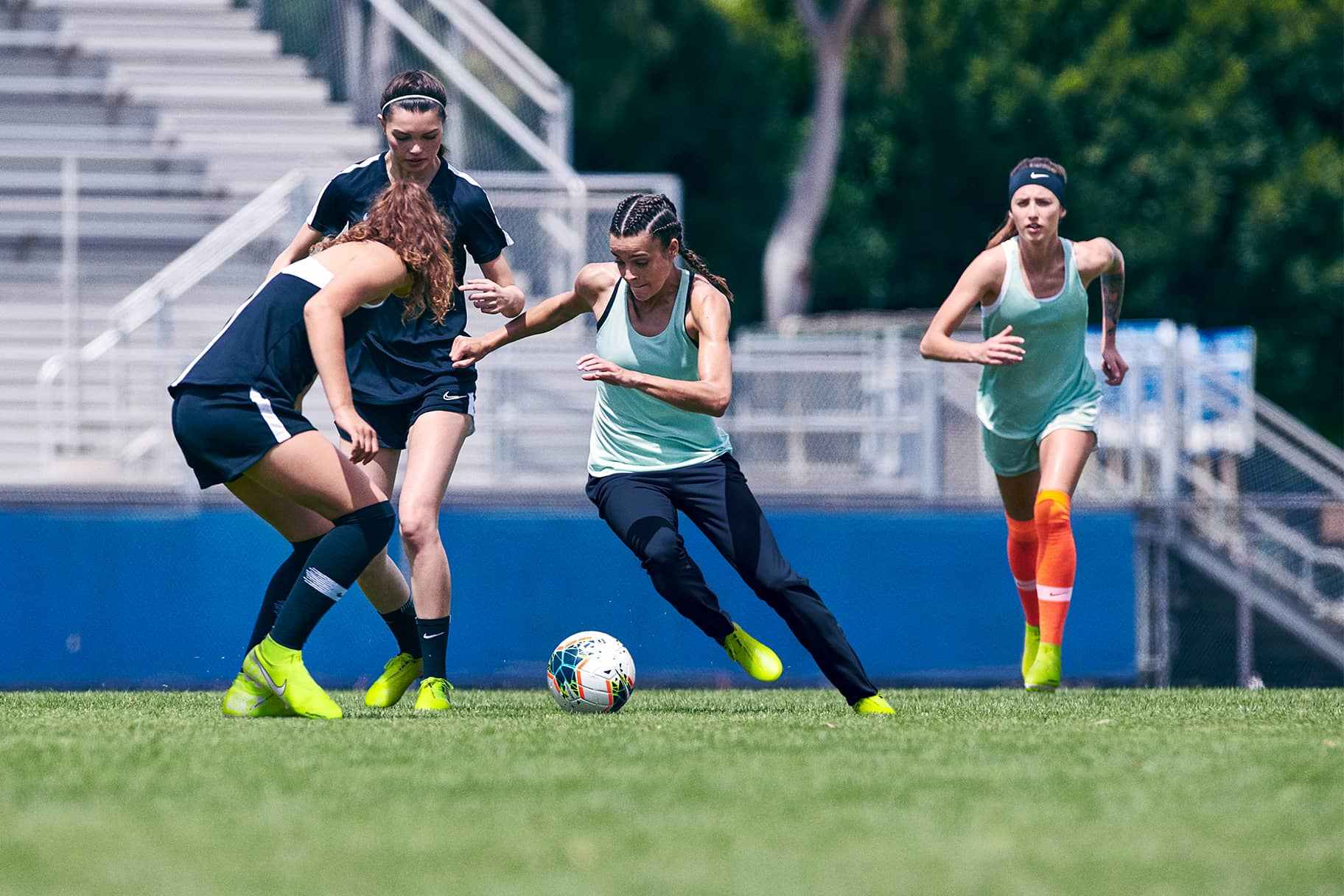
Considered the biggest sport in the world—with an estimated fan base of over 3.5 billion—football is a fast-paced, fun-filled sport that's exciting to watch and to play. So it's worth learning the basics to get the most out of your football experience. This guide will give you all the info you need, from certified coaches to getting on the pitch.
## Quick Takeaways:
- A football game is 90 minutes, split into two 45-minute halves.
- Each team has 10 outfield players and one goalkeeper.
- Key rules to know are offside, handball, yellow and red cards and penalty kicks.
- Positions include forwards, midfielders, defenders and the goalkeeper; all require similar core skills.
- Penalties are awarded when a foul is committed inside the 18-yard box.
## How Long Is a Football Game?
"A full game is 90 minutes, split into two 45-minute halves," said Carl Wild, certified football coach with the [English Football Association](https://www.thefa.com/) and [Scottish Football Association](https://www.scottishfa.co.uk/scottish-fa/organisation/strategy-structure/who-we-are/), management expert and author of "Essential Practices for Player Development."
"There are no breaks or \[time-outs] within those halves. If there is a stop for an injury or substitution, officials will stop the watch and, usually, after 90 minutes, three or four minutes are added to the time", he said.
## What Are the Basic Rules of Football?
Learning how to play football requires a basic understanding of the rules. The more you play, practice and watch games, the better you'll grasp these parameters, but going into the sport with some idea can help get you up to speed. Here are the basic rules of football.
## What Is a Handball in Football?
Using your hands is a big no-no in football. In football, it's against the rules to manoeuvre the ball with your hands and arms; this is often called handball.
"The handball rule is very important and a growing grey area," said Luke Toughey, professional football coach at The University of Brighton. "No player other than the goalkeeper inside their marked-out area can touch the ball with any part of their arm below the sleeve of their shirt, or it will be the opponent's ball," he said.
That said, there are instances when the ball might be kicked in your direction and come in contact with your arms. Accidental cases like that are OK, as long as you don't use your arms to handle the ball.
## What Is Offside in Football?
This is another term you'll hear frequently in football, and it's one of the most important rules of the game. According to Toughey, offside means that "the furthest forward attacker on a team must have at least one opposition outfield defender between them and the opponent's goal or the attacker will be in an offside position".
Being offside creates a situation where it might be easier for an attacking player to score a goal, as there isn't anyone to defend the ball.
## What Do Yellow and Red Cards Mean in Football?
In football, foul play is against the rules. While it's up to the referee's discretion, fouls are when a player kicks, trips, pushes or displays other types of unsportsmanlike behaviour toward an opponent.
When this happens, a referee may show either a yellow or red card to indicate the seriousness of the foul. A yellow card is a formal warning but allows the player to stay on the field, while a red card indicates a serious infraction that leads to immediate ejection from the game.
## What Happens During a Penalty Kick?
When a foul occurs within the penalty box by the defending team, the opposing team gets a penalty kick, meaning they have the opportunity to score a goal with just the goalkeeper defending. Penalty kicks must occur 9.15 metres away from the penalty line, directly at the goalkeeper.
"It is fundamentally important to not commit a foul or handball inside your penalty area, as doing so will result in the opponent feinting a penalty kick, where the opponent striker is statistically very likely to score a goal," said Toughey.
"Even more important than not conceding a penalty is having a player sent off \[the pitch], either by being handed a red card or two yellow cards for indecent conduct, such as a dangerous tackle", he said. When a player gets sent off the pitch, it means they are no longer allowed to participate in the game. This player also can't be replaced.
## What Are Corner Kicks, Throw-Ins and Free Kicks?
If the ball goes over the goal line but a goal is not scored and is last touched by a player from the defending team, a corner kick is awarded to the attacking team. The corner kick restarts play, giving the attacking team a chance to redeem themselves.
If a player kicks the ball out of bounds, the referee gives a player from the opposing team (the team that did not last touch the ball) a throw-in. When throwing the ball back into bounds, players must keep both feet on the ground with both hands on the ball and above their head.
When a foul occurs anywhere else on the pitch (not the penalty box), it's a free kick to the opposing team. A direct free kick means that a player gets to kick the ball directly at the goal, which may be blocked by a group of defenders on the opposing team. An indirect free kick is when a player must kick the ball to a teammate first before it can go into the goal (and count).
## How Do You Score in Football?
A goal is when a player [kicks the ball](https://www.nike.com/my/a/how-to-kick-a-soccer-ball) into the net of the opposing team. While forwards are more likely to score, any position and player on the pitch can score, including goalkeepers.
Scoring in football is quite simple: One goal equals one point. And, if it's a league game, one team doesn't have to win the game. Wild said one team will win or they will have what's called a draw. A draw is when the score is tied, which can occur even if the game ends at 0–0. This changes in a competition format.
"After 90 minutes, if it's the same score, you usually play another 30 minutes, split into two halves—so, 15 minutes and 15 minutes," said Wild. "At the end of that, if it's still the same, then it's a penalty shootout, and that's usually five penalty kicks each, taken in turns." For context, penalty kicks entail a player kicking the ball into the net with a goalkeeper defending the goal.
After penalty kicks, if one team scored more than the other, that team wins the game. If they don't score and the game is still tied, it goes into a round of sudden death, which is when players keep kicking penalty kicks until one team scores more than the other.
## What Are the Football Positions?
Football is the ultimate team sport in that anyone on the pitch can switch between defence and offence and score a goal, no matter their [position](https://www.nike.com/my/a/soccer-positions).
"The best way to describe all the positions in football is that they're all the same and require the same skills, it's just a matter of where you are on the field and what you want to do," said Ray Selvadurai, three-time youth football national championship coach in New York City.
In the game, there are 10 outfield players on each team in either forward, defender and midfielder units and more specific roles within those units. "Knowing how you work together within those units is important," Selvadurai said. This ensures each player contributes to the game in necessary and impactful ways.
## Forward
Forward is an offensive position, sometimes referred to as an "attacking" position. The players in forward positions are typically the ones scoring or creating goal opportunities by passing the ball to the striker.
## Striker
A striker is a single player on the pitch situated closest to the other team's goal. This is an attacking or forward position, and strikers are typically good at manoeuvring around defenders to score a goal.
## Defence
Defence is all about "defending and keeping the ball out of the goal and making sure that the other team doesn't get in dangerous opportunities to score," said Selvadurai.
While the main objective of a defender is to keep the ball away from the goal, a defender can also score.
"That's one of the best parts about being a defender: You're kind of a two-way player", he said. "You can get forward and try to score and at the same time you have to make sure that you're keeping the other team from getting scoring opportunities".
## Goalkeeper
In football, there are two goalkeepers on the pitch, each protecting their team's goal. This position requires a different skill set than a defender or forward.
"Not only do you have to keep the ball out of the net with your hands, but you also have to manage the game", said Selvadurai. "Goalkeepers see the entire field the entire time; they're usually very vocal and give \[teammates] lots of directions", he said.
## Midfielder
Selvadurai calls midfielders the 'link-up players', because "they're really good distributors of the ball". They're the players who try to keep possession of the ball within their team and tend to switch between forward and defence roles the most.
## What Shoes Do You Need for Football?
Having the right qualities in football boots can affect performance in a football match. These factors include strong traction that lets you run quickly and pivot when needed and lightweight construction to reduce fatigue. The Nike Mercurial styles have both.
- __Nike Mercurial Vapor__ is the lightest Nike football boot. FlyLite plate technology reduces weight but still features a sock-like fit and Chevron studs on the sole for traction in sudden direction changes in tight spaces.
- __Nike Mercurial Superfly__ is the fastest Nike boot for football, designed for sprints at maximum speed with a prominent Air Zoom bag for a powerful energy return. The Flyweave Ultra upper keeps your foot secure, and the Chevron studs allow for explosive acceleration in open spaces.
Beyond Mercurial, Nike offers an array of other football boots. The Phantom 6 is one option, offered in both low and high styles, and the Tiempo Maestro — known for its soft, glove-like fit — is another. Because football involves both endurance and sprints, along with quick shifts in movement, having shoes that give you more confidence can be a game changer.
## Why Should You Start Playing Football?
Whether you played as a kid or have never kicked a ball, you may find that learning how to play football is easier than it seems. The game itself is straightforward, the positions are interchangeable and the camaraderie between players can motivate more pick-up games and [practices](https://www.nike.com/my/a/football-practice-drills).
## FAQs
How long is a football match?
A full game is 90 minutes, split into two 45-minute halves, with no breaks or time-outs within the halves. There is a 15-minute intermission, or half-time, between the two halves.
How many players are on a football team?
There are 22 players on the pitch, and each team has 10 substitute players and one goalkeeper. A game can be held with fewer players, but there must be at least seven per team for a standard game.
What is small-sided football, and is it a good way to start playing?
Small-sided football is any version of the game played with fewer players than a full 11v11 match, often ranging from 3v3 to 7v7. This includes pick-up games at a park, futsal and many indoor or local recreational leagues.
For beginners, small-sided play is often an easy way to start, because it requires fewer players, less space and gives everyone more touches on the ball. It's also one of the best formats for building footwork and quick decision-making.
Do you need a full team to play football?
Not at all. While a standard match is 11v11, football can be played almost anywhere with smaller teams. Formats like 3v3, 5v5 and 7v7 are common around the world and make the game more accessible for casual players and community pick-up games. In many places, small-sided football is the most common way for people to play the sport.
What is a penalty kick?
When a foul occurs within the penalty box by the defending team, the opposing team gets a penalty kick, meaning they have the opportunity to score a goal with just the goalkeeper defending. Penalty kicks must occur 9.15 metres away from the penalty line, directly at the goalkeeper.
How large is a football pitch?
Football field sizes vary, but typically they're around the same length as an American football field (110 metres), and about 70 metres in width. However, you can play on smaller pitches of between 45 and 90 metres. A football field is called a pitch and is split in half, so each team has a half they start in. Located within each half is an area called the penalty box or 18-yard box, which is positioned around the goal.
Can any player score a goal in football?
Yes, any player is able to score a goal, even a goalkeeper if the ball travels the entire field. A goal is scored when the ball crosses the goal line between the goalposts and no offence is called on the play.
Originally published: 27 May 2026
## Related Stories
- 
[](https://www.nike.com/my/a/gifts-for-soccer-players)
# Kickstart your search with these soccer player gift ideas.
# The Best Nike Gifts for Soccer Players: Jerseys, Training Gear, Cleats, and More
- 
[](https://www.nike.com/my/a/best-soccer-shin-guards)
# Buying Guide
# The Best Nike Football Shin Guards: Slip-In, Sleeve and All-in-One Styles, Compared
- 
[](https://www.nike.com/my/a/cold-weather-soccer-gear)
# Buying Guide
# What to Wear for Soccer in Cold Weather: Nike Therma, Dri-FIT, and Winter Warrior Gear
- 
[](https://www.nike.com/my/a/football-practice-drills)
# Activity
# 9 Soccer Practice Drills to Improve Dribbling, Passing, Shooting, and Conditioning
- 
[](https://www.nike.com/my/a/best-football-boots)
# Buying Guide
# The Best Nike Football Boots: Mercurial, Phantom and Tiempo, Compared by Playing Style and Surface
Resources
[Find A Store](https://www.nike.com/my/retail)
[Become A Member](https://www.nike.com/my/register)
[Running Shoe Finder](https://www.nike.com/my/running/shoe-finder)
[Product Advice](https://www.nike.com/my/product-advice)
[Nike Coaching](https://www.nike.com/my/coaching)
[Education Discounts](https://www.nike.com/my/help/a/student-discount-gs)
[Send Us Feedback](https://www.nike.com#site-feedback)
Help
[Get Help](https://www.nike.com/my/help)
[Order Status](https://www.nike.com/orders/details/)
[Delivery](https://www.nike.com/my/help/a/shipping-delivery-gs)
[Returns](https://www.nike.com/my/help/a/returns-policy-gs)
[Payment Options](https://www.nike.com/my/help/a/payment-options-gs)
[Contact Us](https://www.nike.com/my/help/#contact)
Company
[About Nike](http://about.nike.com/)
[News](https://about.nike.com/en-GB/newsroom)
[Careers](https://careers.nike.com)
[Investors](http://investors.nike.com/)
[Sustainability](https://www.nike.com/my/sustainability)
[Impact](https://about.nike.com/en-GB/impact)
[Report a Concern](https://speakup.nike.com)
## Resources
[Find A Store](https://www.nike.com/my/retail)
[Become A Member](https://www.nike.com/my/register)
[Running Shoe Finder](https://www.nike.com/my/running/shoe-finder)
[Product Advice](https://www.nike.com/my/product-advice)
[Nike Coaching](https://www.nike.com/my/coaching)
[Education Discounts](https://www.nike.com/my/help/a/student-discount-gs)
[Send Us Feedback](https://www.nike.com#site-feedback)
## Help
[Get Help](https://www.nike.com/my/help)
[Order Status](https://www.nike.com/orders/details/)
[Delivery](https://www.nike.com/my/help/a/shipping-delivery-gs)
[Returns](https://www.nike.com/my/help/a/returns-policy-gs)
[Payment Options](https://www.nike.com/my/help/a/payment-options-gs)
[Contact Us](https://www.nike.com/my/help/#contact)
## Company
[About Nike](http://about.nike.com/)
[News](https://about.nike.com/en-GB/newsroom)
[Careers](https://careers.nike.com)
[Investors](http://investors.nike.com/)
[Sustainability](https://www.nike.com/my/sustainability)
[Impact](https://about.nike.com/en-GB/impact)
[Report a Concern](https://speakup.nike.com)
Malaysia
- © 2026 Nike, Inc. All rights reserved.
- Guides
- [Nike Air Force 1](https://www.nike.com/my/air-force-1)
- [Nike Air Max](https://www.nike.com/my/air-max)
- [Nike FlyEase](https://www.nike.com/my/flyease)
- [Nike Free](https://www.nike.com/my/free)
- [Nike Pegasus](https://www.nike.com/my/running/runningzoom-pegasus-37)
- [Nike Vaporfly](https://www.nike.com/my/running/vaporfly)
- [Nike Zoom Fly](https://www.nike.com/my/running/zoom-fly)
- [Nike ZoomX](https://www.nike.com/my/zoomx)
- [Terms of Sale](https://www.eshopworld.com/shoppers/help/retailer/nike/terms-and-conditions-of-sale-en/)
- [Terms of Use](https://agreementservice.svs.nike.com/my/en_gb/rest/agreement?agreementType=termsOfUse&uxId=com.nike&country=MY&language=en&requestType=redirect)
- [Nike Privacy Policy (EN)](https://agreementservice.svs.nike.com/my/en_gb/rest/agreement?agreementType=privacyPolicy&uxId=com.nike.unite&country=MY&language=en&requestType=redirect)
- [Nike Privacy Policy (Bahasa Melayu)](https://agreementservice.svs.nike.com/my/en_gb/rest/agreement?agreementType=privacyPolicy&uxId=com.nike.unite&country=MY&language=my&requestType=redirect)
- [Privacy Settings](https://www.nike.com/my/guest/settings/privacy)
## Africa
- [__Egypt__
\
English](https://www.nike.com/eg/)
- [__Morocco__
\
English](https://www.nike.com/ma/en/)
- [__Maroc__
\
Français](https://www.nike.com/ma/)
- [__South Africa__
\
English](https://www.nike.com/za/)
## Americas
- [__Argentina__
\
Español](https://www.nike.com.ar)
- [__Brasil__
\
Português](https://www.nike.com.br)
- [__Canada__
\
English](https://www.nike.com/ca/)
- [__Canada__
\
Français](https://www.nike.com/ca/fr/)
- [__Chile__
\
Español](https://www.nike.cl)
- [__Colombia__
\
Español](https://www.nike.com.co)
- [__México__
\
Español](https://www.nike.com/mx/)
- [__Peru__
\
Español](https://www.nike.com.pe)
- [__Puerto Rico__
\
Español](https://www.nike.com/pr/)
- [__United States__
\
English](https://www.nike.com)
- [__Estados Unidos__
\
Español](https://www.nike.com/us/es/)
- [__Uruguay__
\
Español](https://www.nike.com.uy)
- [__Latin America__
\
Español](https://www.nike.com/xl/)
## Asia Pacific
- [__Australia__
\
English](https://www.nike.com/au/)
- [__中国大陆__
\
简体中文](https://www.nike.com.cn/)
- [__Hong Kong__
\
English](https://www.nike.com.hk/)
- [__香港__
\
繁體中文](https://www.nike.com.hk/)
- [__India__
\
English](https://www.nike.in/)
- [__Indonesia__
\
English](https://www.nike.com/id/)
- [__Japan__
\
English](https://www.nike.com/jp/en/)
- [__日本__
\
日本語](https://www.nike.com/jp/)
- [__대한민국__
\
한국어](https://www.nike.com/kr/)
- [__Malaysia__
\
English](https://www.nike.com/my/)
- [__New Zealand__
\
English](https://www.nike.com/nz/)
- [__Philippines__
\
English](https://www.nike.com/ph/)
- [__Singapore__
\
English](https://www.nike.com/sg/)
- [__台灣__
\
繁體中文](https://www.nike.com/tw/)
- [__ไทย__
\
ภาษาไทย](https://www.nike.com/th/)
- [__Vietnam__
\
English](https://www.nike.com/vn/)
## Europe
- [__Österreich__
\
Deutsch](https://www.nike.com/at/)
- [__Austria__
\
English](https://www.nike.com/at/en/)
- [__Belgien__
\
Deutsch](https://www.nike.com/be/de/)
- [__Belgium__
\
English](https://www.nike.com/be/en/)
- [__Belgique__
\
Français](https://www.nike.com/be/fr/)
- [__België__
\
Nederlands](https://www.nike.com/be/)
- [__Bulgaria__
\
English](https://www.nike.com/bg/)
- [__Croatia__
\
English](https://www.nike.com/hr/)
- [__Česká republika__
\
Čeština](https://www.nike.com/cz/)
- [__Czech Republic__
\
English](https://www.nike.com/cz/en/)
- [__Danmark__
\
Dansk](https://www.nike.com/dk/)
- [__Denmark__
\
English](https://www.nike.com/dk/en/)
- [__Finland__
\
English](https://www.nike.com/fi/)
- [__France__
\
Français](https://www.nike.com/fr/)
- [__Deutschland__
\
Deutsch](https://www.nike.com/de/)
- [__Ελλάδα__
\
ελληνικά](https://www.nike.com/gr/)
- [__Hungary__
\
English](https://www.nike.com/hu/en/)
- [__Magyarország__
\
Magyar](https://www.nike.com/hu/)
- [__Ireland__
\
English](https://www.nike.com/ie/)
- [__Israel__
\
English](https://www.nike.com/il/)
- [__Italia__
\
Italiano](https://www.nike.com/it/)
- [__Luxemburg__
\
Deutsch](https://www.nike.com/lu/de/)
- [__Luxembourg__
\
English](https://www.nike.com/lu/en/)
- [__Luxembourg__
\
Français](https://www.nike.com/lu/)
- [__Netherlands__
\
English](https://www.nike.com/nl/en/)
- [__Nederland__
\
Nederlands](https://www.nike.com/nl/)
- [__Norway__
\
English](https://www.nike.com/no/en/)
- [__Norge__
\
Norsk](https://www.nike.com/no/)
- [__Polska__
\
Polski](https://www.nike.com/pl/)
- [__Portugal__
\
English](https://www.nike.com/pt/en/)
- [__Portugal__
\
Português](https://www.nike.com/pt/)
- [__Romania__
\
English](https://www.nike.com/ro/)
- [__Россия__
\
Русский](https://www.nike.com/ru/)
- [__Slovakia__
\
English](https://www.nike.com/sk/)
- [__Slovenia__
\
English](https://www.nike.com/si/)
- [__Espanya__
\
Català](https://www.nike.com/es/ca/)
- [__España__
\
Español](https://www.nike.com/es/)
- [__Sweden__
\
English](https://www.nike.com/se/en/)
- [__Sverige__
\
Svenska](https://www.nike.com/se/)
- [__Schweiz__
\
Deutsch](https://www.nike.com/ch/)
- [__Switzerland__
\
English](https://www.nike.com/ch/en/)
- [__Suisse__
\
Français](https://www.nike.com/ch/fr/)
- [__Svizzera__
\
Italiano](https://www.nike.com/ch/it/)
- [__Türkiye__
\
Türkçe](https://www.nike.com/tr/)
- [__United Kingdom__
\
English](https://www.nike.com/gb/)
## Middle East
- [__Saudi Arabia__
\
English](https://www.nike.sa/en/home)
- [__المملكة العربية السعودية__
\
العربية](https://www.nike.sa/ar/home)
- [__United Arab Emirates__
\
English](https://www.nike.ae/en/home)
- [__الإمارات العربية المتحدة__
\
العربية](https://www.nike.ae/ar/home)
- [__Qatar__
\
English](https://www.nike.qa/en/home)
- [__دولة قطر__
\
العربية](https://www.nike.qa/ar/home)
- [__Kuwait__
\
English](https://www.nike.com.kw/en/home)
- [__الكويت__
\
العربية](https://www.nike.com.kw/ar/home)