[Skip to main content](https://www.nike.com#skip-to-content)
- [](https://www.nike.com/ie/jordan)
- [Find a Store](https://www.nike.com/ie/retail)
- [Help](https://www.nike.com/ie/help)
[Help](https://www.nike.com/ie/help)
- [Order Status](https://www.nike.com/ie/orders/details)
- [Dispatch and Delivery](https://www.nike.com/ie/help/a/shipping-delivery-eu)
- [Returns](https://www.nike.com/ie/help/a/returns-policy-eu)
- [Size Charts](https://www.nike.com/ie/help/a/size-charts-eu)
- [Contact Us](https://www.nike.com/ie/help/#contact)
- [Privacy Policy](https://agreementservice.svs.nike.com/ie/en_gb/rest/agreement?agreementType=privacyPolicy&uxId=com.nike.unite&country=IE&language=en&requestType=redirect)
- [Terms of Sale](https://agreementservice.svs.nike.com/rest/agreement?agreementType=termsOfSale&uxId=com.nike.tos&requestType=redirect)
- [Terms of Use](https://agreementservice.svs.nike.com/ie/en_gb/rest/agreement?agreementType=termsOfUse&uxId=com.nike&country=IE&language=en&requestType=redirect)
- [Send Us Feedback](https://www.nike.com#site-feedback)
- [Join Us](https://www.nike.com/ie/membership)
- [Sign In](https://www.nike.com/ie/register)
[](https://www.nike.com/ie/)
- [New](https://www.nike.com/ie/w/new-3n82y)
- [New](https://www.nike.com/ie/w/new-3n82y)
- [New Arrivals](https://www.nike.com/ie/w/new-3n82y)
- [Best Sellers](https://www.nike.com/ie/w/best-76m50)
- [SNKRS Launch Calendar](https://www.nike.com/gb/launch/upcoming)
- [Tennis Slam](https://www.nike.com/ie/w/tennis-slam-7vd60)
- [Highlights](https://www.nike.com/ie/w/new-just-in-3apgqz3n82y)
- [Jordan: Love Letter Collection](https://www.nike.com/ie/w/love-letter-7xkbw)
- [Best of Jordan](https://www.nike.com/ie/w/best-of-jordan-brand-j0oa)
- [Running: Discover Aerofit](https://www.nike.com/ie/w/running-clothing-37v7jz6ymx6)
- [Style By Moon Shoe](https://www.nike.com/ie/nike-style-by)
- [Trending](https://www.nike.com/ie/w/best-76m50)
- [Hybrid Training](https://www.nike.com/ie/w/hybrid-training-7fx1n)
- [Marathon Shoes](https://www.nike.com/ie/w/marathon-distance-shoes-6vbyfzy7ok)
- [Elite Football Boots](https://www.nike.com/ie/w/elite-football-shoes-1gdj0z9vmnhzy7ok)
- [Sportswear Clothing](https://www.nike.com/ie/w/sportswear-clothing-43h4uz6ymx6)
- [Pro Football Boots](https://www.nike.com/ie/w/pro-football-shoes-1gdj0z2a2jzy7ok)
- [Brands](https://www.nike.com/ie/w/37eefz43h4uz93bsdzpgd6)
- [Nike Sportswear](https://www.nike.com/ie/w/lifestyle-13jrm)
- [ACG: All Conditions Gear](https://www.nike.com/ie/acg)
- [Jordan](https://www.nike.com/ie/w/jordan-37eef)
- [Kobe](https://www.nike.com/ie/w/kobe-pgd6)
- [NOCTA](https://www.nike.com/ie/w/nocta-25nhb)
- [Men](https://www.nike.com/ie/men)
- [Highlights](https://www.nike.com/ie/w/new-mens-3n82yznik1)
- [New Arrivals](https://www.nike.com/ie/w/new-mens-3n82yznik1)
- [Best Sellers](https://www.nike.com/ie/w/mens-best-76m50znik1)
- [Streetwear Clothing](https://www.nike.com/ie/w/streetwear-clothing-97qn8)
- [Tennis Slam](https://www.nike.com/ie/w/mens-tennis-slam-7vd60znik1)
- [Shoes](https://www.nike.com/ie/w/mens-shoes-nik1zy7ok)
- [All Shoes](https://www.nike.com/ie/w/mens-shoes-nik1zy7ok)
- [Lifestyle](https://www.nike.com/ie/w/mens-lifestyle-shoes-13jrmznik1zy7ok)
- [Jordan](https://www.nike.com/ie/w/mens-jordan-shoes-37eefznik1zy7ok)
- [Running](https://www.nike.com/ie/w/mens-running-shoes-37v7jznik1zy7ok)
- [Football](https://www.nike.com/ie/w/mens-football-shoes-1gdj0znik1zy7ok)
- [Basketball](https://www.nike.com/ie/w/mens-basketball-shoes-3glsmznik1zy7ok)
- [Training and Gym](https://www.nike.com/ie/w/mens-training-gym-shoes-58jtoznik1zy7ok)
- [Skateboarding](https://www.nike.com/ie/w/mens-skateboarding-shoes-8mfrfznik1zy7ok)
- [Custom Shoes](https://www.nike.com/ie/w/mens-nike-by-you-shoes-6ealhznik1zy7ok)
- [Shoes under 100 (EU)](https://www.nike.com/ie/w/mens-under-100-shoes-49o1mznik1zy7ok)
- [Clothing](https://www.nike.com/ie/w/mens-clothing-6ymx6znik1)
- [All Clothing](https://www.nike.com/ie/w/mens-clothing-6ymx6znik1)
- [Hoodies and Sweatshirts](https://www.nike.com/ie/w/mens-hoodies-sweatshirts-6riveznik1)
- [Tops and T-Shirts](https://www.nike.com/ie/w/mens-tops-t-shirts-9om13znik1)
- [Kits and Jerseys](https://www.nike.com/ie/w/mens-football-kits-jerseys-1gdj0z3a41eznik1)
- [Shorts](https://www.nike.com/ie/w/mens-shorts-38fphznik1)
- [Trousers and Tights](https://www.nike.com/ie/w/mens-trousers-tights-2kq19znik1)
- [Tracksuits](https://www.nike.com/ie/w/mens-tracksuits-1ll2wznik1)
- [Jackets](https://www.nike.com/ie/w/mens-jackets-gilets-50r7yznik1)
- [Accessories](https://www.nike.com/ie/w/mens-accessories-equipment-awwpwznik1)
- [Sport](https://www.nike.com/ie/w/mens-performance-3k7dgznik1)
- [Running](https://www.nike.com/ie/running)
- [Football](https://www.nike.com/ie/football)
- [Basketball](https://www.nike.com/ie/basketball)
- [Training and Gym](https://www.nike.com/ie/training)
- [Tennis](https://www.nike.com/ie/tennis)
- [Skateboarding](https://www.nike.com/ie/w/mens-skateboarding-8mfrfznik1)
- [Golf](https://www.nike.com/ie/golf)
- Brands
- [Nike Sportswear](https://www.nike.com/ie/w/mens-lifestyle-13jrmznik1)
- [ACG: All Conditions Gear](https://www.nike.com/ie/acg)
- [Jordan](https://www.nike.com/ie/w/mens-jordan-37eefznik1)
- [Kobe](https://www.nike.com/ie/w/mens-kobe-nik1zpgd6)
- [NOCTA](https://www.nike.com/ie/w/mens-nocta-25nhbznik1)
- [Women](https://www.nike.com/ie/women)
- [Highlights](https://www.nike.com/ie/w/new-womens-3n82yz5e1x6)
- [New Arrivals](https://www.nike.com/ie/w/new-womens-3n82yz5e1x6)
- [Best Sellers](https://www.nike.com/ie/w/womens-best-5e1x6z76m50)
- [Nike Fleece Essentials](https://www.nike.com/ie/w/womens-nike-studio-fleece-clothing-5e1x6z6ymx6zs531)
- [Seasonal Clothing Packs](https://www.nike.com/ie/w/seasonal-clothing-packs-9yawh)
- [Style By Moon Shoe](https://www.nike.com/ie/nike-style-by)
- [Tennis Slam](https://www.nike.com/ie/w/womens-tennis-slam-5e1x6z7vd60)
- [Shoes](https://www.nike.com/ie/w/womens-shoes-5e1x6zy7ok)
- [All Shoes](https://www.nike.com/ie/w/womens-shoes-5e1x6zy7ok)
- [Lifestyle](https://www.nike.com/ie/w/womens-lifestyle-shoes-13jrmz5e1x6zy7ok)
- [Jordan](https://www.nike.com/ie/w/womens-jordan-shoes-37eefz5e1x6zy7ok)
- [Running](https://www.nike.com/ie/w/womens-running-shoes-37v7jz5e1x6zy7ok)
- [Training and Gym](https://www.nike.com/ie/w/womens-training-gym-shoes-58jtoz5e1x6zy7ok)
- [Football](https://www.nike.com/ie/w/womens-football-shoes-1gdj0z5e1x6zy7ok)
- [Custom Shoes](https://www.nike.com/ie/w/womens-nike-by-you-shoes-5e1x6z6ealhzy7ok)
- [Shoes under 100 (EU)](https://www.nike.com/ie/w/womens-under-100-shoes-49o1mz5e1x6zy7ok)
- [Clothing](https://www.nike.com/ie/w/womens-clothing-5e1x6z6ymx6)
- [All Clothing](https://www.nike.com/ie/w/womens-clothing-5e1x6z6ymx6)
- [Hoodies and Sweatshirts](https://www.nike.com/ie/w/womens-hoodies-sweatshirts-5e1x6z6rive)
- [Tops and T-Shirts](https://www.nike.com/ie/w/womens-tops-t-shirts-5e1x6z9om13)
- [Shorts](https://www.nike.com/ie/w/womens-shorts-38fphz5e1x6)
- [Leggings](https://www.nike.com/ie/w/womens-tights-leggings-29sh2z5e1x6)
- [Trousers](https://www.nike.com/ie/w/womens-trousers-tights-2kq19z5e1x6)
- [Matching Sets](https://www.nike.com/ie/w/womens-matching-sets-2lukpz5e1x6)
- [Jackets](https://www.nike.com/ie/w/womens-jackets-gilets-50r7yz5e1x6)
- [Sports Bras](https://www.nike.com/ie/w/womens-sports-bras-40qgmz5e1x6)
- [Accessories](https://www.nike.com/ie/w/womens-accessories-equipment-5e1x6zawwpw)
- [Sport](https://www.nike.com/ie/w/womens-performance-3k7dgz5e1x6)
- [Training and Gym](https://www.nike.com/ie/training)
- [Running](https://www.nike.com/ie/running)
- [Football](https://www.nike.com/ie/football)
- [Basketball](https://www.nike.com/ie/basketball)
- [Tennis](https://www.nike.com/ie/tennis)
- [Skateboarding](https://www.nike.com/ie/w/womens-skateboarding-5e1x6z8mfrf)
- [Golf](https://www.nike.com/ie/golf)
- Brands
- [NikeSKIMS](https://www.nike.com/ie/nikeskims)
- [Nike Sportswear](https://www.nike.com/ie/w/womens-lifestyle-13jrmz5e1x6)
- [ACG: All Conditions Gear](https://www.nike.com/ie/acg)
- [Jordan](https://www.nike.com/ie/w/womens-jordan-37eefz5e1x6)
- [Kobe](https://www.nike.com/ie/w/womens-kobe-5e1x6zpgd6)
- [Kids](https://www.nike.com/ie/kids)
- [Highlights](https://www.nike.com/ie/w/new-kids-3n82yzv4dh)
- [New Arrivals](https://www.nike.com/ie/w/new-kids-3n82yzv4dh)
- [Best Sellers](https://www.nike.com/ie/w/kids-best-76m50zv4dh)
- [Teen Destination](https://www.nike.com/ie/teens)
- [Nike x LEGO® Collection](https://www.nike.com/ie/lego)
- [Shoes](https://www.nike.com/ie/w/kids-shoes-v4dhzy7ok)
- [All Shoes](https://www.nike.com/ie/w/kids-shoes-v4dhzy7ok)
- [Lifestyle](https://www.nike.com/ie/w/kids-lifestyle-shoes-13jrmzv4dhzy7ok)
- [Jordan](https://www.nike.com/ie/w/kids-jordan-shoes-37eefzv4dhzy7ok)
- [Football](https://www.nike.com/ie/w/kids-football-shoes-1gdj0zv4dhzy7ok)
- [Running](https://www.nike.com/ie/w/kids-running-shoes-37v7jzv4dhzy7ok)
- [Basketball](https://www.nike.com/ie/w/kids-basketball-shoes-3glsmzv4dhzy7ok)
- [Physical Education](https://www.nike.com/ie/w/kids-performance-shoes-3k7dgzv4dhzy7ok)
- [Shoes under 100 (EU)](https://www.nike.com/ie/w/kids-under-100-shoes-49o1mzv4dhzy7ok)
- [Clothing](https://www.nike.com/ie/w/kids-clothing-6ymx6zv4dh)
- [All Clothing](https://www.nike.com/ie/w/kids-clothing-6ymx6zv4dh)
- [Hoodies and Sweatshirts](https://www.nike.com/ie/w/kids-hoodies-sweatshirts-6rivezv4dh)
- [Tops and T-Shirts](https://www.nike.com/ie/w/kids-tops-t-shirts-9om13zv4dh)
- [Kits & Jerseys](https://www.nike.com/ie/w/kids-football-kits-jerseys-1gdj0z3a41ezv4dh)
- [Tracksuits](https://www.nike.com/ie/w/kids-tracksuits-1ll2wzv4dh)
- [Shorts](https://www.nike.com/ie/w/kids-shorts-38fphzv4dh)
- [Trousers and Leggings](https://www.nike.com/ie/w/kids-trousers-tights-2kq19zv4dh)
- [Matching Sets](https://www.nike.com/ie/w/kids-matching-sets-2lukpzv4dh)
- [Jackets](https://www.nike.com/ie/w/kids-jackets-gilets-50r7yzv4dh)
- [Accessories](https://www.nike.com/ie/w/kids-accessories-equipment-awwpwzv4dh)
- [Kids by age](https://www.nike.com/ie/w/kids-v4dh)
- [Teens (13–17 years)](https://www.nike.com/ie/w/teen-collection-6hgue)
- [Older Kids (7–12 years)](https://www.nike.com/ie/w/older-kids-agibjzv4dh)
- [Younger Kids (3–7 years)](https://www.nike.com/ie/w/little-kids-6dacezv4dh)
- [Baby & Toddler (0–3 years)](https://www.nike.com/ie/w/baby-toddlers-kids-2j488zv4dh)
- [Sport](https://www.nike.com/ie/w/kids-performance-3k7dgzv4dh)
- [Running](https://www.nike.com/ie/w/kids-running-37v7jzv4dh)
- [Football](https://www.nike.com/ie/w/kids-football-1gdj0zv4dh)
- [Basketball](https://www.nike.com/ie/w/kids-basketball-3glsmzv4dh)
- [Physical Education](https://www.nike.com/ie/w/kids-training-gym-58jtozv4dh)
- [Skateboarding](https://www.nike.com/ie/w/skateboarding-8mfrf)
- [Sport](https://www.nike.com/ie/lockerroom)
- [Highlights](https://www.nike.com/ie/w/new-performance-3k7dgz3n82y)
- [New Arrivals](https://www.nike.com/ie/w/new-performance-3k7dgz3n82y)
- [Best Sellers](https://www.nike.com/ie/w/best-performance-3k7dgz76m50)
- [Jordan Basketball](https://www.nike.com/ie/w/jordan-basketball-37eefz3glsm)
- [Running: Discover Aerofit](https://www.nike.com/ie/w/running-clothing-37v7jz6ymx6)
- [Football: New Club Kits 26/27](https://www.nike.com/ie/w/club-football-teams-6fu9q)
- [Running](https://www.nike.com/ie/running)
- [All Running](https://www.nike.com/ie/w/running-37v7j)
- [Shoes](https://www.nike.com/ie/w/running-shoes-37v7jzy7ok)
- [Clothing](https://www.nike.com/ie/w/running-clothing-37v7jz6ymx6)
- [Accessories](https://www.nike.com/ie/w/running-accessories-equipment-37v7jzawwpw)
- [Football](https://www.nike.com/ie/football)
- [All Football](https://www.nike.com/ie/w/football-1gdj0)
- [Shoes](https://www.nike.com/ie/w/football-shoes-1gdj0zy7ok)
- [Clothing](https://www.nike.com/ie/w/football-clothing-1gdj0z6ymx6)
- [Accessories](https://www.nike.com/ie/w/football-accessories-equipment-1gdj0zawwpw)
- [Training and Gym](https://www.nike.com/ie/training)
- [All Training and Gym](https://www.nike.com/ie/w/training-gym-58jto)
- [Shoes](https://www.nike.com/ie/w/training-gym-shoes-58jtozy7ok)
- [Clothing](https://www.nike.com/ie/w/training-gym-clothing-58jtoz6ymx6)
- [Accessories](https://www.nike.com/ie/w/training-gym-accessories-equipment-58jtozawwpw)
- [More Sports](https://www.nike.com/ie/w/performance-3k7dg)
- [All Sport](https://www.nike.com/ie/w/performance-3k7dg)
- [Basketball](https://www.nike.com/ie/basketball)
- [Outdoor](https://www.nike.com/ie/w/acg-93bsd)
- [Tennis](https://www.nike.com/ie/tennis)
- [Nike SB](https://www.nike.com/ie/w/skateboarding-8mfrf)
- [Golf](https://www.nike.com/ie/golf)
- [NikeSKIMS](https://www.nike.com/ie/nikeskims)
- [NikeSKIMS Guides](https://www.nike.com/ie/nikeskims-lookbook)
- [NikeSKIMS Lookbook](https://www.nike.com/ie/nikeskims-lookbook)
- [NikeSKIMS Bra Guide](https://www.nike.com/ie/nikeskims-bra-guide)
- [NikeSKIMS Collection Guide](https://www.nike.com/ie/nikeskims-collection-guide)
- [Clothing](https://www.nike.com/ie/w/nikeskims-b2asd)
- [All Clothing](https://www.nike.com/ie/w/nikeskims-clothing-6ymx6zb2asd)
- [Bras](https://www.nike.com/ie/w/nikeskims-sports-bras-40qgmzb2asd)
- [Tops and Tanks](https://www.nike.com/ie/w/nikeskims-tops-t-shirts-9om13zb2asd)
- [Leggings](https://www.nike.com/ie/w/nikeskims-tights-leggings-29sh2zb2asd)
- [Shorts](https://www.nike.com/ie/w/nikeskims-shorts-38fphzb2asd)
- [Shoes](https://www.nike.com/ie/w/nikeskims-shoes-b2asdzy7ok)
- [Accessories](https://www.nike.com/ie/w/nikeskims-accessories-equipment-awwpwzb2asd)
- [Collections](https://www.nike.com/ie/nikeskims-collection-guide)
- [All Collections](https://www.nike.com/ie/w/nikeskims-b2asd)
- [Shine](https://www.nike.com/ie/w/nikeskims-nikeskims-shine-aq8qbzb2asd)
- [Matte](https://www.nike.com/ie/w/nikeskims-nikeskims-matte-5s3enzb2asd)
- [Airy](https://www.nike.com/ie/w/nikeskims-nikeskims-airy-5c1qqzb2asd)
- [Ribbed Seamless](https://www.nike.com/ie/w/nikeskims-nikeskims-seamless-6lh4szb2asd)
- [Stretch Knit](https://www.nike.com/ie/w/nikeskims-nikeskims-stretch-knit-21jwlzb2asd)
- [Studio Stretch](https://www.nike.com/ie/w/nikeskims-studio-stretch-admbq)
- [Stretch Nylon](https://www.nike.com/ie/w/nikeskims-stretch-nylon-7sut9)
- [Weightless](https://www.nike.com/ie/w/nikeskims-nikeskims-weightless-4csx8zb2asd)
- [Shop By Color](https://www.nike.com/ie/w/nikeskims-b2asd)
- [Obsidian](https://www.nike.com/ie/w/nikeskims-black-90poyzb2asd)
- [Dark Sepia](https://www.nike.com/ie/w/nikeskims-dark-sepia-81pvm)
- [Phoenix](https://www.nike.com/ie/w/nikeskims-phoenix-1jhtj)
- [Cobalt](https://www.nike.com/ie/w/nikeskims-blue-8hfx3zb2asd)
- [Ivory](https://www.nike.com/ie/w/nikeskims-white-4g797zb2asd)
Cancel
Cancel
Popular Search Terms
[studio fleece](https://www.nike.com/ie/w?q=studio%20fleece&vst=studio%20fleece)[football boots](https://www.nike.com/ie/w?q=football%20boots&vst=football%20boots)[basketball shoes](https://www.nike.com/ie/w?q=basketball%20shoes&vst=basketball%20shoes)[p6000](https://www.nike.com/ie/w?q=p6000&vst=p6000)[shoes](https://www.nike.com/ie/w?q=shoes&vst=shoes)[air max](https://www.nike.com/ie/w?q=air%20max&vst=air%20max)[air force 1](https://www.nike.com/ie/w?q=air%20force%201&vst=air%20force%201)[socks](https://www.nike.com/ie/w?q=socks&vst=socks)
[](https://www.nike.com/ie/favorites "Favourites")[](https://www.nike.com/ie/cart "Bag Items: 0")
# Best Running Shoes for Bad Knees: How to Choose the Right Pair
##### Buying Guide
Dealing with knee pain? Learn how to choose the best running shoes for bad knees, including cushioning, support and fit tips to reduce impact and improve comfort.
Last updated: 16 March 2026
9 min read
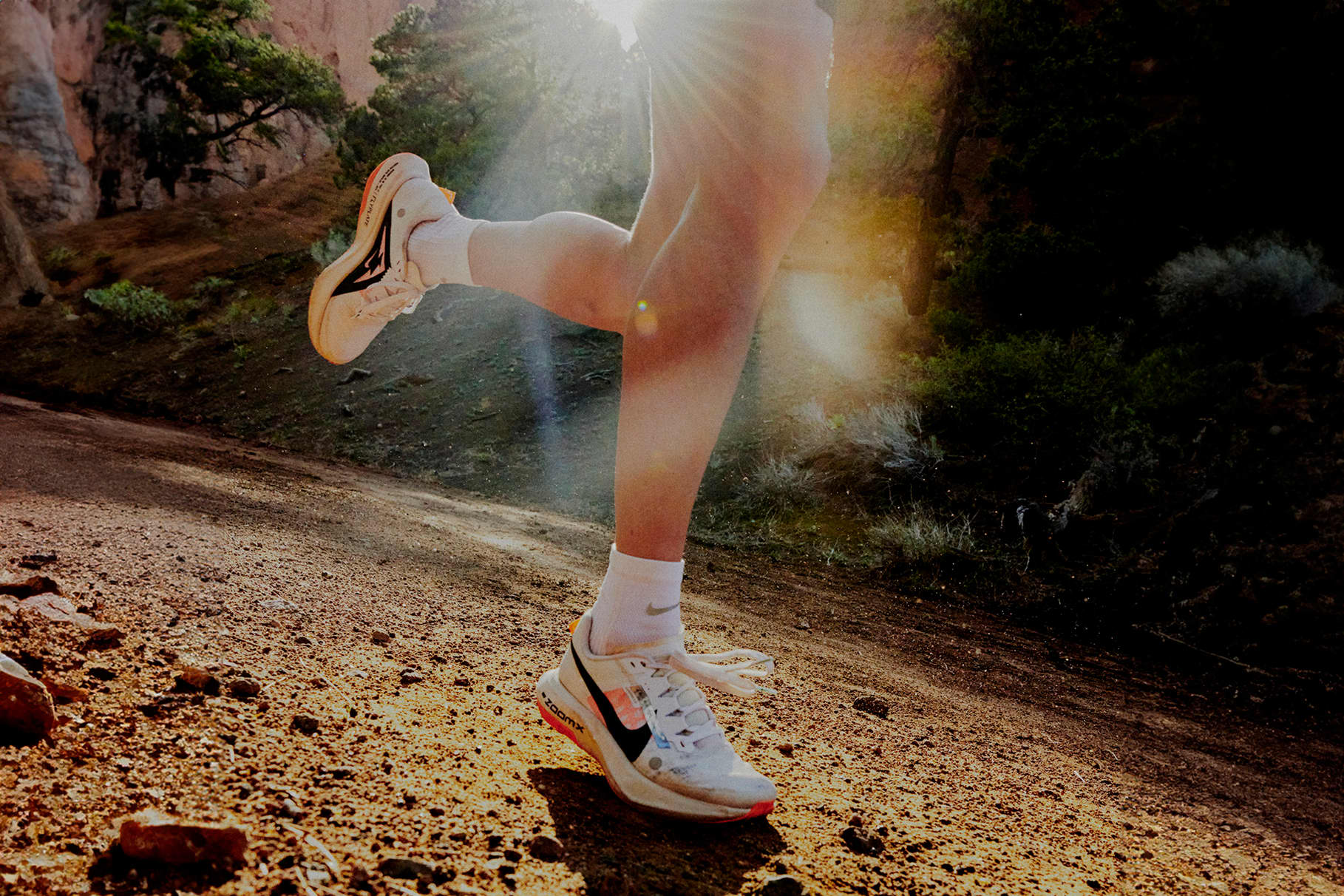
Running has numerous mental and physical benefits – in fact, running just 75 minutes per week can boost healthy ageing at the cellular level, according to a 2023 study in the [*International Journal of Environmental Research and Public Health*](https://pmc.ncbi.nlm.nih.gov/articles/PMC10572212/)*.*
However, running can be hard on your knees. When you run, you're putting pressure equal to three to four times your body weight on every step. It’s a repetitive, high-impact exercise that can cause knee pain. The good news is that running shoes can help manage impact and alignment.
When runners talk about "bad knees", they’re usually referring to conditions like runner’s knee, IT band syndrome, arthritis or general impact-related knee pain. The best running shoes for bad knees are those that reduce repetitive impact forces, support proper alignment and feel stable without being overly rigid.
## Quick takeaways
- Knee pain in runners is often linked to errors in impact, form and shoe cushioning
- The best running shoes for bad knees balance shock absorption and stability
- Heel-to-toe drop and shoe weight can affect knee stress
- Proper fit and timely shoe replacement matter as much as cushioning
## Shop Nike Running Shoes
[View All](https://www.nike.com/ie/w/running-shoes-37v7jzy7ok)
- [
\
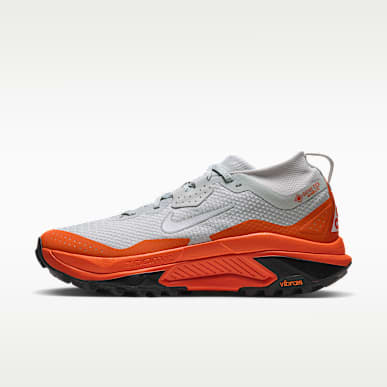
Nike ACG Zegama Trail GORE-TEX
\
Men's Waterproof Trail-Running Shoes
\
__€189.99__](https://www.nike.com/ie/t/acg-zegama-trail-gore-tex-mens-waterproof-trail-running-shoes-PaGSQHQx/IO7932-001)
- [
\
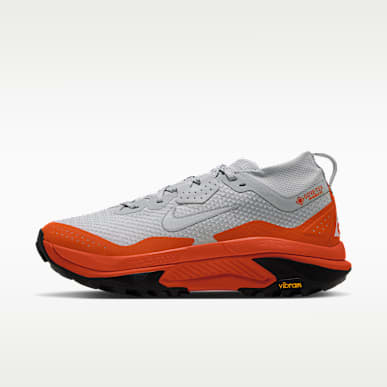
Nike ACG Zegama Trail GORE-TEX
\
Women's Waterproof Trail-Running Shoes
\
__€189.99__](https://www.nike.com/ie/t/acg-zegama-trail-gore-tex-womens-waterproof-trail-running-shoes-DhEdcTsn/IO7933-002)
- [
\
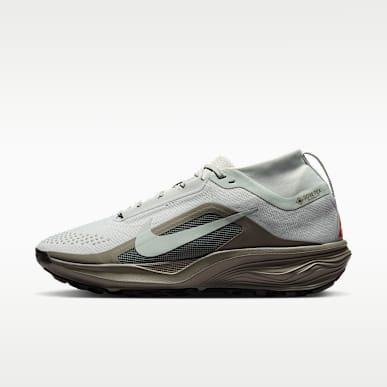
ACG Pegasus Trail GORE-TEX
\
Men's Waterproof Trail-Running Shoes
\
__€169.99__](https://www.nike.com/ie/t/acg-pegasus-trail-gore-tex-mens-waterproof-trail-running-shoes-OQhUtu95/IQ1084-003)
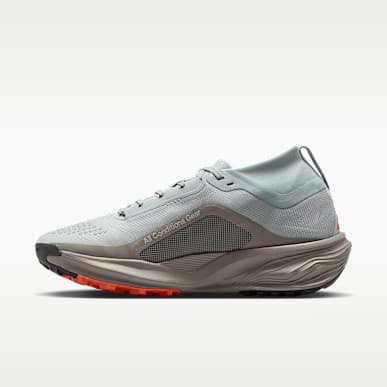
- [
\
ACG Pegasus Trail GORE-TEX
\
Women's Waterproof Trail-Running Shoes
\
__€169.99__](https://www.nike.com/ie/t/acg-pegasus-trail-gore-tex-womens-waterproof-trail-running-shoes-jkcoafLW/IQ1394-002)
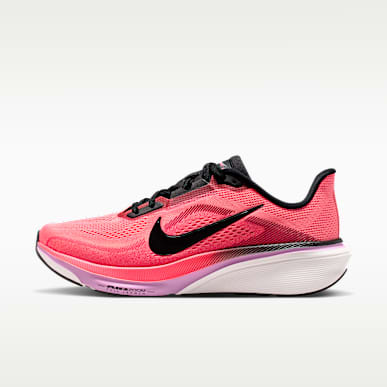
- [
\
Nike Pegasus 42
\
Women's Road Running Shoes
\
__€139.99__](https://www.nike.com/ie/t/pegasus-42-womens-road-running-shoes-VNFFbZDe/IB1881-602)
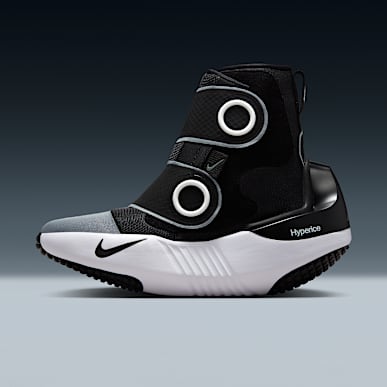
- [
\
Nike x Hyperice Hyperboot
\
Shoes
\
__€749.99__](https://www.nike.com/ie/t/hyperice-hyperboot-shoes-BTqcKDVh/IM3072-001)
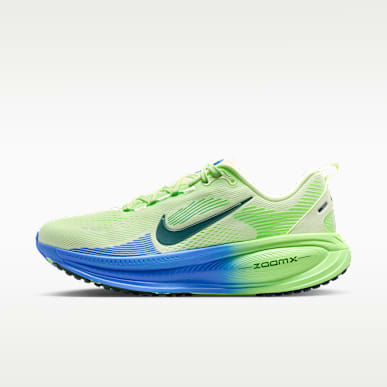
- [
\
Nike Vomero 18
\
Men's Road Running Shoes
\
__€111.99__
__€159.99__](https://www.nike.com/ie/t/vomero-18-mens-road-running-shoes-SMtmxlKz/HM6803-111)
- [
\
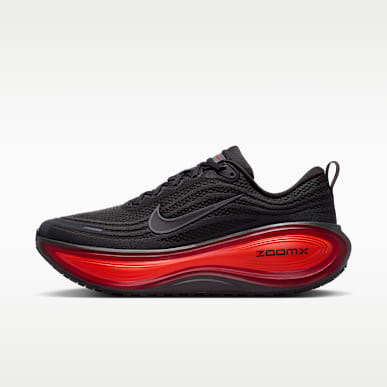
Nike Vomero Plus
\
Men's Road Running Shoes
\
__€179.99__](https://www.nike.com/ie/t/vomero-plus-mens-road-running-shoes-ZaR7ZyEh/HV8150-017)
- [
\
Nike Mind 001
\
Men's Pregame Mules
\
__€89.99__](https://www.nike.com/ie/t/mind-001-mens-pregame-mules-UD4zRJ3b/HQ4307-200)
- [
\
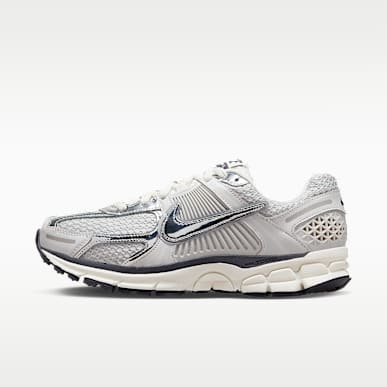
Nike Zoom Vomero 5
\
Women's Shoes
\
__€159.99__](https://www.nike.com/ie/t/zoom-vomero-5-womens-shoes-pdPpDdsR/FD0884-025)
## How To Choose Running Shoes for Bad Knees
When choosing running shoes to help alleviate knee pain, here are the factors to prioritise.
## 1. Midsole Cushioning or Stabilising Features
- Cushioned shoes absorb impact for sensitive knees.
- Stability features can help if knee pain is linked to overpronation.
- You'll likely need to try different cushioning amounts to find what works best.
If you tend to [supinate](https://www.nike.com/ie/a/pronation-supination-difference) – in other words, if your foot tends to lean outwards as it hits the ground—you may need extra cushioning in your shoes for shock absorption. However, too much cushioning in your running shoes can increase the impact on your knees, since more cushioning may cause the body to stiffen legs as a way to get more stability. When that happens, it can lead to more impact in the knees. Also, a runner may change their gait with more cushioning, which could affect knees as well. You may need to try a few different cushioning levels until you find a shoe that is just right for you.
If your knee pain is caused by [overpronation](https://www.nike.com/ie/a/shoes-for-overpronation)—meaning, your foot leans inwards as it strikes the ground—you'll likely want a pair of stability shoes with structural support such as medial posts. Stability shoes with a wide footprint and a shock-absorbing design may also help ease the pressure on your knees.
Make sure your shoes fit properly and don't rely on a break-in period. You should also take each new pair for a test run.
## 2. Heel-toe drop
1. Assessing heel-toe drop can reduce impact on your knees.
2. You may also reduce IT band syndrome with a better heel-toe drop.
3. Like with cushioning, you may need to try different heel-toe drop levels to see what works best for you.
Heel-to-toe drop changes how impact is distributed through the leg. Nike lists the heel-to-toe drop measurement in running shoe product details on nike.com. Lower-drop shoes (0–6 mm) may reduce knee loading for some runners by shifting work towards the calves and ankles. Higher-drop shoes (8–12 mm) may reduce strain on the Achilles and calves but increase knee involvement for certain runners. The ideal drop depends on your injury history and comfort.
## 3. Supportive Upper
- The right fit in an upper provides better overall foot support.
- Breathability can provide greater comfort, especially when feet get hot.
- With targeted support, there's less stress on the knees.
Look for an upper that is breathable and moisture-wicking to keep you cool and dry, and make sure the upper has a glove-like fit and targeted support.
## 4. Lightweight Construction
- Heavy shoes can stress your knees, especially upon impact.
- Lightweight running shoes can reduce fatigue.
- Make sure there's enough support, even in a lightweight shoe.
Heavy shoes can put undue stress on your knees, so it's important to choose a pair that doesn't weigh you down from heel to toe. Aim to strike a balance between support and cushioning, and look for a [lightweight feel](https://www.nike.com/ie/a/find-running-shoe-weight).
Keep in mind that lightweight running shoes can reduce fatigue, but insufficient support may increase knee stress over longer distances.
## How Cushioning Affects Knee Pain
Midsole cushioning plays a major role in how force travels through the knee joint.
- Maximum cushioning (thicker, softer midsoles) can reduce peak impact forces and may feel more comfortable for runners with arthritis or long-distance knee pain.
- Moderate cushioning offers a balance of shock absorption and stability, which works well for many runners with mild knee discomfort.
- Minimal cushioning increases ground feel and responsiveness but may increase joint loading for impact-sensitive runners.
However, overly soft shoes can feel unstable and may cause some runners to stiffen their stride, which can shift stress back to the knees. The goal is cushioning that absorbs shock without compromising control.
Softer midsoles can reduce peak impact forces, while overly soft shoes may feel unstable for some runners. The goal is cushioning that absorbs shock without compromising control.
## What Causes Knee Pain When Running?
While a number of factors can cause knee pain, here are some common examples runners may experience. There are many tips and exercises that can support healthy and pain-free knees, but speak with your healthcare provider for expert medical advice if your knee pain persists.
## 1. Runner's Knee
If your leg muscles are weak or tight, your kneecaps may be poorly aligned. The repetitive stress of impact on misaligned knees can cause several different conditions that present with pain under the kneecap. You may feel pain when walking, running, squatting or going up and down the stairs.
__What you should know:__ make sure to stretch before your workout and build up slowly to your desired running distance while you work on strengthening your legs. You should also incorporate different types of exercise into your routine to develop balanced muscles and avoid bad knees.
## 2. IT Band Syndrome
Weak hip muscles can put extra strain on the iliotibial (IT) band when running. That causes friction between your IT band and thigh or knee, which can irritate the bone and cause pain and swelling. If you have ITBS, the outside of your knee will hurt, and you might hear popping or clicking with movement.
__What You Should Know:__ Make sure you warm up before your run, stretch regularly and incorporate exercises that strengthen your hips into your workout routine. You should rest during flare-ups, but continue stretching and foam rolling.
## 3. Patellar Tendonitis
The tendon that connects your knee and shin can become inflamed from repetitive impact. You'll typically notice pain underneath your kneecap that comes on when you start running or when you stand from sitting.
__What you should know:__ first, check your running shoes to see [if it's time for a replacement](https://www.nike.com/ie/a/how-often-to-replace-running-shoes). The arch support in your running shoes will decrease over time, so it's best to get a new pair at least every 300 miles. If you're not sure how long you've worn yours, try a new pair and see if they feel better. If the soles of your shoes look worn out, that's a sign that you've already been wearing them too long. Worn-out midsoles lose shock absorption, which can increase cumulative knee stress over time.
## 4. Knee Bursitis
Fluid-filled sacs known as bursas help provide cushioning between your bones and tendons, but they can also become painfully inflamed. It can be caused by trauma to the knee or by strenuous activity like running. You might feel a swollen, squishy lump on the front of the knee or pain and stiffness in the knee itself.
__What you should know:__ when you run, make sure to take plenty of stretching breaks and build up to your desired distance slowly. Knee bursitis is also more common in people with obesity, so work on maintaining a healthy weight. You may want to vary the types of cardiovascular exercise you do if the issue recurs.
## 5. Arthritis
Running or even walking for many years can wear down the articular cartilage, leading to joint pain. Most people feel arthritis pain on the inside of the knee. When you have arthritis, it's important to stay active. Anti-inflammatories may help with the pain.
__What you should know:__ while there's no way to ensure you won't get arthritis as you age, keeping a healthy weight and limiting stress on your joints can help.
## 6. Bad Form
If some muscles are stronger or tighter than others, these imbalances can lead to knee pain when you run. It's usually felt inside the knee or kneecap, but it depends on your individual running form. If you're having knee pain and can't identify the cause, you'll want to see a physiotherapist who works with runners for an evaluation.
__What you should know:__ if you're a beginner, you may want to consult a running coach or PT prior to training.
## 7. Overpronation or Supination
Excess inward or outward foot motion can change how force travels through the knee with each stride. While some pronation is natural and healthy, if your low arches are causing knee pain, you may need to correct your gait with the right cushioned shoe. Similarly, people with high arches tend to supinate or roll their feet outwards. While high arches are more likely to put stress on your ankles, some people can get knee pain without enough arch support. Excess inward or outward motion changes how force travels up the kinetic chain. In runners with knee pain, overpronation can increase stress on the inside of the knee, while excessive supination can reduce shock absorption. Choosing between stability and neutral running shoes depends on whether corrective support improves your alignment and comfort.
__What you should know:__ [get the right running shoes](https://www.nike.com/ie/a/best-running-shoes-for-bad-knees). If you tend to supinate to the point of pain, look for shoes with lots of arch support, extra cushioning and a larger toe box. If you overpronate to the point of pain, you may need a pair of stability or motion-control shoes.
## Which Shoe Features Help Different Types of Knee Pain?
- Runner's knee: balanced cushioning and moderate drop
- IT band pain: stable platform and supportive upper
- Arthritis-related pain: maximum cushioning and smooth transitions
Although finding the best running shoes for bad knees is not a medical treatment for knee injuries—persistent pain should be evaluated by a healthcare professional—running shoes can provide cushioning, support and proper fit to reduce impact and improve comfort.
## What Type of Running Shoe Is Best for Knee Pain?
For most runners with knee pain, a shoe with moderate to maximum cushioning and a stable platform is a good starting point. If knee pain is linked to overpronation, a stability shoe may help. If alignment is neutral, a well-cushioned neutral shoe may be sufficient. Comfort during test runs should guide the final decision.
## FAQs
Are cushioned shoes always better for bad knees?
Cushioning does help absorb shock during running, which can be helpful for the knees. However, too much cushioning may reduce stability, so it's important to find the amount of cushioning that works well for you – and your knees.
Should I have two different pairs of running shoes?
Yes. If you rotate your style of running shoes, you'll change which parts of your leg absorb the most impact. That's especially important if you tend to have knee pain after you run.
How can I run without hurting my knees?
To help avoid injury, runners should build up speed and distance slowly. Make sure to incorporate crosstraining and resistance training into your workout routine, since building strong muscles in your legs and core and learning different movement patterns can set you up for success. It's also important to stay hydrated, warm up before you lace up your running shoes and stretch regularly.
Can running shoes affect your knees?
Yes. Wearing worn-out running shoes with little cushioning can cause knee problems, as can wearing the wrong type of shoes for your feet. If you're having knee pain, consider replacing your shoes or consulting a physiotherapist to work towards pain-free running.
What type of running shoe is best for bad knees?
The best running shoe for bad knees typically combines sufficient cushioning to absorb impact with enough stability to support proper alignment. Runners with overpronation may benefit from stability shoes, while others may prefer well-cushioned neutral shoes. Comfort and fit are the most important factors.
## Shop Nike Running Shoes
[View All](https://www.nike.com/ie/w/running-shoes-37v7jzy7ok)
- [
\
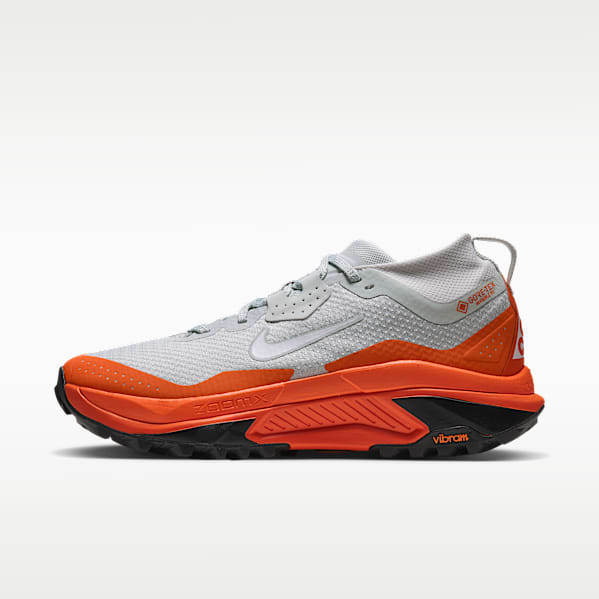
Nike ACG Zegama Trail GORE-TEX
\
Men's Waterproof Trail-Running Shoes
\
__€189.99__](https://www.nike.com/ie/t/acg-zegama-trail-gore-tex-mens-waterproof-trail-running-shoes-PaGSQHQx/IO7932-001)
- [
\
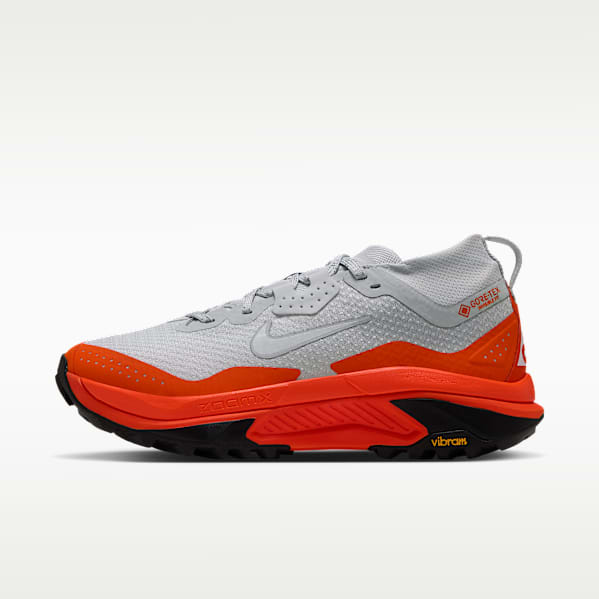
Nike ACG Zegama Trail GORE-TEX
\
Women's Waterproof Trail-Running Shoes
\
__€189.99__](https://www.nike.com/ie/t/acg-zegama-trail-gore-tex-womens-waterproof-trail-running-shoes-DhEdcTsn/IO7933-002)
- [
\
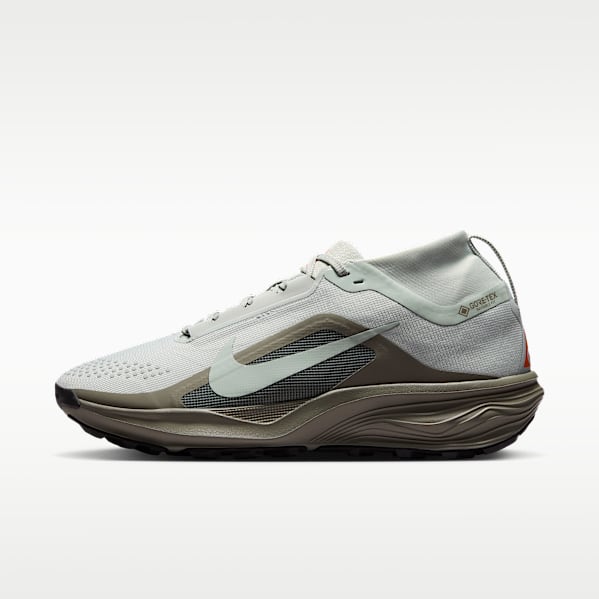
ACG Pegasus Trail GORE-TEX
\
Men's Waterproof Trail-Running Shoes
\
__€169.99__](https://www.nike.com/ie/t/acg-pegasus-trail-gore-tex-mens-waterproof-trail-running-shoes-OQhUtu95/IQ1084-003)
- [
\
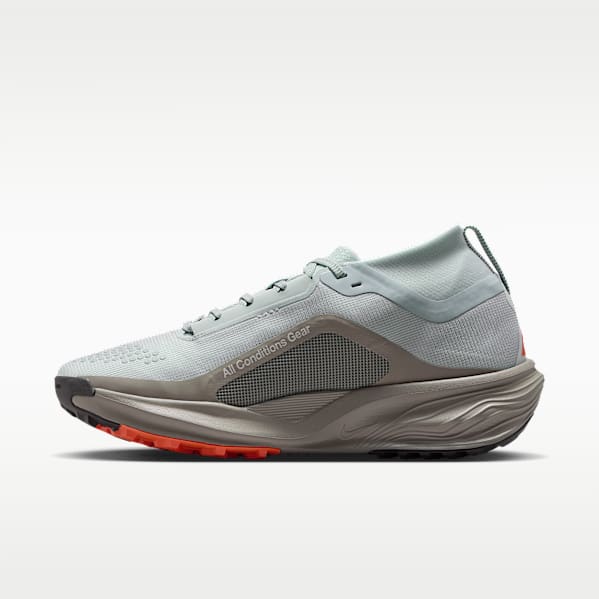
ACG Pegasus Trail GORE-TEX
\
Women's Waterproof Trail-Running Shoes
\
__€169.99__](https://www.nike.com/ie/t/acg-pegasus-trail-gore-tex-womens-waterproof-trail-running-shoes-jkcoafLW/IQ1394-002)
- [
\
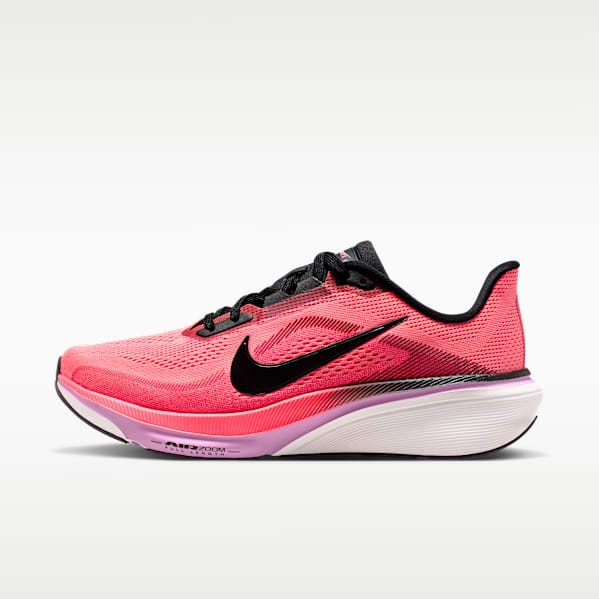
Nike Pegasus 42
\
Women's Road Running Shoes
\
__€139.99__](https://www.nike.com/ie/t/pegasus-42-womens-road-running-shoes-VNFFbZDe/IB1881-602)
- [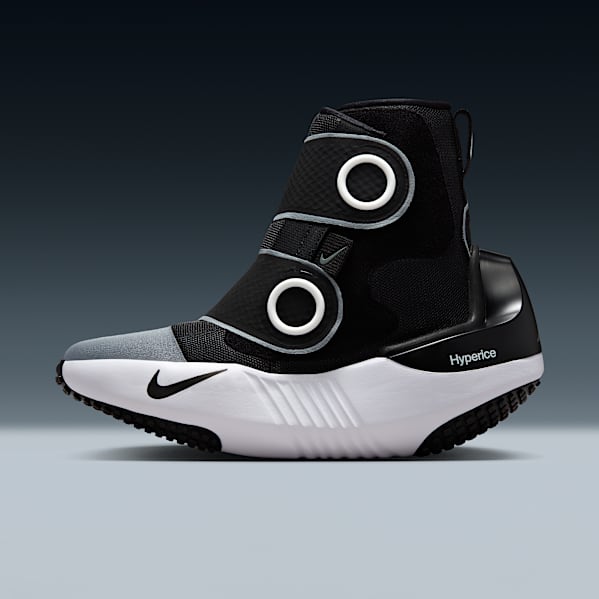
\
Nike x Hyperice Hyperboot
\
Shoes
\
__€749.99__](https://www.nike.com/ie/t/hyperice-hyperboot-shoes-BTqcKDVh/IM3072-001)
- [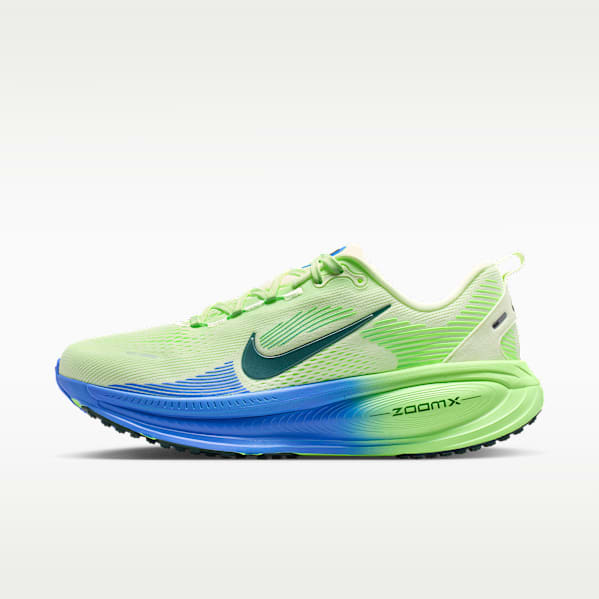
\
Nike Vomero 18
\
Men's Road Running Shoes
\
__€111.99__
__€159.99__](https://www.nike.com/ie/t/vomero-18-mens-road-running-shoes-SMtmxlKz/HM6803-111)
- [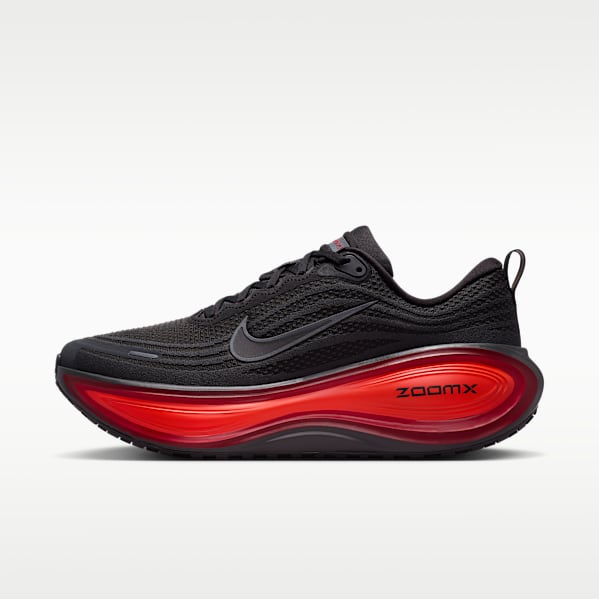
\
Nike Vomero Plus
\
Men's Road Running Shoes
\
__€179.99__](https://www.nike.com/ie/t/vomero-plus-mens-road-running-shoes-ZaR7ZyEh/HV8150-017)
- [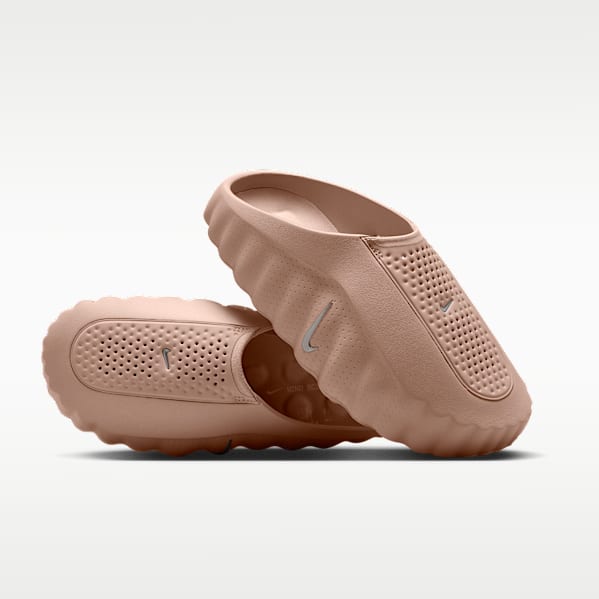
\
Nike Mind 001
\
Men's Pregame Mules
\
__€89.99__](https://www.nike.com/ie/t/mind-001-mens-pregame-mules-UD4zRJ3b/HQ4307-200)
- [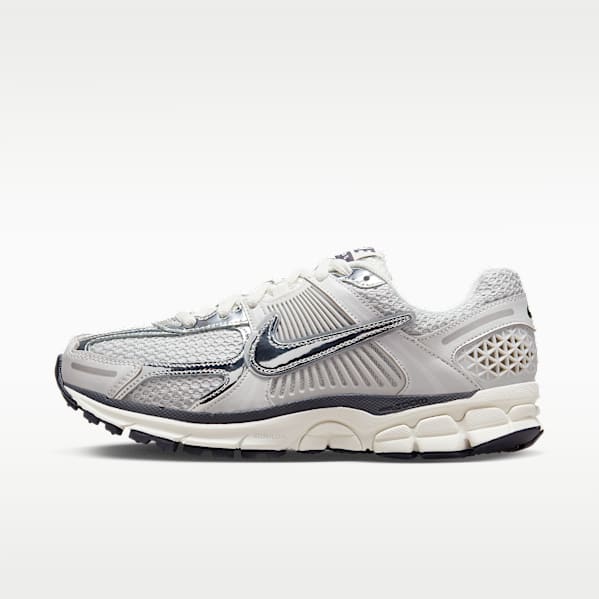
\
Nike Zoom Vomero 5
\
Women's Shoes
\
__€159.99__](https://www.nike.com/ie/t/zoom-vomero-5-womens-shoes-pdPpDdsR/FD0884-025)
Originally published: 16 March 2026
## Related Stories
- 
[](https://www.nike.com/ie/a/most-comfortable-running-shoes)
# Buying Guide
# The Most Comfortable Running Shoes From Nike (By Cushioning Type and Use)
- 
[](https://www.nike.com/ie/a/best-running-shoes-for-treadmill)
# Buying Guide
# Best Nike Running Shoes for the Treadmill
- 
[](https://www.nike.com/ie/a/best-cross-country-shoes)
# Buying Guide
# The Best Nike Cross-Country Shoes and Spikes
- 
[](https://www.nike.com/ie/a/best-running-shoes-for-walking)
# Buying Guide
# The Best Running Shoes for Walking and All-Day Comfort
- 
[](https://www.nike.com/ie/a/types-of-running-shoes)
# Buying Guide
# The Definitive Guide to Different Types of Running Shoes: Stability, Neutral and More
Resources
[Gift Cards](https://www.nike.com/ie/gift-cards)
[Find a Store](https://www.nike.com/ie/retail/)
[Nike Journal](https://www.nike.com/ie/stories)
[Become a Member](https://www.nike.com/ie/membership)
[Feedback](https://www.nike.com#site-feedback)
[Promo Codes](https://www.nike.com/ie/promo-code)
[Product Advice](https://www.nike.com/ie/product-advice)
[Running Shoe Finder](https://www.nike.com/ie/running/shoe-finder)
Help
[Get Help](https://www.nike.com/ie/help)
[Order Status](https://www.nike.com/ie/orders/details)
[Shipping and Delivery](https://www.nike.com/ie/help/a/shipping-delivery-eu)
[Returns](https://www.nike.com/ie/help/a/returns-policy-eu)
[Payment Options](https://www.nike.com/ie/help/a/payment-options-eu)
[Contact Us](https://www.nike.com/ie/help/#contact)
[Reviews](https://www.nike.com/ie/help/a/reviews)
Company
[About Nike](https://about.nike.com/)
[News](https://news.nike.com/)
[Careers](https://jobs.nike.com/)
[Investors](https://investors.nike.com/)
[Sustainability](https://www.nike.com/ie/sustainability)
[Accountability](https://www.nike.com/ie/en/accessibility/statement)
[Purpose](https://www.nike.com/ie/purpose)
[Nike Coaching](https://www.nike.com/ie/coaching)
Community Discounts
[Student](https://services.sheerid.com/verify/68d15e386bcf0b059b3b1708/?locale=en-GB)
[Teacher](https://urldefense.com/v3/__https://services.sheerid.com/verify/68dcfa47c3f2fd1cd3069a9c/?locale=en-GB__%3B%21%21KLCbKzk%21nTvDkRbY-BbSpoWsFhAQdmMrehEzU3loDux4_exRVjO9--Ik_EbQNJ3bX2gkEwR7F9cVVROFKqLxE4B8uW6bnx4Mc-D7Vg%24)
[First Responders](https://urldefense.com/v3/__https://services.sheerid.com/verify/68d55da9273c5b3a03a5aa8e/?locale=en-GB__%3B%21%21KLCbKzk%21nTvDkRbY-BbSpoWsFhAQdmMrehEzU3loDux4_exRVjO9--Ik_EbQNJ3bX2gkEwR7F9cVVROFKqLxE4B8uW6bnx5my0S4tQ%24)
[Medical Professionals](https://urldefense.com/v3/__https://services.sheerid.com/verify/68d55e0d273c5b3a03a5b0ac/?locale=en-GB__%3B%21%21KLCbKzk%21nTvDkRbY-BbSpoWsFhAQdmMrehEzU3loDux4_exRVjO9--Ik_EbQNJ3bX2gkEwR7F9cVVROFKqLxE4B8uW6bnx715S7Egg%24)
[Resources](https://www.nike.com/ie/help)
[Gift Cards](https://www.nike.com/ie/gift-cards)
[Find a Store](https://www.nike.com/ie/retail/)
[Nike Journal](https://www.nike.com/ie/stories)
[Become a Member](https://www.nike.com/ie/membership)
[Feedback](https://www.nike.com#site-feedback)
[Promo Codes](https://www.nike.com/ie/promo-code)
[Product Advice](https://www.nike.com/ie/product-advice)
[Running Shoe Finder](https://www.nike.com/ie/running/shoe-finder)
[Help](https://www.nike.com/ie/help)
[Get Help](https://www.nike.com/ie/help)
[Order Status](https://www.nike.com/ie/orders/details)
[Shipping and Delivery](https://www.nike.com/ie/help/a/shipping-delivery-eu)
[Returns](https://www.nike.com/ie/help/a/returns-policy-eu)
[Payment Options](https://www.nike.com/ie/help/a/payment-options-eu)
[Contact Us](https://www.nike.com/ie/help/#contact)
[Reviews](https://www.nike.com/ie/help/a/reviews)
[Company](https://about.nike.com/en)
[About Nike](https://about.nike.com/)
[News](https://news.nike.com/)
[Careers](https://jobs.nike.com/)
[Investors](https://investors.nike.com/)
[Sustainability](https://www.nike.com/ie/sustainability)
[Accountability](https://www.nike.com/ie/en/accessibility/statement)
[Purpose](https://www.nike.com/ie/purpose)
[Nike Coaching](https://www.nike.com/ie/coaching)
## Community Discounts
[Student](https://services.sheerid.com/verify/68d15e386bcf0b059b3b1708/?locale=en-GB)
[Teacher](https://urldefense.com/v3/__https://services.sheerid.com/verify/68dcfa47c3f2fd1cd3069a9c/?locale=en-GB__%3B%21%21KLCbKzk%21nTvDkRbY-BbSpoWsFhAQdmMrehEzU3loDux4_exRVjO9--Ik_EbQNJ3bX2gkEwR7F9cVVROFKqLxE4B8uW6bnx4Mc-D7Vg%24)
[First Responders](https://urldefense.com/v3/__https://services.sheerid.com/verify/68d55da9273c5b3a03a5aa8e/?locale=en-GB__%3B%21%21KLCbKzk%21nTvDkRbY-BbSpoWsFhAQdmMrehEzU3loDux4_exRVjO9--Ik_EbQNJ3bX2gkEwR7F9cVVROFKqLxE4B8uW6bnx5my0S4tQ%24)
[Medical Professionals](https://urldefense.com/v3/__https://services.sheerid.com/verify/68d55e0d273c5b3a03a5b0ac/?locale=en-GB__%3B%21%21KLCbKzk%21nTvDkRbY-BbSpoWsFhAQdmMrehEzU3loDux4_exRVjO9--Ik_EbQNJ3bX2gkEwR7F9cVVROFKqLxE4B8uW6bnx715S7Egg%24)
Ireland
- © 2026 Nike, Inc. All rights reserved
- Guides
- [Nike Air](https://www.nike.com/ie/air)
- [Nike Air Max](https://www.nike.com/ie/air-max)
- [Nike FlyEase](https://www.nike.com/ie/flyease)
- [Nike Pegasus](https://www.nike.com/ie/running/runningzoom-pegasus-37)
- [Nike React](https://www.nike.com/ie/react)
- [Nike Vaporfly](https://www.nike.com/ie/running/vaporfly)
- [Terms of Use](https://agreementservice.svs.nike.com/ie/en_gb/rest/agreement?agreementType=termsOfUse&uxId=com.nike&country=IE&language=en&requestType=redirect)
- [Terms of Sale](https://agreementservice.svs.nike.com/rest/agreement?agreementType=termsOfSale&uxId=com.nike.tos&requestType=redirect)
- [Company Details](https://www.nike.com/ie/help/a/company-details)
- [Privacy & Cookie Policy](https://agreementservice.svs.nike.com/rest/agreement?agreementType=privacyPolicy&uxId=com.nike.commerce.nikedotcom.web&requestType=redirect)
- [Privacy & Cookie Settings](https://www.nike.com/ie/guest/settings/privacy)
## Africa
- [__Egypt__
\
English](https://www.nike.com/eg/)
- [__Morocco__
\
English](https://www.nike.com/ma/en/)
- [__Maroc__
\
Français](https://www.nike.com/ma/)
- [__South Africa__
\
English](https://www.nike.com/za/)
## Americas
- [__Argentina__
\
Español](https://www.nike.com.ar)
- [__Brasil__
\
Português](https://www.nike.com.br)
- [__Canada__
\
English](https://www.nike.com/ca/)
- [__Canada__
\
Français](https://www.nike.com/ca/fr/)
- [__Chile__
\
Español](https://www.nike.cl)
- [__Colombia__
\
Español](https://www.nike.com.co)
- [__México__
\
Español](https://www.nike.com/mx/)
- [__Peru__
\
Español](https://www.nike.com.pe)
- [__Puerto Rico__
\
Español](https://www.nike.com/pr/)
- [__United States__
\
English](https://www.nike.com)
- [__Estados Unidos__
\
Español](https://www.nike.com/us/es/)
- [__Uruguay__
\
Español](https://www.nike.com.uy)
- [__Latin America__
\
Español](https://www.nike.com/xl/)
## Asia Pacific
- [__Australia__
\
English](https://www.nike.com/au/)
- [__中国大陆__
\
简体中文](https://www.nike.com.cn/)
- [__Hong Kong__
\
English](https://www.nike.com.hk/)
- [__香港__
\
繁體中文](https://www.nike.com.hk/)
- [__India__
\
English](https://www.nike.in/)
- [__Indonesia__
\
English](https://www.nike.com/id/)
- [__Japan__
\
English](https://www.nike.com/jp/en/)
- [__日本__
\
日本語](https://www.nike.com/jp/)
- [__대한민국__
\
한국어](https://www.nike.com/kr/)
- [__Malaysia__
\
English](https://www.nike.com/my/)
- [__New Zealand__
\
English](https://www.nike.com/nz/)
- [__Philippines__
\
English](https://www.nike.com/ph/)
- [__Singapore__
\
English](https://www.nike.com/sg/)
- [__台灣__
\
繁體中文](https://www.nike.com/tw/)
- [__ไทย__
\
ภาษาไทย](https://www.nike.com/th/)
- [__Vietnam__
\
English](https://www.nike.com/vn/)
## Europe
- [__Österreich__
\
Deutsch](https://www.nike.com/at/)
- [__Austria__
\
English](https://www.nike.com/at/en/)
- [__Belgien__
\
Deutsch](https://www.nike.com/be/de/)
- [__Belgium__
\
English](https://www.nike.com/be/en/)
- [__Belgique__
\
Français](https://www.nike.com/be/fr/)
- [__België__
\
Nederlands](https://www.nike.com/be/)
- [__Bulgaria__
\
English](https://www.nike.com/bg/)
- [__Croatia__
\
English](https://www.nike.com/hr/)
- [__Česká republika__
\
Čeština](https://www.nike.com/cz/)
- [__Czech Republic__
\
English](https://www.nike.com/cz/en/)
- [__Danmark__
\
Dansk](https://www.nike.com/dk/)
- [__Denmark__
\
English](https://www.nike.com/dk/en/)
- [__Finland__
\
English](https://www.nike.com/fi/)
- [__France__
\
Français](https://www.nike.com/fr/)
- [__Deutschland__
\
Deutsch](https://www.nike.com/de/)
- [__Ελλάδα__
\
ελληνικά](https://www.nike.com/gr/)
- [__Hungary__
\
English](https://www.nike.com/hu/en/)
- [__Magyarország__
\
Magyar](https://www.nike.com/hu/)
- [__Ireland__
\
English](https://www.nike.com/ie/)
- [__Israel__
\
English](https://www.nike.com/il/)
- [__Italia__
\
Italiano](https://www.nike.com/it/)
- [__Luxemburg__
\
Deutsch](https://www.nike.com/lu/de/)
- [__Luxembourg__
\
English](https://www.nike.com/lu/en/)
- [__Luxembourg__
\
Français](https://www.nike.com/lu/)
- [__Netherlands__
\
English](https://www.nike.com/nl/en/)
- [__Nederland__
\
Nederlands](https://www.nike.com/nl/)
- [__Norway__
\
English](https://www.nike.com/no/en/)
- [__Norge__
\
Norsk](https://www.nike.com/no/)
- [__Polska__
\
Polski](https://www.nike.com/pl/)
- [__Portugal__
\
English](https://www.nike.com/pt/en/)
- [__Portugal__
\
Português](https://www.nike.com/pt/)
- [__Romania__
\
English](https://www.nike.com/ro/)
- [__Россия__
\
Русский](https://www.nike.com/ru/)
- [__Slovakia__
\
English](https://www.nike.com/sk/)
- [__Slovenia__
\
English](https://www.nike.com/si/)
- [__Espanya__
\
Català](https://www.nike.com/es/ca/)
- [__España__
\
Español](https://www.nike.com/es/)
- [__Sweden__
\
English](https://www.nike.com/se/en/)
- [__Sverige__
\
Svenska](https://www.nike.com/se/)
- [__Schweiz__
\
Deutsch](https://www.nike.com/ch/)
- [__Switzerland__
\
English](https://www.nike.com/ch/en/)
- [__Suisse__
\
Français](https://www.nike.com/ch/fr/)
- [__Svizzera__
\
Italiano](https://www.nike.com/ch/it/)
- [__Türkiye__
\
Türkçe](https://www.nike.com/tr/)
- [__United Kingdom__
\
English](https://www.nike.com/gb/)
## Middle East
- [__Saudi Arabia__
\
English](https://www.nike.sa/en/home)
- [__المملكة العربية السعودية__
\
العربية](https://www.nike.sa/ar/home)
- [__United Arab Emirates__
\
English](https://www.nike.ae/en/home)
- [__الإمارات العربية المتحدة__
\
العربية](https://www.nike.ae/ar/home)
- [__Qatar__
\
English](https://www.nike.qa/en/home)
- [__دولة قطر__
\
العربية](https://www.nike.qa/ar/home)
- [__Kuwait__
\
English](https://www.nike.com.kw/en/home)
- [__الكويت__
\
العربية](https://www.nike.com.kw/ar/home)