[Skip to main content](https://www.nike.com#skip-to-content)
- [](https://www.nike.com/za/jordan)
- [Find a Store](https://www.nike.com/za/retail)
- [Help](https://www.nike.com/za/help)
[Help](https://www.nike.com/za/help)
- [Order Status](https://www.nike.com/za/orders)
- [Dispatch and Delivery](https://www.nike.com/za/help/a/shipping-delivery-gs)
- [Returns](https://www.nike.com/za/help/a/returns-policy-gs)
- [Contact Us](https://www.nike.com/za/help/#contact)
- [Privacy Policy](https://agreementservice.svs.nike.com/za/en_gb/rest/agreement?agreementType=privacyPolicy&uxId=com.nike.unite&country=ZA&language=en&requestType=redirect)
- [Terms of Sale](https://www.eshopworld.com/shoppers/help/retailer/nike/terms-and-conditions-of-sale-en/)
- [Terms of Use](https://agreementservice.svs.nike.com/za/en_gb/rest/agreement?agreementType=termsOfUse&uxId=com.nike.unite&country=ZA&language=en&requestType=redirect)
- [Send Us Feedback](https://www.nike.com#site-feedback)
- [Join Us](https://www.nike.com/za/membership)
- [Sign In](https://www.nike.com/za/register)
[](https://www.nike.com/za/)
- [New](https://www.nike.com/za/w/new-3n82y)
- [New](https://www.nike.com/za/w/new-3n82y)
- [New Arrivals](https://www.nike.com/za/w/new-3n82y)
- [Best Sellers](https://www.nike.com/za/w/best-76m50)
- [SNKRS Launch Calendar](https://www.nike.com/gb/launch/upcoming)
- [Tennis Slam](https://www.nike.com/za/w/tennis-slam-7vd60)
- [Highlights](https://www.nike.com/za/w/new-just-in-3apgqz3n82y)
- [Jordan: Love Letter Collection](https://www.nike.com/za/w/love-letter-7xkbw)
- [Best of Jordan](https://www.nike.com/za/w/best-of-jordan-brand-j0oa)
- [Running: Discover Aerofit](https://www.nike.com/za/w/running-clothing-37v7jz6ymx6)
- [Style By Moon Shoe](https://www.nike.com/za/nike-style-by)
- [Trending](https://www.nike.com/za/w/best-76m50)
- [Hybrid Training](https://www.nike.com/za/w/hybrid-training-7fx1n)
- [Marathon Shoes](https://www.nike.com/za/w/marathon-distance-shoes-6vbyfzy7ok)
- [Elite Football Boots](https://www.nike.com/za/w/elite-football-shoes-1gdj0z9vmnhzy7ok)
- [Sportswear Clothing](https://www.nike.com/za/w/sportswear-clothing-43h4uz6ymx6)
- [Pro Football Boots](https://www.nike.com/za/w/pro-football-shoes-1gdj0z2a2jzy7ok)
- [Brands](https://www.nike.com/za/w/37eefz43h4uz93bsdzpgd6)
- [Nike Sportswear](https://www.nike.com/za/w/lifestyle-13jrm)
- [ACG: All Conditions Gear](https://www.nike.com/za/acg)
- [Jordan](https://www.nike.com/za/w/jordan-37eef)
- [Kobe](https://www.nike.com/za/w/kobe-pgd6)
- [NOCTA](https://www.nike.com/za/w/nocta-25nhb)
- [Men](https://www.nike.com/za/men)
- [Highlights](https://www.nike.com/za/w/new-mens-3n82yznik1)
- [New Arrivals](https://www.nike.com/za/w/new-mens-3n82yznik1)
- [Best Sellers](https://www.nike.com/za/w/mens-best-76m50znik1)
- [Streetwear Clothing](https://www.nike.com/za/w/streetwear-clothing-97qn8)
- [Tennis Slam](https://www.nike.com/za/w/mens-tennis-slam-7vd60znik1)
- [Shoes](https://www.nike.com/za/w/mens-shoes-nik1zy7ok)
- [All Shoes](https://www.nike.com/za/w/mens-shoes-nik1zy7ok)
- [Lifestyle](https://www.nike.com/za/w/mens-lifestyle-shoes-13jrmznik1zy7ok)
- [Jordan](https://www.nike.com/za/w/mens-jordan-shoes-37eefznik1zy7ok)
- [Running](https://www.nike.com/za/w/mens-running-shoes-37v7jznik1zy7ok)
- [Football](https://www.nike.com/za/w/mens-football-shoes-1gdj0znik1zy7ok)
- [Basketball](https://www.nike.com/za/w/mens-basketball-shoes-3glsmznik1zy7ok)
- [Training and Gym](https://www.nike.com/za/w/mens-training-gym-shoes-58jtoznik1zy7ok)
- [Skateboarding](https://www.nike.com/za/w/mens-skateboarding-shoes-8mfrfznik1zy7ok)
- [Custom Shoes](https://www.nike.com/za/w/mens-nike-by-you-shoes-6ealhznik1zy7ok)
- [Clothing](https://www.nike.com/za/w/mens-clothing-6ymx6znik1)
- [All Clothing](https://www.nike.com/za/w/mens-clothing-6ymx6znik1)
- [Hoodies and Sweatshirts](https://www.nike.com/za/w/mens-hoodies-sweatshirts-6riveznik1)
- [Tops and T-Shirts](https://www.nike.com/za/w/mens-tops-t-shirts-9om13znik1)
- [Kits and Jerseys](https://www.nike.com/za/w/mens-football-kits-jerseys-1gdj0z3a41eznik1)
- [Shorts](https://www.nike.com/za/w/mens-shorts-38fphznik1)
- [Trousers and Tights](https://www.nike.com/za/w/mens-trousers-tights-2kq19znik1)
- [Tracksuits](https://www.nike.com/za/w/mens-tracksuits-1ll2wznik1)
- [Jackets](https://www.nike.com/za/w/mens-jackets-gilets-50r7yznik1)
- [Accessories](https://www.nike.com/za/w/mens-accessories-equipment-awwpwznik1)
- [Sport](https://www.nike.com/za/w/mens-performance-3k7dgznik1)
- [Running](https://www.nike.com/za/running)
- [Football](https://www.nike.com/za/football)
- [Basketball](https://www.nike.com/za/basketball)
- [Training and Gym](https://www.nike.com/za/training)
- [Tennis](https://www.nike.com/za/tennis)
- [Skateboarding](https://www.nike.com/za/w/mens-skateboarding-8mfrfznik1)
- [Golf](https://www.nike.com/za/golf)
- Brands
- [Nike Sportswear](https://www.nike.com/za/w/mens-lifestyle-13jrmznik1)
- [ACG: All Conditions Gear](https://www.nike.com/za/acg)
- [Jordan](https://www.nike.com/za/w/mens-jordan-37eefznik1)
- [Kobe](https://www.nike.com/za/w/mens-kobe-nik1zpgd6)
- [NOCTA](https://www.nike.com/za/w/mens-nocta-25nhbznik1)
- [Women](https://www.nike.com/za/women)
- [Highlights](https://www.nike.com/za/w/new-womens-3n82yz5e1x6)
- [New Arrivals](https://www.nike.com/za/w/new-womens-3n82yz5e1x6)
- [Best Sellers](https://www.nike.com/za/w/womens-best-5e1x6z76m50)
- [Nike Fleece Essentials](https://www.nike.com/za/w/womens-nike-studio-fleece-clothing-5e1x6z6ymx6zs531)
- [Seasonal Clothing Packs](https://www.nike.com/za/w/seasonal-clothing-packs-9yawh)
- [Style By Moon Shoe](https://www.nike.com/za/nike-style-by)
- [Tennis Slam](https://www.nike.com/za/w/womens-tennis-slam-5e1x6z7vd60)
- [Shoes](https://www.nike.com/za/w/womens-shoes-5e1x6zy7ok)
- [All Shoes](https://www.nike.com/za/w/womens-shoes-5e1x6zy7ok)
- [Lifestyle](https://www.nike.com/za/w/womens-lifestyle-shoes-13jrmz5e1x6zy7ok)
- [Jordan](https://www.nike.com/za/w/womens-jordan-shoes-37eefz5e1x6zy7ok)
- [Running](https://www.nike.com/za/w/womens-running-shoes-37v7jz5e1x6zy7ok)
- [Training and Gym](https://www.nike.com/za/w/womens-training-gym-shoes-58jtoz5e1x6zy7ok)
- [Football](https://www.nike.com/za/w/womens-football-shoes-1gdj0z5e1x6zy7ok)
- [Custom Shoes](https://www.nike.com/za/w/womens-nike-by-you-shoes-5e1x6z6ealhzy7ok)
- [Clothing](https://www.nike.com/za/w/womens-clothing-5e1x6z6ymx6)
- [All Clothing](https://www.nike.com/za/w/womens-clothing-5e1x6z6ymx6)
- [Hoodies and Sweatshirts](https://www.nike.com/za/w/womens-hoodies-sweatshirts-5e1x6z6rive)
- [Tops and T-Shirts](https://www.nike.com/za/w/womens-tops-t-shirts-5e1x6z9om13)
- [Shorts](https://www.nike.com/za/w/womens-shorts-38fphz5e1x6)
- [Leggings](https://www.nike.com/za/w/womens-tights-leggings-29sh2z5e1x6)
- [Trousers](https://www.nike.com/za/w/womens-trousers-tights-2kq19z5e1x6)
- [Matching Sets](https://www.nike.com/za/w/womens-matching-sets-2lukpz5e1x6)
- [Jackets](https://www.nike.com/za/w/womens-jackets-gilets-50r7yz5e1x6)
- [Sports Bras](https://www.nike.com/za/w/womens-sports-bras-40qgmz5e1x6)
- [Accessories](https://www.nike.com/za/w/womens-accessories-equipment-5e1x6zawwpw)
- [Sport](https://www.nike.com/za/w/womens-performance-3k7dgz5e1x6)
- [Training and Gym](https://www.nike.com/za/training)
- [Running](https://www.nike.com/za/running)
- [Football](https://www.nike.com/za/football)
- [Basketball](https://www.nike.com/za/basketball)
- [Tennis](https://www.nike.com/za/tennis)
- [Skateboarding](https://www.nike.com/za/w/womens-skateboarding-5e1x6z8mfrf)
- [Golf](https://www.nike.com/za/golf)
- Brands
- [NikeSKIMS](https://www.nike.com/za/nikeskims)
- [Nike Sportswear](https://www.nike.com/za/w/womens-lifestyle-13jrmz5e1x6)
- [ACG: All Conditions Gear](https://www.nike.com/za/acg)
- [Jordan](https://www.nike.com/za/w/womens-jordan-37eefz5e1x6)
- [Kobe](https://www.nike.com/za/w/womens-kobe-5e1x6zpgd6)
- [Kids](https://www.nike.com/za/kids)
- [Highlights](https://www.nike.com/za/w/new-kids-3n82yzv4dh)
- [New Arrivals](https://www.nike.com/za/w/new-kids-3n82yzv4dh)
- [Best Sellers](https://www.nike.com/za/w/kids-best-76m50zv4dh)
- [Teen Destination](https://www.nike.com/za/teens)
- [Nike x LEGO® Collection](https://www.nike.com/za/lego)
- [Shoes](https://www.nike.com/za/w/kids-shoes-v4dhzy7ok)
- [All Shoes](https://www.nike.com/za/w/kids-shoes-v4dhzy7ok)
- [Lifestyle](https://www.nike.com/za/w/kids-lifestyle-shoes-13jrmzv4dhzy7ok)
- [Jordan](https://www.nike.com/za/w/kids-jordan-shoes-37eefzv4dhzy7ok)
- [Football](https://www.nike.com/za/w/kids-football-shoes-1gdj0zv4dhzy7ok)
- [Running](https://www.nike.com/za/w/kids-running-shoes-37v7jzv4dhzy7ok)
- [Basketball](https://www.nike.com/za/w/kids-basketball-shoes-3glsmzv4dhzy7ok)
- [Physical Education](https://www.nike.com/za/w/kids-performance-shoes-3k7dgzv4dhzy7ok)
- [Clothing](https://www.nike.com/za/w/kids-clothing-6ymx6zv4dh)
- [All Clothing](https://www.nike.com/za/w/kids-clothing-6ymx6zv4dh)
- [Hoodies and Sweatshirts](https://www.nike.com/za/w/kids-hoodies-sweatshirts-6rivezv4dh)
- [Tops and T-Shirts](https://www.nike.com/za/w/kids-tops-t-shirts-9om13zv4dh)
- [Kits & Jerseys](https://www.nike.com/za/w/kids-football-kits-jerseys-1gdj0z3a41ezv4dh)
- [Tracksuits](https://www.nike.com/za/w/kids-tracksuits-1ll2wzv4dh)
- [Shorts](https://www.nike.com/za/w/kids-shorts-38fphzv4dh)
- [Trousers and Leggings](https://www.nike.com/za/w/kids-trousers-tights-2kq19zv4dh)
- [Matching Sets](https://www.nike.com/za/w/kids-matching-sets-2lukpzv4dh)
- [Jackets](https://www.nike.com/za/w/kids-jackets-gilets-50r7yzv4dh)
- [Accessories](https://www.nike.com/za/w/kids-accessories-equipment-awwpwzv4dh)
- [Kids by age](https://www.nike.com/za/w/kids-v4dh)
- [Teens (13–17 years)](https://www.nike.com/za/w/teen-collection-6hgue)
- [Older Kids (7–12 years)](https://www.nike.com/za/w/older-kids-agibjzv4dh)
- [Younger Kids (3–7 years)](https://www.nike.com/za/w/little-kids-6dacezv4dh)
- [Baby & Toddler (0–3 years)](https://www.nike.com/za/w/baby-toddlers-kids-2j488zv4dh)
- [Sport](https://www.nike.com/za/w/kids-performance-3k7dgzv4dh)
- [Running](https://www.nike.com/za/w/kids-running-37v7jzv4dh)
- [Football](https://www.nike.com/za/w/kids-football-1gdj0zv4dh)
- [Basketball](https://www.nike.com/za/w/kids-basketball-3glsmzv4dh)
- [Physical Education](https://www.nike.com/za/w/kids-training-gym-58jtozv4dh)
- [Skateboarding](https://www.nike.com/za/w/skateboarding-8mfrf)
- [Sport](https://www.nike.com/za/lockerroom)
- [Highlights](https://www.nike.com/za/w/new-performance-3k7dgz3n82y)
- [New Arrivals](https://www.nike.com/za/w/new-performance-3k7dgz3n82y)
- [Best Sellers](https://www.nike.com/za/w/best-performance-3k7dgz76m50)
- [Jordan Basketball](https://www.nike.com/za/w/jordan-basketball-37eefz3glsm)
- [Running: Discover Aerofit](https://www.nike.com/za/w/running-clothing-37v7jz6ymx6)
- [Football: New Club Kits 26/27](https://www.nike.com/za/w/club-football-teams-6fu9q)
- [Running](https://www.nike.com/za/running)
- [All Running](https://www.nike.com/za/w/running-37v7j)
- [Shoes](https://www.nike.com/za/w/running-shoes-37v7jzy7ok)
- [Clothing](https://www.nike.com/za/w/running-clothing-37v7jz6ymx6)
- [Accessories](https://www.nike.com/za/w/running-accessories-equipment-37v7jzawwpw)
- [Football](https://www.nike.com/za/football)
- [All Football](https://www.nike.com/za/w/football-1gdj0)
- [Shoes](https://www.nike.com/za/w/football-shoes-1gdj0zy7ok)
- [Clothing](https://www.nike.com/za/w/football-clothing-1gdj0z6ymx6)
- [Accessories](https://www.nike.com/za/w/football-accessories-equipment-1gdj0zawwpw)
- [Training and Gym](https://www.nike.com/za/training)
- [All Training and Gym](https://www.nike.com/za/w/training-gym-58jto)
- [Shoes](https://www.nike.com/za/w/training-gym-shoes-58jtozy7ok)
- [Clothing](https://www.nike.com/za/w/training-gym-clothing-58jtoz6ymx6)
- [Accessories](https://www.nike.com/za/w/training-gym-accessories-equipment-58jtozawwpw)
- [More Sports](https://www.nike.com/za/w/performance-3k7dg)
- [All Sport](https://www.nike.com/za/w/performance-3k7dg)
- [Basketball](https://www.nike.com/za/basketball)
- [Outdoor](https://www.nike.com/za/w/acg-93bsd)
- [Tennis](https://www.nike.com/za/tennis)
- [Nike SB](https://www.nike.com/za/w/skateboarding-8mfrf)
- [Golf](https://www.nike.com/za/golf)
- [NikeSKIMS](https://www.nike.com/za/nikeskims)
- [NikeSKIMS Guides](https://www.nike.com/za/nikeskims-lookbook)
- [NikeSKIMS Lookbook](https://www.nike.com/za/nikeskims-lookbook)
- [NikeSKIMS Bra Guide](https://www.nike.com/za/nikeskims-bra-guide)
- [NikeSKIMS Collection Guide](https://www.nike.com/za/nikeskims-collection-guide)
- [Clothing](https://www.nike.com/za/w/nikeskims-b2asd)
- [All Clothing](https://www.nike.com/za/w/nikeskims-clothing-6ymx6zb2asd)
- [Bras](https://www.nike.com/za/w/nikeskims-sports-bras-40qgmzb2asd)
- [Tops and Tanks](https://www.nike.com/za/w/nikeskims-tops-t-shirts-9om13zb2asd)
- [Leggings](https://www.nike.com/za/w/nikeskims-tights-leggings-29sh2zb2asd)
- [Shorts](https://www.nike.com/za/w/nikeskims-shorts-38fphzb2asd)
- [Shoes](https://www.nike.com/za/w/nikeskims-shoes-b2asdzy7ok)
- [Accessories](https://www.nike.com/za/w/nikeskims-accessories-equipment-awwpwzb2asd)
- [Collections](https://www.nike.com/za/nikeskims-collection-guide)
- [All Collections](https://www.nike.com/za/w/nikeskims-b2asd)
- [Shine](https://www.nike.com/za/w/nikeskims-nikeskims-shine-aq8qbzb2asd)
- [Matte](https://www.nike.com/za/w/nikeskims-nikeskims-matte-5s3enzb2asd)
- [Airy](https://www.nike.com/za/w/nikeskims-nikeskims-airy-5c1qqzb2asd)
- [Ribbed Seamless](https://www.nike.com/za/w/nikeskims-nikeskims-seamless-6lh4szb2asd)
- [Stretch Knit](https://www.nike.com/za/w/nikeskims-nikeskims-stretch-knit-21jwlzb2asd)
- [Studio Stretch](https://www.nike.com/za/w/nikeskims-studio-stretch-admbq)
- [Stretch Nylon](https://www.nike.com/za/w/nikeskims-stretch-nylon-7sut9)
- [Weightless](https://www.nike.com/za/w/nikeskims-nikeskims-weightless-4csx8zb2asd)
- [Shop By Color](https://www.nike.com/za/w/nikeskims-b2asd)
- [Obsidian](https://www.nike.com/za/w/nikeskims-black-90poyzb2asd)
- [Dark Sepia](https://www.nike.com/za/w/nikeskims-dark-sepia-81pvm)
- [Phoenix](https://www.nike.com/za/w/nikeskims-phoenix-1jhtj)
- [Cobalt](https://www.nike.com/za/w/nikeskims-blue-8hfx3zb2asd)
- [Ivory](https://www.nike.com/za/w/nikeskims-white-4g797zb2asd)
Cancel
Cancel
Popular Search Terms
[jordan](https://www.nike.com/za/w?q=jordan&vst=jordan)[p6000](https://www.nike.com/za/w?q=p6000&vst=p6000)[air force 1](https://www.nike.com/za/w?q=air%20force%201&vst=air%20force%201)[air max](https://www.nike.com/za/w?q=air%20max&vst=air%20max)[nike shox](https://www.nike.com/za/w?q=nike%20shox&vst=nike%20shox)[jordan 1](https://www.nike.com/za/w?q=jordan%201&vst=jordan%201)[dunk low](https://www.nike.com/za/w?q=dunk%20low&vst=dunk%20low)[jordan 4](https://www.nike.com/za/w?q=jordan%204&vst=jordan%204)
[](https://www.nike.com/za/favorites "Favourites")[](https://www.nike.com/za/cart "Bag Items: 0")
# How to Select the Right Weight for Running Shoes
##### Buying Guide
Wondering if running shoes should be heavy or light? Learn how much sneakers weigh, how shoe weight affects performance, and how to choose the right running shoe weight for your needs.
Last updated: 16 March 2026
6 min read
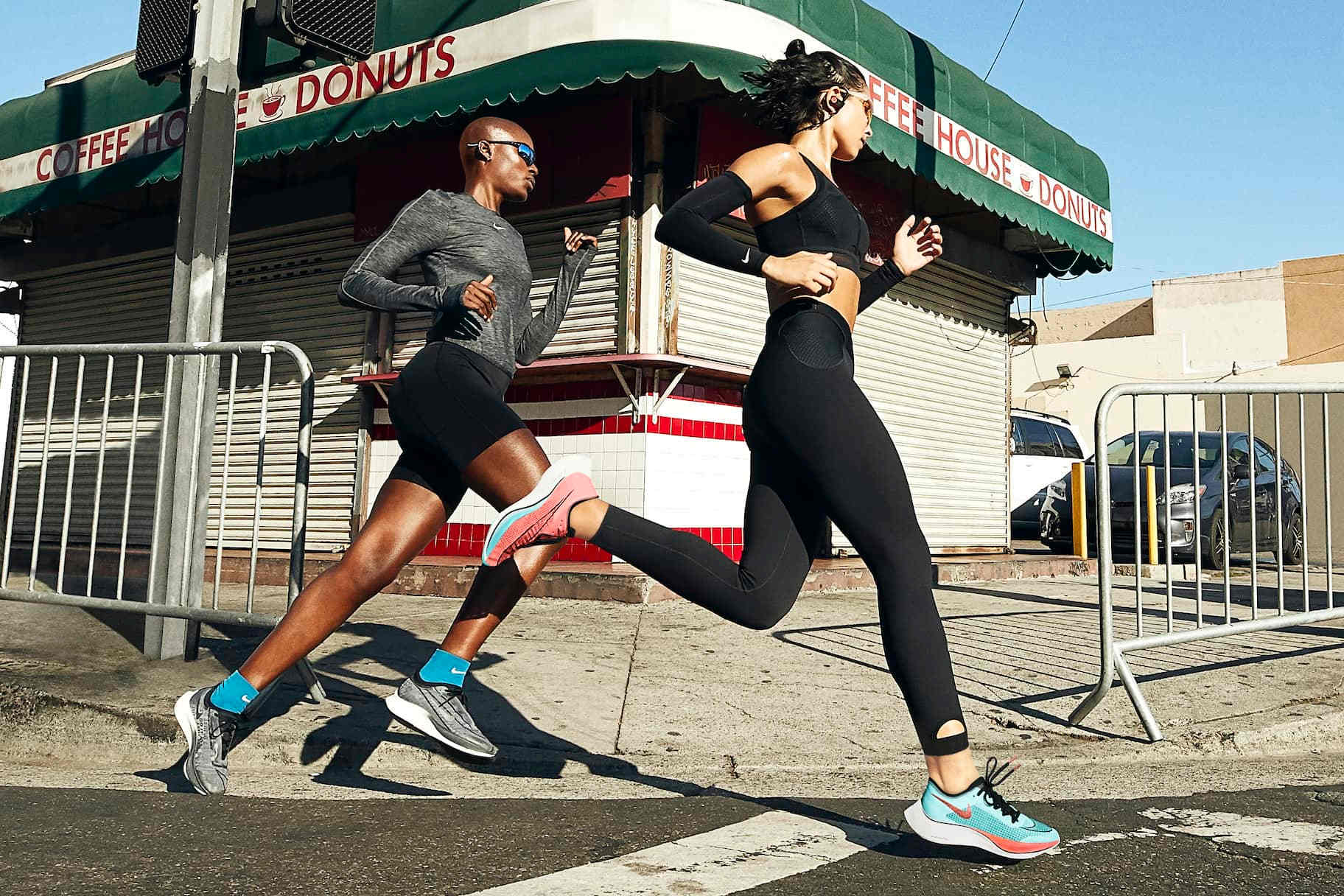
Shoe weight isn't the first feature most people consider when picking a pair of running shoes. Instead, that honour goes to fun features like colourways and responsive foam cushioning.
But the shoes' weight can make a difference in achieving your goals while lowering the risk of injury. Should running shoes be heavy or light? The answer, unfortunately, isn't that simple.
Depending on your running style, body type and preferences, you may find a heavier or lighter-weight sneaker is better for you. Just don't confuse shoe weight with cushioning. Lightweight running shoes are typically built for efficiency and speed, while more heavily cushioned trainers prioritise comfort, durability and impact protection over longer distances. Shoe weight reflects the total materials used, while cushioning is a term used to describe how soft or responsive the shoe feels.
Read on to learn how much sneakers weigh, plus what the pros have to say about finding the best running shoe weight for your needs.
## Shop Nike Running Shoes
[View All](https://www.nike.com/za/w/running-shoes-37v7jzy7ok)
- [Nike Vomero 18
\
Men's Road Running Shoes
\
__R 3 299,95__](https://www.nike.com/za/t/vomero-18-mens-road-running-shoes-xK6kNz/HM6803-021)
- [Nike Vomero 18
\
Women's Road Running Shoes
\
__R 3 299,95__](https://www.nike.com/za/t/vomero-18-womens-road-running-shoes-23S85s/HM6804-013)
- [Nike Pegasus 42
\
Women's Road Running Shoes
\
__R 2 899,95__](https://www.nike.com/za/t/pegasus-42-womens-road-running-shoes-wpVbizWJ/IB1881-601)
- [Nike Structure 26
\
Women's Road Running Shoes
\
__R 3 099,95__](https://www.nike.com/za/t/structure-26-womens-road-running-shoes-TDHq84/HJ1101-005)
- [Nike Vaporfly 4
\
Women's Road Racing Shoes
\
__R 5 399,95__](https://www.nike.com/za/t/vaporfly-4-womens-road-racing-shoes-HL90jq/HF6412-602)
- [Nike Zoom Fly 6
\
Women's Road Racing Shoes
\
__R 3 499,95__](https://www.nike.com/za/t/zoom-fly-6-womens-road-racing-shoes-cv1bGl/FN8455-603)
- [Nike Pegasus Plus 2
\
Men's Road Running Shoes
\
__R 3 499,95__](https://www.nike.com/za/t/pegasus-plus-2-mens-road-running-shoes-gYkPBFSX/IM2541-600)
- [Nike Pegasus Plus 2
\
Women's Road Running Shoes
\
__R 3 499,95__](https://www.nike.com/za/t/pegasus-plus-2-womens-road-running-shoes-l2dKqRnR/IM2543-600)
- [Nike Vomero Plus
\
Men's Road Running Shoes
\
__R 3 699,95__](https://www.nike.com/za/t/vomero-plus-mens-road-running-shoes-6fC359/HV8150-017)
- [Nike Pegasus 42
\
Men's Road Running Shoes
\
__R 2 899,95__](https://www.nike.com/za/t/pegasus-42-mens-road-running-shoes-ONJE3feq/IB1873-401)
## Quick takeaways
- Most running shoes weigh between 184g and 368g. Cushioning and support often influence the weight.
- Lightweight shoes are typically preferred for speed and racing; heavier shoes deliver stability and durability.
- The best running shoe weight takes into account performance goals, comfort and injury prevention.
- Foot type, distance and body weight influence the ideal shoe weight.
## What Are Lightweight Running Shoes?
The weight of a running shoe is influenced by all the shoe components, but "most notably the midsole", says Nelya Lobkova, D.P.M., a podiatrist in New York City. In fact, the midsole accounts for up to 75% of the weight of a typical running shoe, she says. The midsole is the part of the running shoe attached to the outsole and it dictates the cushioning or shock absorption of the shoe.
## Running Shoe Benefits and Tradeoffs, by Weight
__Lightweight__
- 225g or less
- Best for racing and track running
- Trade-offs include less cushioning, stability and durability
__Heavy__
- 300g or more
- Best for long runs and recovery
- Trade-offs include __reduced__speed and more muscle fatigue over time
## Should Running Shoes Be Heavy or Light?
Lightweight running shoes aren't necessarily better than heavier shoes, and vice versa. "When determining the best weight for a running shoe, a lot of factors come into play. Different types of feet require different types of shoes to stay injury-free", says Peter F. Lovato, D.P.M., an avid runner and podiatrist with Northern Illinois Foot and Ankle Specialists.
Here are a few things to bear in mind when choosing the right weight for running shoes:
## Best Shoe Weight by Type of Run
– __Racing and speed work__: Lighter shoes for efficiency
– __Long runs and recovery__: Heavier shoes for cushioning and protection
## Best Shoe Weight for Foot Pain
\- __Foot discomfort__: Heavier shoes offer stability
\- __No foot discomfort__: Lightweight shoes may be fine
## Best shoe weight by body weight
__- Runners weighing 200 pounds or more:__ Heavier running shoes for comfort and lowered injury risk
__- Runners under 200 pounds:__ Lightweight shoes provide enough comfort and support
## Best Shoe Weight by Arch Type
__- Neutral arches:__ A neutral, lightweight shoe
__– High arches:__ A neutral shoe, which has less cushioning and is naturally lighter in weight
__– Flat feet:__ A heavier stability shoe
Not sure which arch type you have? Check the wear pattern on the soles of a well-worn pair of running shoes. If your shoes show excessive wear on the inside edge of the soles, chances are you [overpronate and have flat feet](https://www.nike.com/za/a/shoes-for-overpronation). If your shoes are worn out on the outside edge of the soles, you probably [supinate and have high arches](https://www.nike.com/za/a/pronation-supination-difference). Neutral arches will show wear in the middle portion of your shoe.
## How Nike Cushioning Relates to Shoe Weight
Lightweight shoes often use responsive cushioning that rebounds quickly for speed and turnover, while heavier shoes rely on maximum or supportive cushioning to absorb impact and enhance stability. Cushioning refers to how much shock the midsole absorbs, while responsiveness describes how quickly it returns energy to help propel you forward.
Even lightweight performance shoes should still provide enough cushioning to feel protective during faster efforts. The key is impact protection without excessive softness that can reduce stability or efficiency.
People with flat feet will often benefit from a heavier shoe with supportive cushioning, while those with a neutral stride may prefer a lighter shoe with responsive cushioning.
An everyday running shoe offers enough cushioning if it feels protective during longer miles without making your stride feel sluggish or overly disconnected from the ground.
At the end of the day, the right weight for your running shoes may come down to personal preference. Lightweight running shoes typically have a more "natural" feel, whereas heavy running shoes offer more stability and durability, Dr Lobkova says. Note which types feel most comfortable for you.
[Nike Pegasus](https://www.nike.com/za/w/pegasus-running-shoes-37v7jz8nexhzy7ok)[](https://www.nike.com/w/pegasus-running-shoes-37v7jz8nexhzy7ok)
This lighter-weight running line offers responsive cushioning for an energised feel underfoot.
[Nike Vomero](https://www.nike.com/za/w/zoom-vomero-running-shoes-37v7jz7gee1zy7ok)
Nike's Vomero lands squarely between lightweight and heavier categories, delivering a comfortable, highly cushioned ride for everyday runs.
[Nike Structure](https://www.nike.com/za/w/zoom-structure-shoes-1sytgzy7ok)
The Structure offers stability and supportive cushioning to keep you steady on daily runs without sacrificing comfort.
## Shop Nike Running
[View All](https://www.nike.com/za/w/running-shoes-37v7jzy7ok)
- [Nike Vomero 18
\
Men's Road Running Shoes
\
__R 3 299,95__](https://www.nike.com/za/t/vomero-18-mens-road-running-shoes-xK6kNz/HM6803-021)
- [Nike Vomero 18
\
Women's Road Running Shoes
\
__R 3 299,95__](https://www.nike.com/za/t/vomero-18-womens-road-running-shoes-23S85s/HM6804-013)
- [Nike Pegasus 42
\
Women's Road Running Shoes
\
__R 2 899,95__](https://www.nike.com/za/t/pegasus-42-womens-road-running-shoes-wpVbizWJ/IB1881-601)
- [Nike Structure 26
\
Women's Road Running Shoes
\
__R 3 099,95__](https://www.nike.com/za/t/structure-26-womens-road-running-shoes-TDHq84/HJ1101-005)
- [Nike Vaporfly 4
\
Women's Road Racing Shoes
\
__R 5 399,95__](https://www.nike.com/za/t/vaporfly-4-womens-road-racing-shoes-HL90jq/HF6412-602)
- [Nike Zoom Fly 6
\
Women's Road Racing Shoes
\
__R 3 499,95__](https://www.nike.com/za/t/zoom-fly-6-womens-road-racing-shoes-cv1bGl/FN8455-603)
- [Nike Pegasus Plus 2
\
Men's Road Running Shoes
\
__R 3 499,95__](https://www.nike.com/za/t/pegasus-plus-2-mens-road-running-shoes-gYkPBFSX/IM2541-600)
- [Nike Pegasus Plus 2
\
Women's Road Running Shoes
\
__R 3 499,95__](https://www.nike.com/za/t/pegasus-plus-2-womens-road-running-shoes-l2dKqRnR/IM2543-600)
- [Nike Vomero Plus
\
Men's Road Running Shoes
\
__R 3 699,95__](https://www.nike.com/za/t/vomero-plus-mens-road-running-shoes-6fC359/HV8150-017)
- [Nike Pegasus 42
\
Men's Road Running Shoes
\
__R 2 899,95__](https://www.nike.com/za/t/pegasus-42-mens-road-running-shoes-ONJE3feq/IB1873-401)
## FAQs
Should running shoes be heavy or light for beginners?
Your foot type is important, along with how you plan to use your shoes, according to [Melissa Lockwood](https://www.heartlandfootandankle.com/dr-lockwood/), D.P.M., a podiatrist at Heartland Foot and Ankle Associates in Bloomington, Ill. However, she says a relatively lightweight shoe can be helpful for beginner runners.
Do lighter running shoes reduce injury risk?
Not necessarily. Lighter running shoes may have less structure across the midfoot, Dr Lockwood says. That can raise the risk of stress fractures and other injuries like plantar fasciitis if you need extra support in this area.
How can I choose the best running shoe weight?
Dr Lockwood recommends giving your shoes a special weight test. "Generally speaking, shoe weight should allow you to be able to lift your foot off the ground for about 10 seconds without any feeling of heaviness or drag", she says.
[](http://nike.com/ntc)
### Explore More Workouts on Nike Training Club
Free guidance from trainers and experts to strengthen your body and mind.
[Download](http://nike.com/ntc)
Originally published: 16 March 2026
## Related Stories
- 
[](https://www.nike.com/za/a/most-comfortable-running-shoes)
# Buying Guide
# The Most Comfortable Running Shoes From Nike (By Cushioning Type and Use)
- 
[](https://www.nike.com/za/a/best-running-shoes-for-treadmill)
# Buying Guide
# Best Nike Running Shoes for the Treadmill
- 
[](https://www.nike.com/za/a/best-cross-country-shoes)
# Buying Guide
# The Best Nike Cross-Country Shoes and Spikes
- 
[](https://www.nike.com/za/a/best-running-shoes-for-walking)
# Buying Guide
# The Best Running Shoes for Walking and All-Day Comfort
- 
[](https://www.nike.com/za/a/difference-between-training-running-shoes)
# Buying Guide
# Training Shoes vs Running Shoes: What's the Difference and Which Should You Wear?
Resources
[Find a Store](https://www.nike.com/za/retail/)
[Nike Journal](https://www.nike.com/za/stories)
[Become a Member](https://www.nike.com/za/membership)
[Feedback](https://www.nike.com#site-feedback)
[Promo Codes](https://www.nike.com/za/promo-code)
[Product Advice](https://www.nike.com/za/product-advice)
[Running Shoe Finder](https://www.nike.com/za/running/shoe-finder)
Help
[Get Help](https://www.nike.com/za/help)
[Order Status](https://www.nike.com/za/orders/details)
[Shipping and Delivery](https://www.nike.com/za/help/a/shipping-delivery-gs)
[Returns](https://www.nike.com/za/help/a/returns-policy-gs)
[Payment Options](https://www.nike.com/za/help/a/payment-options-gs)
[Contact Us](https://www.nike.com/za/help/#contact)
[Reviews](https://www.nike.com/za/help/a/reviews)
Company
[About Nike](https://about.nike.com/)
[News](https://news.nike.com/)
[Careers](https://jobs.nike.com/)
[Investors](https://investors.nike.com/)
[Sustainability](https://www.nike.com/za/sustainability)
[Purpose](https://www.nike.com/za/purpose)
[Nike Coaching](https://www.nike.com/za/coaching)
[Report a concern](https://secure.ethicspoint.com/domain/media/en/gui/56821/index.html)
Community Discounts
[Student](https://urldefense.com/v3/__https://services.sheerid.com/verify/68d55e7b273c5b3a03a5b76d/?locale=en-GB__%3B%21%21KLCbKzk%21nTvDkRbY-BbSpoWsFhAQdmMrehEzU3loDux4_exRVjO9--Ik_EbQNJ3bX2gkEwR7F9cVVROFKqLxE4B8uW6bnx4IPOiRLg%24)
[Teacher](https://urldefense.com/v3/__https://services.sheerid.com/verify/68dcfa39c3f2fd1cd3069932/?locale=en-GB__%3B%21%21KLCbKzk%21nTvDkRbY-BbSpoWsFhAQdmMrehEzU3loDux4_exRVjO9--Ik_EbQNJ3bX2gkEwR7F9cVVROFKqLxE4B8uW6bnx5n4vwR-Q%24)
[Resources](https://www.nike.com/za/help)
[Find a Store](https://www.nike.com/za/retail/)
[Nike Journal](https://www.nike.com/za/stories)
[Become a Member](https://www.nike.com/za/membership)
[Feedback](https://www.nike.com#site-feedback)
[Promo Codes](https://www.nike.com/za/promo-code)
[Product Advice](https://www.nike.com/za/product-advice)
[Running Shoe Finder](https://www.nike.com/za/running/shoe-finder)
[Help](https://www.nike.com/za/help)
[Get Help](https://www.nike.com/za/help)
[Order Status](https://www.nike.com/za/orders/details)
[Shipping and Delivery](https://www.nike.com/za/help/a/shipping-delivery-gs)
[Returns](https://www.nike.com/za/help/a/returns-policy-gs)
[Payment Options](https://www.nike.com/za/help/a/payment-options-gs)
[Contact Us](https://www.nike.com/za/help/#contact)
[Reviews](https://www.nike.com/za/help/a/reviews)
[Company](https://about.nike.com/en)
[About Nike](https://about.nike.com/)
[News](https://news.nike.com/)
[Careers](https://jobs.nike.com/)
[Investors](https://investors.nike.com/)
[Sustainability](https://www.nike.com/za/sustainability)
[Purpose](https://www.nike.com/za/purpose)
[Nike Coaching](https://www.nike.com/za/coaching)
[Report a concern](https://secure.ethicspoint.com/domain/media/en/gui/56821/index.html)
## Community Discounts
[Student](https://urldefense.com/v3/__https://services.sheerid.com/verify/68d55e7b273c5b3a03a5b76d/?locale=en-GB__%3B%21%21KLCbKzk%21nTvDkRbY-BbSpoWsFhAQdmMrehEzU3loDux4_exRVjO9--Ik_EbQNJ3bX2gkEwR7F9cVVROFKqLxE4B8uW6bnx4IPOiRLg%24)
[Teacher](https://urldefense.com/v3/__https://services.sheerid.com/verify/68dcfa39c3f2fd1cd3069932/?locale=en-GB__%3B%21%21KLCbKzk%21nTvDkRbY-BbSpoWsFhAQdmMrehEzU3loDux4_exRVjO9--Ik_EbQNJ3bX2gkEwR7F9cVVROFKqLxE4B8uW6bnx5n4vwR-Q%24)
South Africa
- © 2026 Nike, Inc. All rights reserved
- Guides
- [Nike Air](https://www.nike.com/za/air)
- [Nike Air Max](https://www.nike.com/za/air-max)
- [Nike FlyEase](https://www.nike.com/za/flyease)
- [Nike Pegasus](https://www.nike.com/za/running/runningzoom-pegasus-37)
- [Nike React](https://www.nike.com/za/react)
- [Nike Vaporfly](https://www.nike.com/za/running/vaporfly)
- [Terms of Use](https://agreementservice.svs.nike.com/za/en_gb/rest/agreement?agreementType=termsOfUse&uxId=com.nike.unite&country=ZA&language=en&requestType=redirect)
- [Terms of Sale](https://www.eshopworld.com/shoppers/help/terms-and-conditions-of-sale-en/)
- [Company Details](https://www.nike.com/za/help/a/company-details)
- [Privacy & Cookie Policy](https://agreementservice.svs.nike.com/za/en_gb/rest/agreement?agreementType=privacyPolicy&uxId=com.nike.unite&country=ZA&language=en&requestType=redirect)
- [Privacy & Cookie Settings](https://www.nike.com/za/guest/settings/privacy)
## Africa
- [__Egypt__
\
English](https://www.nike.com/eg/)
- [__Morocco__
\
English](https://www.nike.com/ma/en/)
- [__Maroc__
\
Français](https://www.nike.com/ma/)
- [__South Africa__
\
English](https://www.nike.com/za/)
## Americas
- [__Argentina__
\
Español](https://www.nike.com.ar)
- [__Brasil__
\
Português](https://www.nike.com.br)
- [__Canada__
\
English](https://www.nike.com/ca/)
- [__Canada__
\
Français](https://www.nike.com/ca/fr/)
- [__Chile__
\
Español](https://www.nike.cl)
- [__Colombia__
\
Español](https://www.nike.com.co)
- [__México__
\
Español](https://www.nike.com/mx/)
- [__Peru__
\
Español](https://www.nike.com.pe)
- [__Puerto Rico__
\
Español](https://www.nike.com/pr/)
- [__United States__
\
English](https://www.nike.com)
- [__Estados Unidos__
\
Español](https://www.nike.com/us/es/)
- [__Uruguay__
\
Español](https://www.nike.com.uy)
- [__Latin America__
\
Español](https://www.nike.com/xl/)
## Asia Pacific
- [__Australia__
\
English](https://www.nike.com/au/)
- [__中国大陆__
\
简体中文](https://www.nike.com.cn/)
- [__Hong Kong__
\
English](https://www.nike.com.hk/)
- [__香港__
\
繁體中文](https://www.nike.com.hk/)
- [__India__
\
English](https://www.nike.in/)
- [__Indonesia__
\
English](https://www.nike.com/id/)
- [__Japan__
\
English](https://www.nike.com/jp/en/)
- [__日本__
\
日本語](https://www.nike.com/jp/)
- [__대한민국__
\
한국어](https://www.nike.com/kr/)
- [__Malaysia__
\
English](https://www.nike.com/my/)
- [__New Zealand__
\
English](https://www.nike.com/nz/)
- [__Philippines__
\
English](https://www.nike.com/ph/)
- [__Singapore__
\
English](https://www.nike.com/sg/)
- [__台灣__
\
繁體中文](https://www.nike.com/tw/)
- [__ไทย__
\
ภาษาไทย](https://www.nike.com/th/)
- [__Vietnam__
\
English](https://www.nike.com/vn/)
## Europe
- [__Österreich__
\
Deutsch](https://www.nike.com/at/)
- [__Austria__
\
English](https://www.nike.com/at/en/)
- [__Belgien__
\
Deutsch](https://www.nike.com/be/de/)
- [__Belgium__
\
English](https://www.nike.com/be/en/)
- [__Belgique__
\
Français](https://www.nike.com/be/fr/)
- [__België__
\
Nederlands](https://www.nike.com/be/)
- [__Bulgaria__
\
English](https://www.nike.com/bg/)
- [__Croatia__
\
English](https://www.nike.com/hr/)
- [__Česká republika__
\
Čeština](https://www.nike.com/cz/)
- [__Czech Republic__
\
English](https://www.nike.com/cz/en/)
- [__Danmark__
\
Dansk](https://www.nike.com/dk/)
- [__Denmark__
\
English](https://www.nike.com/dk/en/)
- [__Finland__
\
English](https://www.nike.com/fi/)
- [__France__
\
Français](https://www.nike.com/fr/)
- [__Deutschland__
\
Deutsch](https://www.nike.com/de/)
- [__Ελλάδα__
\
ελληνικά](https://www.nike.com/gr/)
- [__Hungary__
\
English](https://www.nike.com/hu/en/)
- [__Magyarország__
\
Magyar](https://www.nike.com/hu/)
- [__Ireland__
\
English](https://www.nike.com/ie/)
- [__Israel__
\
English](https://www.nike.com/il/)
- [__Italia__
\
Italiano](https://www.nike.com/it/)
- [__Luxemburg__
\
Deutsch](https://www.nike.com/lu/de/)
- [__Luxembourg__
\
English](https://www.nike.com/lu/en/)
- [__Luxembourg__
\
Français](https://www.nike.com/lu/)
- [__Netherlands__
\
English](https://www.nike.com/nl/en/)
- [__Nederland__
\
Nederlands](https://www.nike.com/nl/)
- [__Norway__
\
English](https://www.nike.com/no/en/)
- [__Norge__
\
Norsk](https://www.nike.com/no/)
- [__Polska__
\
Polski](https://www.nike.com/pl/)
- [__Portugal__
\
English](https://www.nike.com/pt/en/)
- [__Portugal__
\
Português](https://www.nike.com/pt/)
- [__Romania__
\
English](https://www.nike.com/ro/)
- [__Россия__
\
Русский](https://www.nike.com/ru/)
- [__Slovakia__
\
English](https://www.nike.com/sk/)
- [__Slovenia__
\
English](https://www.nike.com/si/)
- [__Espanya__
\
Català](https://www.nike.com/es/ca/)
- [__España__
\
Español](https://www.nike.com/es/)
- [__Sweden__
\
English](https://www.nike.com/se/en/)
- [__Sverige__
\
Svenska](https://www.nike.com/se/)
- [__Schweiz__
\
Deutsch](https://www.nike.com/ch/)
- [__Switzerland__
\
English](https://www.nike.com/ch/en/)
- [__Suisse__
\
Français](https://www.nike.com/ch/fr/)
- [__Svizzera__
\
Italiano](https://www.nike.com/ch/it/)
- [__Türkiye__
\
Türkçe](https://www.nike.com/tr/)
- [__United Kingdom__
\
English](https://www.nike.com/gb/)
## Middle East
- [__Saudi Arabia__
\
English](https://www.nike.sa/en/home)
- [__المملكة العربية السعودية__
\
العربية](https://www.nike.sa/ar/home)
- [__United Arab Emirates__
\
English](https://www.nike.ae/en/home)
- [__الإمارات العربية المتحدة__
\
العربية](https://www.nike.ae/ar/home)
- [__Qatar__
\
English](https://www.nike.qa/en/home)
- [__دولة قطر__
\
العربية](https://www.nike.qa/ar/home)
- [__Kuwait__
\
English](https://www.nike.com.kw/en/home)
- [__الكويت__
\
العربية](https://www.nike.com.kw/ar/home)