[Skip to main content](https://www.nike.com#skip-to-content)
- [](https://www.nike.com/sg/jordan)
- [Find a Store](https://www.nike.com/sg/retail)
- [Help](https://www.nike.com/sg/help)
[Help](https://www.nike.com/sg/help)
- [Order Status](https://www.nike.com/sg/orders)
- [Dispatch and Delivery](https://www.nike.com/sg/help/a/shipping-delivery-gs)
- [Returns](https://www.nike.com/sg/help/a/returns-policy-gs)
- [Contact Us](https://www.nike.com/sg/help/#contact)
- [Privacy Policy](https://agreementservice.svs.nike.com/sg/en_gb/rest/agreement?agreementType=privacyPolicy&uxId=com.nike.unite&country=SG&language=en&requestType=redirect)
- [Terms of Sale](https://www.eshopworld.com/shoppers/help/retailer/nike/terms-and-conditions-of-sale-en/)
- [Terms of Use](https://agreementservice.svs.nike.com/sg/en_gb/rest/agreement?agreementType=termsOfUse&uxId=com.nike&country=SG&language=en&requestType=redirect)
- [Send Us Feedback](https://www.nike.com#site-feedback)
- [Join Us](https://www.nike.com/sg/membership)
- [Sign In](https://www.nike.com/sg/register)
[](https://www.nike.com/sg/)
- New & Featured
- Featured
- [Upcoming Drops](https://www.nike.com/sg/w/new-upcoming-drops-k0gk)
- [New Arrivals](https://www.nike.com/sg/w/new-3n82y)
- [Bestsellers](https://www.nike.com/sg/w/best-76m50)
- [SNKRS Launch Calendar](https://www.nike.com/sg/launch)
- [Customise with Nike By You](https://www.nike.com/sg/nike-by-you)
- [Jordan](https://www.nike.com/sg/jordan)
- [Kobe Bryant](https://www.nike.com/sg/w/kobe-pgd6)
- [LeBron James](https://www.nike.com/sg/basketball/lebron-james)
- Trending
- [Travel Essentials](https://www.nike.com/sg/w/travel-collection-951k)
- [Just Do the Work](https://www.nike.com/sg/w/nike-training-gym-58jtoz7yfb)
- [More Colours, More Running](https://www.nike.com/sg/w/running-shoes-1sytgz37v7jz7gee1z8nexhzy7ok)
- [What's Trending](https://www.nike.com/sg/w/trending-now-5fpm9)
- [24.7 Collection](https://www.nike.com/sg/w/247-collection-asi8j)
- [Colours of the Season](https://www.nike.com/sg/w/fresh-colors-a499l)
- [Retro Running](https://www.nike.com/sg/w/retro-running-8kemk)
- [Running Shoe Finder](https://www.nike.com/sg/running-shoe-finder)
- [Nike Mind](https://www.nike.com/sg/w/mind-game-avw)
- Shop Icons
- [Lifestyle](https://www.nike.com/sg/sportswear)
- [Air Force 1](https://www.nike.com/sg/w/air-force-1-shoes-5sj3yzy7ok)
- [Air Jordan 1](https://www.nike.com/sg/w/jordan-1-shoes-aj85gzy7ok)
- [Air Max](https://www.nike.com/sg/w/air-max-shoes-a6d8hzy7ok)
- [Dunk](https://www.nike.com/sg/w/dunk-shoes-90aohzy7ok)
- [Cortez](https://www.nike.com/sg/w/cortez-shoes-byfxzy7ok)
- [Blazer](https://www.nike.com/sg/w/blazer-shoes-9gw3azy7ok)
- [Pegasus](https://www.nike.com/sg/w/pegasus-shoes-8nexhzy7ok)
- [Vomero](https://www.nike.com/sg/w/zoom-vomero-shoes-7gee1zy7ok)
- Shop By Sport
- [Running](https://www.nike.com/sg/running)
- [Basketball](https://www.nike.com/sg/basketball)
- [Football](https://www.nike.com/sg/football)
- [Golf](https://www.nike.com/sg/w/golf-23q9w)
- [Tennis & Pickleball](https://www.nike.com/sg/tennis)
- [Gym & Training](https://www.nike.com/sg/training)
- [Yoga](https://www.nike.com/sg/w/yoga-anrlj)
- [Skateboarding](https://www.nike.com/sg/skateboarding)
- [Trail Running](https://www.nike.com/sg/w/trail-running-75jcn)
- [All Conditions Gear](https://www.nike.com/sg/acg)
- [Men](https://www.nike.com/sg/men)
- Featured
- [New Arrivals](https://www.nike.com/sg/w/new-mens-3n82yznik1)
- [Bestsellers](https://www.nike.com/sg/w/mens-best-76m50znik1)
- [All Conditions Gear](https://www.nike.com/sg/w/mens-acg-93bsdznik1)
- [Shop All Sale](https://www.nike.com/sg/w/mens-sale-3yaepznik1)
- [Shoes](https://www.nike.com/sg/w/mens-shoes-nik1zy7ok)
- [All Shoes](https://www.nike.com/sg/w/mens-shoes-nik1zy7ok)
- [Lifestyle](https://www.nike.com/sg/w/mens-lifestyle-shoes-13jrmznik1zy7ok)
- [Jordan](https://www.nike.com/sg/w/mens-jordan-shoes-37eefznik1zy7ok)
- [Running](https://www.nike.com/sg/w/mens-running-shoes-37v7jznik1zy7ok)
- [Football](https://www.nike.com/sg/w/mens-football-shoes-1gdj0znik1zy7ok)
- [Basketball](https://www.nike.com/sg/w/mens-basketball-shoes-3glsmznik1zy7ok)
- [Gym & Training](https://www.nike.com/sg/w/mens-training-gym-shoes-58jtoznik1zy7ok)
- [Tennis](https://www.nike.com/sg/w/mens-tennis-shoes-ed1qznik1zy7ok)
- [Skateboarding](https://www.nike.com/sg/w/mens-skateboarding-shoes-8mfrfznik1zy7ok)
- [Sandals & Slides](https://www.nike.com/sg/w/mens-sandals-slides-fl76znik1)
- [Nike By You](https://www.nike.com/sg/w/mens-nike-by-you-shoes-6ealhznik1zy7ok)
- [Trail Running](https://www.nike.com/sg/w/mens-acg-trail-running-shoes-75jcnz93bsdznik1zy7ok)
- [Clothing](https://www.nike.com/sg/w/mens-clothing-6ymx6znik1)
- [All Clothing](https://www.nike.com/sg/w/mens-clothing-6ymx6znik1)
- [Tops & T-Shirts](https://www.nike.com/sg/w/mens-tops-t-shirts-9om13znik1)
- [Shorts](https://www.nike.com/sg/w/mens-shorts-38fphznik1)
- [Pants & Leggings](https://www.nike.com/sg/w/mens-trousers-tights-2kq19znik1)
- [Hoodies & Sweatshirts](https://www.nike.com/sg/w/mens-hoodies-sweatshirts-6riveznik1)
- [Jackets & Gilets](https://www.nike.com/sg/w/mens-jackets-gilets-50r7yznik1)
- [Jerseys & Kits](https://www.nike.com/sg/w/mens-kits-jerseys-3a41eznik1)
- [Jordan](https://www.nike.com/sg/w/mens-jordan-clothing-37eefz6ymx6znik1)
- [All Conditions Gear](https://www.nike.com/sg/w/mens-acg-clothing-6ymx6z93bsdznik1)
- Shop By Sport
- [Running](https://www.nike.com/sg/w/mens-running-37v7jznik1)
- [Basketball](https://www.nike.com/sg/w/mens-basketball-3glsmznik1)
- [Football](https://www.nike.com/sg/w/mens-football-1gdj0znik1)
- [Golf](https://www.nike.com/sg/w/mens-golf-23q9wznik1)
- [Tennis & Pickleball](https://www.nike.com/sg/w/mens-tennis-ed1qznik1)
- [Gym & Training](https://www.nike.com/sg/w/mens-training-gym-58jtoznik1)
- [Yoga](https://www.nike.com/sg/w/mens-yoga-anrljznik1)
- [Skateboarding](https://www.nike.com/sg/w/mens-skateboarding-8mfrfznik1)
- [Trail Running](https://www.nike.com/sg/w/mens-trail-running-75jcnznik1)
- Accessories & Equipment
- [All Accessories & Equipment](https://www.nike.com/sg/w/mens-accessories-equipment-awwpwznik1)
- [Bags & Backpacks](https://www.nike.com/sg/w/mens-bags-backpacks-9xy71znik1)
- [Socks](https://www.nike.com/sg/w/mens-socks-nik1zuwr3)
- [Hats & Headwear](https://www.nike.com/sg/w/mens-hats-visors-headbands-31btsznik1)
- [Women](https://www.nike.com/sg/women)
- Featured
- [New Arrivals](https://www.nike.com/sg/w/new-womens-3n82yz5e1x6)
- [Bestsellers](https://www.nike.com/sg/w/womens-best-5e1x6z76m50)
- [All Conditions Gear](https://www.nike.com/sg/w/womens-acg-5e1x6z93bsd)
- [Shop All Sale](https://www.nike.com/sg/w/womens-sale-3yaepz5e1x6)
- [NikeSKIMS](https://www.nike.com/sg/nikeskims)
- [Shoes](https://www.nike.com/sg/w/womens-shoes-5e1x6zy7ok)
- [All Shoes](https://www.nike.com/sg/w/womens-shoes-5e1x6zy7ok)
- [Lifestyle](https://www.nike.com/sg/w/womens-lifestyle-shoes-13jrmz5e1x6zy7ok)
- [Jordan](https://www.nike.com/sg/w/womens-jordan-shoes-37eefz5e1x6zy7ok)
- [Running](https://www.nike.com/sg/w/womens-running-shoes-37v7jz5e1x6zy7ok)
- [Gym & Training](https://www.nike.com/sg/w/womens-training-gym-shoes-58jtoz5e1x6zy7ok)
- [Tennis](https://www.nike.com/sg/w/womens-tennis-shoes-5e1x6zed1qzy7ok)
- [Football](https://www.nike.com/sg/w/womens-football-shoes-1gdj0z5e1x6zy7ok)
- [Basketball](https://www.nike.com/sg/w/womens-basketball-shoes-3glsmz5e1x6zy7ok)
- [Sandals & Slides](https://www.nike.com/sg/w/womens-sandals-slides-5e1x6zfl76)
- [Nike By You](https://www.nike.com/sg/w/womens-nike-by-you-shoes-5e1x6z6ealhzy7ok)
- [Trail Running](https://www.nike.com/sg/w/womens-acg-trail-running-shoes-5e1x6z75jcnz93bsdzy7ok)
- [Clothing](https://www.nike.com/sg/w/womens-clothing-5e1x6z6ymx6)
- [All Clothing](https://www.nike.com/sg/w/womens-clothing-5e1x6z6ymx6)
- [Performance Essentials](https://www.nike.com/sg/w/womens-back-to-basics-5e1x6zkkjj)
- [Tops & T-Shirts](https://www.nike.com/sg/w/womens-tops-t-shirts-5e1x6z9om13)
- [Sports Bras](https://www.nike.com/sg/w/womens-sports-bras-40qgmz5e1x6)
- [Pants & Leggings](https://www.nike.com/sg/w/womens-trousers-tights-2kq19z5e1x6)
- [Shorts](https://www.nike.com/sg/w/womens-shorts-38fphz5e1x6)
- [Hoodies & Sweatshirts](https://www.nike.com/sg/w/womens-hoodies-sweatshirts-5e1x6z6rive)
- [Jackets & Gilets](https://www.nike.com/sg/w/womens-jackets-gilets-50r7yz5e1x6)
- [Skirts & Dresses](https://www.nike.com/sg/w/womens-skirts-dresses-5e1x6z8y3qp)
- [Modest Wear](https://www.nike.com/sg/w/modest-wear-22fj5)
- [All Conditions Gear](https://www.nike.com/sg/w/womens-acg-clothing-5e1x6z6ymx6z93bsd)
- Shop By Sport
- [Yoga](https://www.nike.com/sg/w/womens-yoga-5e1x6zanrlj)
- [Running](https://www.nike.com/sg/w/womens-running-37v7jz5e1x6)
- [Gym & Training](https://www.nike.com/sg/w/womens-training-gym-58jtoz5e1x6)
- [Basketball](https://www.nike.com/sg/w/womens-basketball-3glsmz5e1x6)
- [Tennis & Pickleball](https://www.nike.com/sg/w/womens-tennis-5e1x6zed1q)
- [Golf](https://www.nike.com/sg/w/womens-golf-23q9wz5e1x6)
- [Football](https://www.nike.com/sg/w/womens-football-1gdj0z5e1x6)
- [Skateboarding](https://www.nike.com/sg/w/womens-skateboarding-5e1x6z8mfrf)
- [Trail Running](https://www.nike.com/sg/w/womens-trail-running-5e1x6z75jcn)
- Accessories & Equipment
- [All Accessories & Equipment](https://www.nike.com/sg/w/womens-accessories-equipment-5e1x6zawwpw)
- [Bags & Backpacks](https://www.nike.com/sg/w/womens-bags-backpacks-5e1x6z9xy71)
- [Socks](https://www.nike.com/sg/w/womens-socks-5e1x6zuwr3)
- [Hats & Headwear](https://www.nike.com/sg/w/womens-hats-visors-headbands-31btsz5e1x6)
- [Kids](https://www.nike.com/sg/kids)
- Featured
- [New Arrivals](https://www.nike.com/sg/w/new-kids-3n82yzv4dh)
- [Bestsellers](https://www.nike.com/sg/w/kids-best-76m50zv4dh)
- [Back to School](https://www.nike.com/sg/w/back-to-school-840ik)
- [Sport Gear](https://www.nike.com/sg/w/kids-gym-running-22fovzv4dh)
- [Lifestyle Looks](https://www.nike.com/sg/w/kids-lifestyle-13jrmzv4dh)
- [Nike x LEGO®](https://www.nike.com/sg/lego)
- [All Conditions Gear](https://www.nike.com/sg/w/kids-acg-93bsdzv4dh)
- [Nike Teens](https://www.nike.com/sg/teens)
- Shoes
- [All Shoes](https://www.nike.com/sg/w/kids-shoes-v4dhzy7ok)
- [Lifestyle](https://www.nike.com/sg/w/kids-lifestyle-shoes-13jrmzv4dhzy7ok)
- [Jordan](https://www.nike.com/sg/w/kids-jordan-shoes-37eefzv4dhzy7ok)
- [Football](https://www.nike.com/sg/w/kids-football-shoes-1gdj0zv4dhzy7ok)
- [Running](https://www.nike.com/sg/w/kids-running-shoes-37v7jzv4dhzy7ok)
- [Basketball](https://www.nike.com/sg/w/kids-basketball-shoes-3glsmzv4dhzy7ok)
- Clothing
- [All Clothing](https://www.nike.com/sg/w/kids-clothing-6ymx6zv4dh)
- [Tops & T-Shirts](https://www.nike.com/sg/w/kids-tops-t-shirts-9om13zv4dh)
- [Sport Bras](https://www.nike.com/sg/w/kids-sports-bras-40qgmzv4dh)
- [Hoodies & Sweatshirts](https://www.nike.com/sg/w/kids-hoodies-sweatshirts-6rivezv4dh)
- [Pants & Leggings](https://www.nike.com/sg/w/kids-trousers-tights-2kq19zv4dh)
- [Shorts](https://www.nike.com/sg/w/kids-shorts-38fphzv4dh)
- [Jackets & Gilets](https://www.nike.com/sg/w/kids-jackets-gilets-50r7yzv4dh)
- [All Conditions Gear](https://www.nike.com/sg/w/kids-acg-clothing-6ymx6z93bsdzv4dh)
- Kids By Age
- [Older Kids (7 - 14 years)](https://www.nike.com/sg/w/older-kids-agibjzv4dh)
- [Younger Kids (4 - 7 years)](https://www.nike.com/sg/w/little-kids-6dacezv4dh)
- [Babies & Toddlers (0 - 4 years)](https://www.nike.com/sg/w/baby-toddlers-kids-2j488zv4dh)
- Shop By Sports
- [Football](https://www.nike.com/sg/w/kids-football-1gdj0zv4dh)
- [Running](https://www.nike.com/sg/w/kids-running-37v7jzv4dh)
- [Basketball](https://www.nike.com/sg/w/kids-basketball-3glsmzv4dh)
- [Gym & Training](https://www.nike.com/sg/w/kids-training-gym-58jtozv4dh)
- [Accessories & Equipment](https://www.nike.com/sg/w/kids-accessories-equipment-awwpwzv4dh)
- [All Accessories & Equipment](https://www.nike.com/sg/w/kids-accessories-equipment-awwpwzv4dh)
- [Bags & Backpacks](https://www.nike.com/sg/w/kids-bags-backpacks-9xy71zv4dh)
- [Socks](https://www.nike.com/sg/w/kids-socks-uwr3zv4dh)
- [Hats & Headwear](https://www.nike.com/sg/w/kids-hats-55olazv4dh)
- [NikeSKIMS](https://www.nike.com/sg/nikeskims)
- [All](https://www.nike.com/sg/w/nikeskims-b2asd)
- [Footwear](https://www.nike.com/sg/w/nikeskims-shoes-b2asdzy7ok)
- [Bras](https://www.nike.com/sg/w/nikeskims-sports-bras-40qgmzb2asd)
- [Tops and Tanks](https://www.nike.com/sg/w/nikeskims-tops-t-shirts-9om13zb2asd)
- [Leggings](https://www.nike.com/sg/w/nikeskims-tights-leggings-29sh2zb2asd)
- [Shorts](https://www.nike.com/sg/w/nikeskims-shorts-38fphzb2asd)
- [Bottoms](https://www.nike.com/sg/w/nikeskims-bottoms-5hnnkzb2asd)
- [Jackets](https://www.nike.com/sg/w/nikeskims-jackets-gilets-50r7yzb2asd)
- [Accessories & Equipment](https://www.nike.com/sg/w/nikeskims-accessories-equipment-awwpwzb2asd)
- [Online Exclusive](https://www.nike.com/sg/w/online-exclusive-5rplf)
- Shop By Colour
- [Cobalt](https://www.nike.com/sg/w/nikeskims-blue-8hfx3zb2asd)
- [Citrine](https://www.nike.com/sg/w/nikeskims-yellow-ayp69zb2asd)
- [Talc](https://www.nike.com/sg/w/nikeskims-green-b2asdzbdka)
- [Ivory](https://www.nike.com/sg/w/nikeskims-white-4g797zb2asd)
- [Obsidian](https://www.nike.com/sg/w/nikeskims-black-90poyzb2asd)
- [Carob Brown](https://www.nike.com/sg/w/nikeskims-brown-557pqzb2asd)
- Shop by Material
- [Matte](https://www.nike.com/sg/w/nikeskims-matte-5s3en)
- [Studio Stretch](https://www.nike.com/sg/w/nikeskims-studio-stretch-admbq)
- [Satin Shine](https://www.nike.com/sg/w/nikeskims-shine-aq8qb)
- [Airy](https://www.nike.com/sg/w/nikeskims-airy-5c1qq)
- [Ribbed Seamless](https://www.nike.com/sg/w/nikeskims-seamless-6lh4s)
- [Stretch Nylon](https://www.nike.com/sg/w/nikeskims-stretch-nylon-7sut9)
- [Stretch Knit 2.0](https://www.nike.com/sg/w/nikeskims-stretch-knit-21jwl)
- [Weightless Layers](https://www.nike.com/sg/w/nikeskims-weightless-4csx8)
- [Performance Cotton Blend](https://www.nike.com/sg/w/nikeskims-performance-cotton-blend-93ehs)
- NikeSKIMS Guides
- [NikeSKIMS Lookbook](https://www.nike.com/sg/nikeskims-lookbook)
- [NikeSKIMS Bra Guide](https://www.nike.com/sg/nikeskims-bra-guide)
- [NikeSKIMS Collection Guide](https://www.nike.com/sg/nikeskims-collection-guide)
- [Sale](https://www.nike.com/sg/w/sale-3yaep)
- Sale & Offers
- [Shop All Sale](https://www.nike.com/sg/w/sale-3yaep)
- [Last Chance](https://www.nike.com/sg/w/sale-low-inventory-3yaepz52uxv)
- [Men's Sale](https://www.nike.com/sg/w/mens-sale-3yaepznik1)
- [Shoes](https://www.nike.com/sg/w/mens-sale-shoes-3yaepznik1zy7ok)
- [Clothing](https://www.nike.com/sg/w/mens-sale-clothing-3yaepz6ymx6znik1)
- [Accessories & Equipment](https://www.nike.com/sg/w/mens-sale-accessories-equipment-3yaepzawwpwznik1)
- [Women's Sale](https://www.nike.com/sg/w/womens-sale-3yaepz5e1x6)
- [Shoes](https://www.nike.com/sg/w/womens-sale-shoes-3yaepz5e1x6zy7ok)
- [Clothing](https://www.nike.com/sg/w/womens-sale-clothing-3yaepz5e1x6z6ymx6)
- [Accessories & Equipment](https://www.nike.com/sg/w/womens-sale-accessories-equipment-3yaepz5e1x6zawwpw)
- [Kids' Sale](https://www.nike.com/sg/w/kids-sale-3yaepzv4dh)
- [Shoes](https://www.nike.com/sg/w/kids-sale-shoes-3yaepzv4dhzy7ok)
- [Clothing](https://www.nike.com/sg/w/kids-sale-clothing-3yaepz6ymx6zv4dh)
- [Accessories & Equipment](https://www.nike.com/sg/w/kids-sale-accessories-equipment-3yaepzawwpwzv4dh)
- Shop By Sports
- [Football](https://www.nike.com/sg/w/sale-football-1gdj0z3yaep)
- [Running](https://www.nike.com/sg/w/sale-running-37v7jz3yaep)
- [Basketball](https://www.nike.com/sg/w/sale-basketball-3glsmz3yaep)
- [Gym & Training](https://www.nike.com/sg/w/sale-training-gym-3yaepz58jto)
- [Tennis](https://www.nike.com/sg/w/sale-tennis-3yaepzed1q)
- [SNKRS](https://www.nike.com/sg/launch)
Cancel
Cancel
Popular Search Terms
[nikeskims](https://www.nike.com/sg/w?q=nikeskims&vst=nikeskims)[pegasus plus 2](https://www.nike.com/sg/w?q=pegasus%20plus%202&vst=pegasus%20plus%202)[air force 1](https://www.nike.com/sg/w?q=air%20force%201&vst=air%20force%201)[acg](https://www.nike.com/sg/w?q=acg&vst=acg)[mind](https://www.nike.com/sg/w?q=mind&vst=mind)[jordan](https://www.nike.com/sg/w?q=jordan&vst=jordan)[vomero](https://www.nike.com/sg/w?q=vomero&vst=vomero)[socks](https://www.nike.com/sg/w?q=socks&vst=socks)
[](https://www.nike.com/sg/favorites "Favourites")[](https://www.nike.com/sg/cart "Bag Items: 0")
# What Muscles Does Running Work? Key Muscle Groups and How to Strengthen Them
##### Sports & Activity
Learn what muscles running works and how to strengthen your quads, hamstrings, glutes and core for better performance and fewer injuries.
Last updated: 18 December 2025
13 min read
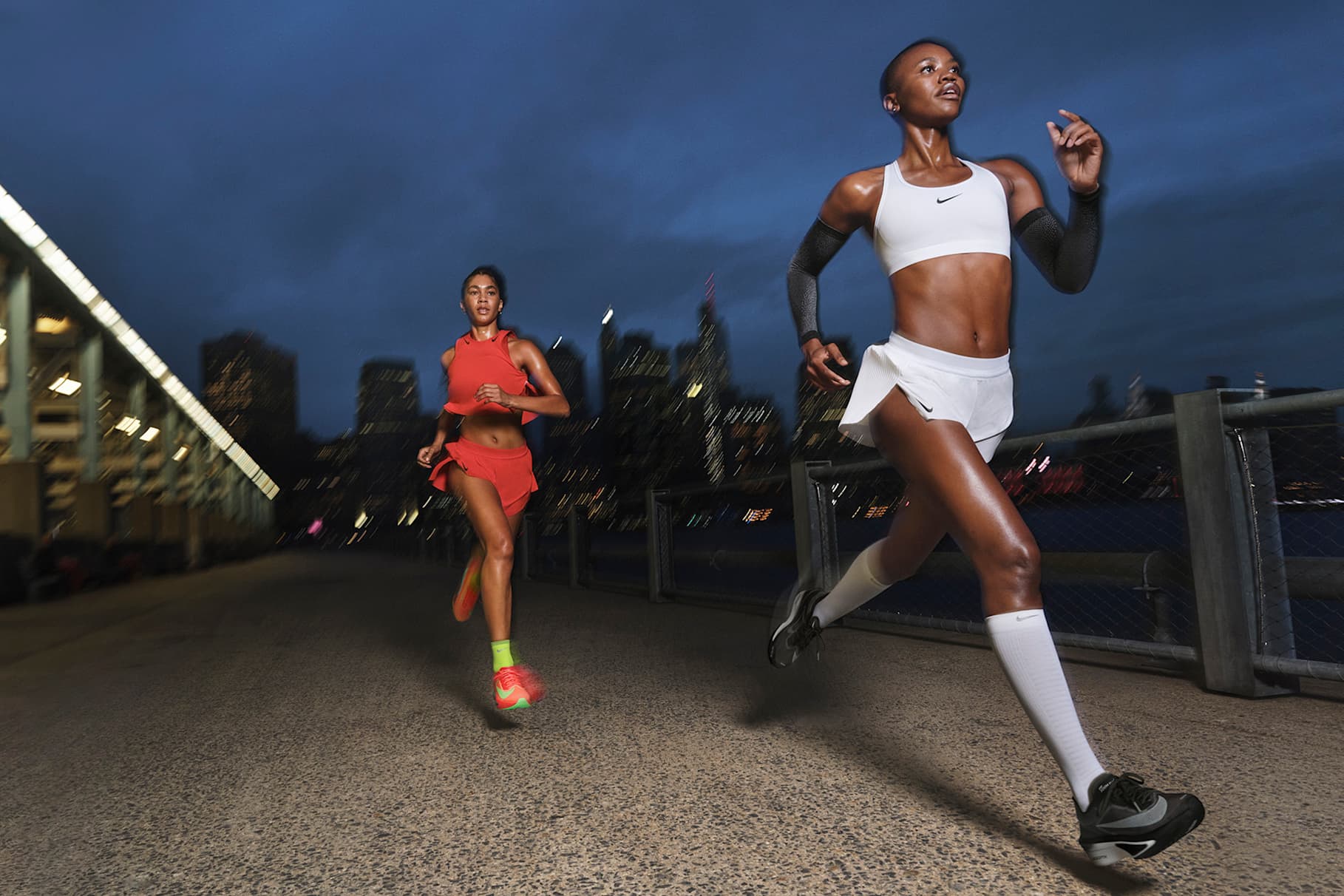
Running is one of the simplest ways to build strength, stability and endurance using only your body weight. But what muscles does running work, exactly? Understanding the muscles used in running, from your quads and hamstrings to your glutes and core, can help you run more efficiently, reduce injury risk and improve performance.
Each stride activates major lower body and core muscles, along with stabilisers that maintain posture and balance. Knowing the muscle groups worked while running or jogging can also help you identify weaknesses before they turn into pain.
## Shop Nike Running
[View All](https://www.nike.com/sg/w/running-37v7j)
- [
\
Nike Pegasus Plus 2
\
Women's Road Running Shoes
\
__S$249__](https://www.nike.com/sg/t/pegasus-plus-2-womens-road-running-shoes-qHRdKw8B/IM2543-310)
- [
\
Nike Pegasus Plus 2
\
Men's Road Running Shoes
\
__S$249__](https://www.nike.com/sg/t/pegasus-plus-2-mens-road-running-shoes-EjLO0njP/IM2541-101)
- [
\
Nike Pegasus Plus 2
\
Men's Road Running Shoes
\
__S$249__](https://www.nike.com/sg/t/pegasus-plus-2-mens-road-running-shoes-EjLO0njP/IM2541-700)
- [
\
Nike Pegasus Plus 2
\
Women's Road Running Shoes
\
__S$249__](https://www.nike.com/sg/t/pegasus-plus-2-womens-road-running-shoes-qHRdKw8B/IM2543-005)
- [
\
Nike Pegasus Plus 2
\
Men's Road Running Shoes
\
__S$249__](https://www.nike.com/sg/t/pegasus-plus-2-mens-road-running-shoes-EjLO0njP/IM2541-002)
- [
\
Nike Pegasus Plus 2
\
Men's Road Running Shoes
\
__S$249__](https://www.nike.com/sg/t/pegasus-plus-2-mens-road-running-shoes-EjLO0njP/IM2541-400)
- [
\
Nike Pegasus Plus 2
\
Women's Road Running Shoes
\
__S$249__](https://www.nike.com/sg/t/pegasus-plus-2-womens-road-running-shoes-qHRdKw8B/IM2543-004)
- [
\
Nike Vomero 18
\
Women's Road Running Shoes
\
__S$229__](https://www.nike.com/sg/t/vomero-18-womens-road-running-shoes-Vn57Nq/HM6804-013)
- [
\
Nike Pegasus 42
\
Women's Road Running Shoes
\
__S$219__](https://www.nike.com/sg/t/pegasus-42-womens-road-running-shoes-ofkR0yvr/IB1881-601)
- [
\
Nike Structure 26
\
Women's Road Running Shoes
\
__S$219__](https://www.nike.com/sg/t/structure-26-womens-road-running-shoes-iLKytA4Q/HJ1101-005)
## At a Glance: Muscles Used in Running
Here's a quick overview of the primary muscle groups involved:
- __Hip flexors (iliopsoas and rectus femoris)__ lift the leg and drive the knee forward.
- __Quadriceps (rectus femoris, vastus lateralis, vastus medialis, and vastus intermedius)__ extend the knee and control impact.
- __Hamstrings (biceps femoris, semimembranosus, and semitendinosus)__ extend the hip and power forward movement.
- __Glutes (gluteus maximus, gluteus medius, and gluteus minimus)__ generate force and stabilise the pelvis.
- __Calves (gastrocnemius and soleus)__ store and release energy for push-off.
- __Core (rectus abdominis, obliques, and erector spinae)__ control rotation and support posture.
- __Upper body muscles (latissimus dorsi and deltoids)__ assist balance and contribute to momentum.
These are the primary muscle groups running works, regardless of pace or terrain.
## Understanding the Running Gait Cycle
It's helpful to be aware of the running gait cycle (how your legs move with each step) to better understand how your muscles work when running. There are two main phases, per [research published](https://ijpefs.org/index.php/ijpefs/article/view/343) in the *International Journal of Physical Education, Fitness and Sports*:
- __Stance:__ when one foot is on the ground
- __Swing:__ when one leg travels forward in the air
Muscles alternate between absorbing force, stabilising the body, and generating forward movement throughout each cycle.
## What Muscles Does Running Work? A Muscle-by-Muscle Breakdown
Below, we take a closer look at the muscles used in running and the role each plays.
## 1. Hip Flexors
The hip flexors, including the iliopsoas and rectus femoris, comprise a group of muscles in the front of the upper thigh that flex (bend) your hips. They drive the leg upward and forward for efficient stride mechanics.
They contract during the swing phase and lengthen as the leg extends behind you. They work even harder during hill running and sprints.
Because the hip flexors repeatedly shorten during running, tightness is common. According to Schuyler Archambault, P.T., D.P.T., C.S.C.S., a physical therapist and personal trainer at Arch Physical Therapy and Fitness in Boston, sitting a lot during the day also puts the hip flexors in a shortened position, which can worsen tightness.
Tightness in the hip flexors could limit how far you're able to extend your hips while running, which also limits how much help you get from your glutes.
## 2. Glutes
Your glutes include three major muscles. The gluteus maximus is the largest, and it produces powerful hip extension, while the gluteus medius and minimus stabilise the pelvis during each stride.
The gluteus maximus is especially active during sprinting and uphill running. A [2021 study](https://pubmed.ncbi.nlm.nih.gov/33009196/) in *Medicine & Science in Sports & Exercise* found this muscle to be significantly larger in elite sprinters.
The glute med and glute min prevent the pelvis from dropping when the opposite leg is off the ground.
"Whenever the opposite leg is off the ground, the glute med has to work hard to keep the pelvis level so that you don't fall to one side, because, with one leg off the ground, gravity is at work to throw you off balance," said Luke Bennett, D.C., CSCS, a chiropractic doctor who works with runners at TOPTEAM Sports Performance in North Carolina.
[Strong glutes](https://www.nike.com/sg/a/glute-bridges-exercise) improve alignment, power and running economy.
## 3. Quadriceps
The quadriceps (quads) are a group of four muscles that include the rectus femoris, vastus lateralis, vastus medialis and vastus intermedius. They manage impact forces and extend the knee during push-off.
They also help lift the knee during swing and stabilise the joint during landing. Downhill running increases demand on the quads dramatically, because they have to perform strong eccentric contractions (when the muscle lengthens) to help control your speed.
"It's a lot of work to put the brakes on to control your movement so that you don't just fall on top of yourself," Dr Bennett said. This braking can increase soreness and requires substantial quad strength.
## 4. Hamstrings
The hamstrings, including the biceps femoris, power hip extension and contribute to movement during the stance phase.
They bend the knee during the swing phase but play a bigger role in forward motion and acceleration. A *Frontiers in Physiology* [study](https://www.frontiersin.org/journals/physiology/articles/10.3389/fphys.2015.00404/full) found that men with the highest hamstring activation produced the greatest amount of force during sprints.
Some runners, especially females, tend to be "[quad dominant](https://www.nike.com/sg/a/what-is-quad-dominant)", meaning their quadriceps take on more of the workload than the hamstrings. If your hamstrings aren't strong enough to contribute equally to your running stride, your quads have to work harder to pick up the slack.
According to Dr Bennett, "At some point, you may notice your knees hurt from running".
Balanced hamstring strength helps prevent knee strain and improve stride efficiency.
## 5. Calves
The calf muscles in your lower legs are also key players during the running gait cycle. The gastrocnemius and soleus generate high levels of force and store elastic energy for push-off.
After the foot contacts the ground, the calves and Achilles tendon absorb and store energy. During push-off, they release that energy to propel you forward.
If your calf muscles aren't strong enough to absorb that force and release it during push-off, your body will compensate in ways that limit power and increase your injury risk, Archambault said.
## 6. Abdominals and Core
The rectus abdominis, obliques and erector spinae connect your upper and lower body and stabilise the trunk to improve efficiency of movement. These muscles minimise rotation so your legs can drive straight ahead without everything swaying.
"Those muscles are working hard to control rotation so you don't waste energy twisting back and forth", Dr Bennett explained. They also support the spine, helping maintain balance and alignment.
## 7. Upper Body Muscles
While running relies mostly on your lower limbs, your [upper body](https://www.nike.com/sg/a/best-arm-workouts) is involved, too. Your arms naturally swing while running (or walking). The latissimus dorsi and deltoids assist arm swing, which contributes to balance, rhythm and forward momentum.
Arm drive helps counterbalance leg motion and maintain posture. Your back and shoulders also play a key role in maintaining an upright posture throughout your run, which can enhance your running economy.
"By maintaining an upright posture, you maintain alignment to ensure the most efficient transfer of energy through the body", Archambault said.
## Shop Nike Running Shoes
[View All](https://www.nike.com/sg/w/running-shoes-37v7jzy7ok)
- [
\
Nike Pegasus Plus 2
\
Women's Road Running Shoes
\
__S$249__](https://www.nike.com/sg/t/pegasus-plus-2-womens-road-running-shoes-qHRdKw8B/IM2543-310)
- [
\
Nike Pegasus Plus 2
\
Men's Road Running Shoes
\
__S$249__](https://www.nike.com/sg/t/pegasus-plus-2-mens-road-running-shoes-EjLO0njP/IM2541-101)
- [
\
Nike Pegasus Plus 2
\
Men's Road Running Shoes
\
__S$249__](https://www.nike.com/sg/t/pegasus-plus-2-mens-road-running-shoes-EjLO0njP/IM2541-700)
- [
\
Nike Pegasus Plus 2
\
Women's Road Running Shoes
\
__S$249__](https://www.nike.com/sg/t/pegasus-plus-2-womens-road-running-shoes-qHRdKw8B/IM2543-005)
- [
\
Nike Pegasus Plus 2
\
Men's Road Running Shoes
\
__S$249__](https://www.nike.com/sg/t/pegasus-plus-2-mens-road-running-shoes-EjLO0njP/IM2541-002)
- [
\
Nike Pegasus Plus 2
\
Men's Road Running Shoes
\
__S$249__](https://www.nike.com/sg/t/pegasus-plus-2-mens-road-running-shoes-EjLO0njP/IM2541-400)
- [
\
Nike Pegasus Plus 2
\
Women's Road Running Shoes
\
__S$249__](https://www.nike.com/sg/t/pegasus-plus-2-womens-road-running-shoes-qHRdKw8B/IM2543-004)
- [
\
Nike Vomero 18
\
Women's Road Running Shoes
\
__S$229__](https://www.nike.com/sg/t/vomero-18-womens-road-running-shoes-Vn57Nq/HM6804-013)
- [
\
Nike Pegasus 42
\
Women's Road Running Shoes
\
__S$219__](https://www.nike.com/sg/t/pegasus-42-womens-road-running-shoes-ofkR0yvr/IB1881-601)
- [
\
Nike Structure 26
\
Women's Road Running Shoes
\
__S$219__](https://www.nike.com/sg/t/structure-26-womens-road-running-shoes-iLKytA4Q/HJ1101-005)
## How Running Builds Muscle (and When It Doesn't)
Running strengthens muscles, but the type of strength depends on the type of running. Running builds muscle by improving:
- Muscular endurance
- Tendon stiffness and elasticity
- Neuromuscular coordination
However, running does not typically build large muscle mass. Building muscle is more associated with [strength training](https://www.nike.com/sg/a/smarter-strength-training-fundamentals), hill sprints and explosive running.
For balanced strength, runners benefit from supplementing their mileage with resistance training.
## Muscles Used in Different Types of Running
## Sprinting vs Distance Running
- Higher activation of gluteus maximus, hamstrings and calves
- Greater core stabilisation
- More powerful arm swing
## Hill Running
- Increased glute max and calf activation
- More hip extension and knee drive (rectus femoris and iliopsoas)
- Higher force output in every stride
## Trail Running
- More work from stabilisers: glute med/min, obliques and deep foot muscles
- Increased eccentric quad demand
- Enhanced core engagement for balance
## FAQ: What Muscles Does Running Work?
Does running build muscle or just work your cardiovascular system?
Running works both. Long, steady runs build endurance; sprints and hills build strength. True muscle growth typically requires strength training.
Is running enough to strengthen your glutes and core?
Running activates both, but many runners underuse their glutes. Strength training helps restore balance and prevent overuse injuries.
What muscles are most important for running faster?
The gluteus maximus, hamstrings (especially biceps femoris), calves and core muscles all contribute significantly to speed.
How can I prevent muscle imbalances from running?
- Strength train two to three times weekly.
- Prioritise hamstrings, glutes, calves and core.
- Add mobility for hip flexors and ankles.
- Vary terrains and running intensities.
## Note on Safety and Individualisation
Running stresses the same tissues repetitively, so progress gradually, rotate terrains and intensities and listen to early signs of discomfort. If you experience persistent pain, consult a physical therapist to evaluate your strength, gait mechanics and mobility.
[](https://www.nike.com/nrc-app)
[Explore NRC](https://www.nike.com/nrc-app)
Originally published: 18 December 2025
## Related Stories
- 
[](https://www.nike.com/sg/a/running-everyday-benefits)
# Activity
# The benefits and drawbacks of running every day
- 
[](https://www.nike.com/sg/a/running-shoes-for-supination)
# Buying Guide
# Selecting the Right Running Shoes for Supination
- 
[](https://www.nike.com/sg/a/should-you-work-out-when-sick)
# Health & wellness
# Should you work out if you're ill?
- 
[](https://www.nike.com/sg/a/how-to-breathe-while-running)
# Sport & Activity
# How to Breathe Whilst Running
- 
[](https://www.nike.com/sg/a/best-shoes-for-wide-feet)
# Buying Guide
# Here's How to Find the Best Shoes for Wide Feet
Resources
[Find A Store](https://www.nike.com/sg/retail)
[Become A Member](https://www.nike.com/sg/register)
[Running Shoe Finder](https://www.nike.com/sg/running/shoe-finder)
[Product Advice](https://www.nike.com/sg/product-advice)
[Nike Coaching](https://www.nike.com/sg/coaching)
[Magazine](https://about.nike.com/en-GB/magazine)
[Education Discounts](https://www.nike.com/sg/help/a/student-discount-gs)
[Send Us Feedback](https://www.nike.com#site-feedback)
Help
[Get Help](https://www.nike.com/sg/help)
[Order Status](https://www.nike.com/sg/orders)
[Delivery](https://www.nike.com/sg/help/a/shipping-delivery-gs)
[Returns](https://www.nike.com/sg/help/a/returns-policy-gs)
[Payment Options](https://www.nike.com/sg/help/a/payment-options-gs)
[Contact Us](https://www.nike.com/sg/help/#contact)
Company
[About Nike](http://about.nike.com/)
[News](https://about.nike.com/en-GB/newsroom)
[Careers](https://careers.nike.com)
[Investors](http://investors.nike.com/)
[Sustainability](https://www.nike.com/sg/sustainability)
[Impact](https://about.nike.com/en-GB/impact)
[Report a Concern](https://speakup.nike.com)
## Resources
[Find A Store](https://www.nike.com/sg/retail)
[Become A Member](https://www.nike.com/sg/register)
[Running Shoe Finder](https://www.nike.com/sg/running/shoe-finder)
[Product Advice](https://www.nike.com/sg/product-advice)
[Nike Coaching](https://www.nike.com/sg/coaching)
[Magazine](https://about.nike.com/en-GB/magazine)
[Education Discounts](https://www.nike.com/sg/help/a/student-discount-gs)
[Send Us Feedback](https://www.nike.com#site-feedback)
[Help](https://www.nike.com/sg/help)
[Get Help](https://www.nike.com/sg/help)
[Order Status](https://www.nike.com/sg/orders)
[Delivery](https://www.nike.com/sg/help/a/shipping-delivery-gs)
[Returns](https://www.nike.com/sg/help/a/returns-policy-gs)
[Payment Options](https://www.nike.com/sg/help/a/payment-options-gs)
[Contact Us](https://www.nike.com/sg/help/#contact)
[Company](http://about.nike.com/)
[About Nike](http://about.nike.com/)
[News](https://about.nike.com/en-GB/newsroom)
[Careers](https://careers.nike.com)
[Investors](http://investors.nike.com/)
[Sustainability](https://www.nike.com/sg/sustainability)
[Impact](https://about.nike.com/en-GB/impact)
[Report a Concern](https://speakup.nike.com)
Singapore
- © 2026 Nike, Inc. All rights reserved.
- Guides
- [Nike Air Force 1](https://www.nike.com/sg/air-force-1)
- [Nike Air Max](https://www.nike.com/sg/air-max)
- [Nike FlyEase](https://www.nike.com/sg/flyease)
- [Nike Free](https://www.nike.com/sg/free)
- [Nike Pegasus](https://www.nike.com/sg/running/runningzoom-pegasus-37)
- [Nike Vaporfly](https://www.nike.com/sg/running/vaporfly)
- [Nike Zoom Fly](https://www.nike.com/sg/running/zoom-fly)
- [Nike ZoomX](https://www.nike.com/sg/zoomx)
- [Terms of Sale](https://www.eshopworld.com/shoppers/help/retailer/nike/terms-and-conditions-of-sale-en/)
- [Terms of Use](https://agreementservice.svs.nike.com/sg/en_gb/rest/agreement?agreementType=termsOfUse&uxId=com.nike&country=SG&language=en&requestType=redirect)
- [Nike Privacy Policy](https://agreementservice.svs.nike.com/sg/en_gb/rest/agreement?agreementType=privacyPolicy&uxId=com.nike.unite&country=SG&language=en&requestType=redirect)
- [Privacy Settings](https://www.nike.com/sg/guest/settings/privacy)
## Africa
- [__Egypt__
\
English](https://www.nike.com/eg/)
- [__Morocco__
\
English](https://www.nike.com/ma/en/)
- [__Maroc__
\
Français](https://www.nike.com/ma/)
- [__South Africa__
\
English](https://www.nike.com/za/)
## Americas
- [__Argentina__
\
Español](https://www.nike.com.ar)
- [__Brasil__
\
Português](https://www.nike.com.br)
- [__Canada__
\
English](https://www.nike.com/ca/)
- [__Canada__
\
Français](https://www.nike.com/ca/fr/)
- [__Chile__
\
Español](https://www.nike.cl)
- [__Colombia__
\
Español](https://www.nike.com.co)
- [__México__
\
Español](https://www.nike.com/mx/)
- [__Peru__
\
Español](https://www.nike.com.pe)
- [__Puerto Rico__
\
Español](https://www.nike.com/pr/)
- [__United States__
\
English](https://www.nike.com)
- [__Estados Unidos__
\
Español](https://www.nike.com/us/es/)
- [__Uruguay__
\
Español](https://www.nike.com.uy)
- [__Latin America__
\
Español](https://www.nike.com/xl/)
## Asia Pacific
- [__Australia__
\
English](https://www.nike.com/au/)
- [__中国大陆__
\
简体中文](https://www.nike.com.cn/)
- [__Hong Kong__
\
English](https://www.nike.com.hk/)
- [__香港__
\
繁體中文](https://www.nike.com.hk/)
- [__India__
\
English](https://www.nike.in/)
- [__Indonesia__
\
English](https://www.nike.com/id/)
- [__Japan__
\
English](https://www.nike.com/jp/en/)
- [__日本__
\
日本語](https://www.nike.com/jp/)
- [__대한민국__
\
한국어](https://www.nike.com/kr/)
- [__Malaysia__
\
English](https://www.nike.com/my/)
- [__New Zealand__
\
English](https://www.nike.com/nz/)
- [__Philippines__
\
English](https://www.nike.com/ph/)
- [__Singapore__
\
English](https://www.nike.com/sg/)
- [__台灣__
\
繁體中文](https://www.nike.com/tw/)
- [__ไทย__
\
ภาษาไทย](https://www.nike.com/th/)
- [__Vietnam__
\
English](https://www.nike.com/vn/)
## Europe
- [__Österreich__
\
Deutsch](https://www.nike.com/at/)
- [__Austria__
\
English](https://www.nike.com/at/en/)
- [__Belgien__
\
Deutsch](https://www.nike.com/be/de/)
- [__Belgium__
\
English](https://www.nike.com/be/en/)
- [__Belgique__
\
Français](https://www.nike.com/be/fr/)
- [__België__
\
Nederlands](https://www.nike.com/be/)
- [__Bulgaria__
\
English](https://www.nike.com/bg/)
- [__Croatia__
\
English](https://www.nike.com/hr/)
- [__Česká republika__
\
Čeština](https://www.nike.com/cz/)
- [__Czech Republic__
\
English](https://www.nike.com/cz/en/)
- [__Danmark__
\
Dansk](https://www.nike.com/dk/)
- [__Denmark__
\
English](https://www.nike.com/dk/en/)
- [__Finland__
\
English](https://www.nike.com/fi/)
- [__France__
\
Français](https://www.nike.com/fr/)
- [__Deutschland__
\
Deutsch](https://www.nike.com/de/)
- [__Ελλάδα__
\
ελληνικά](https://www.nike.com/gr/)
- [__Hungary__
\
English](https://www.nike.com/hu/en/)
- [__Magyarország__
\
Magyar](https://www.nike.com/hu/)
- [__Ireland__
\
English](https://www.nike.com/ie/)
- [__Israel__
\
English](https://www.nike.com/il/)
- [__Italia__
\
Italiano](https://www.nike.com/it/)
- [__Luxemburg__
\
Deutsch](https://www.nike.com/lu/de/)
- [__Luxembourg__
\
English](https://www.nike.com/lu/en/)
- [__Luxembourg__
\
Français](https://www.nike.com/lu/)
- [__Netherlands__
\
English](https://www.nike.com/nl/en/)
- [__Nederland__
\
Nederlands](https://www.nike.com/nl/)
- [__Norway__
\
English](https://www.nike.com/no/en/)
- [__Norge__
\
Norsk](https://www.nike.com/no/)
- [__Polska__
\
Polski](https://www.nike.com/pl/)
- [__Portugal__
\
English](https://www.nike.com/pt/en/)
- [__Portugal__
\
Português](https://www.nike.com/pt/)
- [__Romania__
\
English](https://www.nike.com/ro/)
- [__Россия__
\
Русский](https://www.nike.com/ru/)
- [__Slovakia__
\
English](https://www.nike.com/sk/)
- [__Slovenia__
\
English](https://www.nike.com/si/)
- [__Espanya__
\
Català](https://www.nike.com/es/ca/)
- [__España__
\
Español](https://www.nike.com/es/)
- [__Sweden__
\
English](https://www.nike.com/se/en/)
- [__Sverige__
\
Svenska](https://www.nike.com/se/)
- [__Schweiz__
\
Deutsch](https://www.nike.com/ch/)
- [__Switzerland__
\
English](https://www.nike.com/ch/en/)
- [__Suisse__
\
Français](https://www.nike.com/ch/fr/)
- [__Svizzera__
\
Italiano](https://www.nike.com/ch/it/)
- [__Türkiye__
\
Türkçe](https://www.nike.com/tr/)
- [__United Kingdom__
\
English](https://www.nike.com/gb/)
## Middle East
- [__Saudi Arabia__
\
English](https://www.nike.sa/en/home)
- [__المملكة العربية السعودية__
\
العربية](https://www.nike.sa/ar/home)
- [__United Arab Emirates__
\
English](https://www.nike.ae/en/home)
- [__الإمارات العربية المتحدة__
\
العربية](https://www.nike.ae/ar/home)
- [__Qatar__
\
English](https://www.nike.qa/en/home)
- [__دولة قطر__
\
العربية](https://www.nike.qa/ar/home)
- [__Kuwait__
\
English](https://www.nike.com.kw/en/home)
- [__الكويت__
\
العربية](https://www.nike.com.kw/ar/home)